Right-wing politics continues to reshape Latin America through pro-security and pro-market reforms. One country after another, voters have chosen conservative leaders who promise safety, economic growth, and an opening to the world. El Salvador, Argentina, Ecuador, Bolivia, Chile, Peru, Honduras, and now Colombia have all turned sharply rightward after long and disastrous socialist policies. Add the countries already run on pro-market, pro-freedom lines, like Panama, Paraguay, and Costa Rica, and the pattern is clear to anyone watching the region closely.
This transformation is working for Latin America. The evidence points to the start of an era defined by rising security and stronger economies.
How it began has triggered speculation, most of it about American influence. The left accuses the Trump administration of openly backing right-wing candidates. The right credits the wins to the end of American foreign aid, tying them to the cancellation of USAID funding.
For sure, American influence is obvious, both in direct Trump support and in indirect American foreign aid. However, if we reduce the great transformation in Latin America to these simple effects, we will not only fail to understand what is really happening in the region, but we will also underestimate the struggle of Latin Americans for a better future.
In this article, I explain what USAID is, why it has failed to make Latin America freer or more prosperous, and why the people who have taken matters into their own hands are better positioned to build that future than any form of American influence.
USAID was created by President John F. Kennedy in 1961, under the Foreign Assistance Act of that year
WHAT WAS USAID?
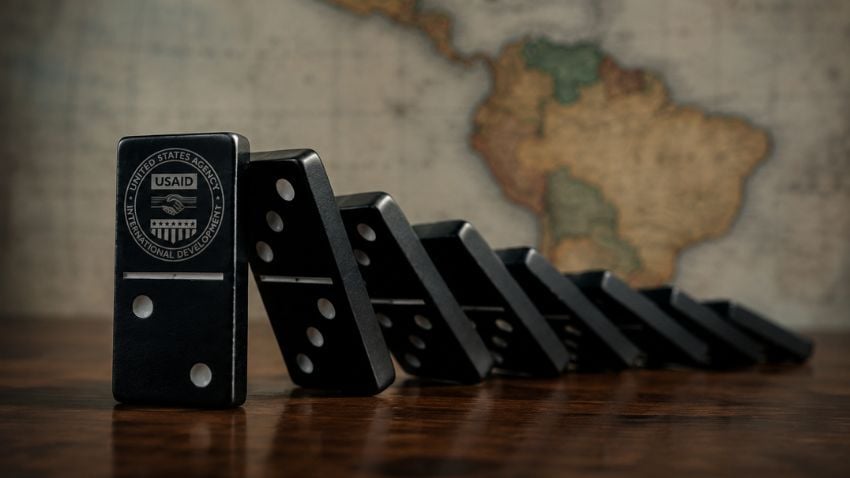
USAID was created by President John F. Kennedy in 1961, under the Foreign Assistance Act of that year. It was born out of the Cold War. Kennedy merged several scattered aid programs into a single agency whose underlying logic was that turning poor countries into stable, prosperous ones would make them better allies and blunt Soviet (and later Chinese) influence. Therefore, from the start, it was never pure charity, but a soft power with a humanitarian face. It ran for 64 years, until it was dismantled in 2025.
USAID operated in approximately 130 countries, and 69 of the world's 77 poorest countries benefited from its assistance. Health has been the largest spending item since the early 1990s. However, humanitarian aid overtook it in fiscal year 2022. What remained were food security, economic growth, agriculture, education, and, to a relatively minor extent, democracy and governance. Its budget grew steadily, reaching around $35.4 billion in 2024.
USAID did not hand money directly to the people it was meant to help. Its projects were implemented by U.S. or foreign NGOs, nonprofit and for-profit contractors, universities, and international organizations. In practice, that meant a chain: Congress to USAID to a large Washington contractor (Chemonics, DAI, Tetra Tech) or a UN agency, and only then, sometimes, down to a local group. That is why most of the money stayed with intermediaries.
USAID was a politically oriented, top-down planning apparatus, bloated with intermediaries, whose effectiveness was effectively impossible to measure, whatever its stated goals were.
HOW SHOULD WE EVALUATE USAID’S INFLUENCE IN LATIN AMERICA?
I believe in charity work and personally fund and organize 10eighteen, a nonprofit that helps vulnerable women in Uganda. However, the funding we use there is private, and funders personally engage in the implementation of the aid programs. We don’t use someone else’s money for people we don’t know anything about, over whom we don’t have any real control in the implementation.
However, USAID was a kind of organization I despised most, a central planner. A bureaucrat in Washington decides what a coca farmer in San Martín needs, wires the money through three layers of contractors, and hopes something useful survives the journey. It rarely does. Consequently, money that travels that far from the people who appropriated it to the people who spend it is, by its very design, wide open to waste and abuse.
Think about what USAID really was. An institution whose entire purpose was to restructure other people's societies, staffed by career development professionals who spent their days partnering with international NGOs. That kind of organization inevitably absorbs the worldview of that world. It adopted every progressive concept on offer: cultural rights, inclusion, gender, and climate. In its last years, it was openly prioritizing diversity and equality as program goals. Of course, it went in that direction. USAID's real problem was not that it had become a progressive organization. The problem was that it existed at all. After 64 years and hundreds of billions of dollars, its achievements exist only in its own annual reports.
So, transferring funds to an NGO is not a good way to help a country. On the other hand, free trade and foreign investment are the most reliable paths to development anywhere in the world. Open your markets and let their entrepreneurs build businesses that sell to yours. In this way, people help themselves while creating value for both parties. It builds year after year in a way that aid never has. Help creates addiction. Trade creates partners. If I had a choice, I would always choose my partner.
Let me be clear on one thing: I won't mourn the loss of USAID. It was an unnecessary institution doing an inadequate job that shouldn't have been its job in the first place. However, it does not mean that switching off USAID is what turned Latin America to the right.
Let's start with the two countries that have eliminated socialism in the most dramatic way, Bolivia and Argentina, which received almost nothing from USAID. You cannot cut something that never existed. Then look at the calendar. Milei won Argentina in 2023. Noboa won Ecuador in 2023. Bukele had reshaped El Salvador before all this. If you want to attribute the collapse of the Latin American left to the demise of USAID, the timeline won't just stop there for you.
Now, let me show you the figures instead of speculating. How much USAID actually spends in each of these countries, where this spending goes, and who receives it? We can answer these questions with data taken directly from the U.S. government's own obligation records. The figures below show a better picture to judge the influence of USAID.
Colombia has received the most aid in the last five years, with approximately $1.6 billion USD. But keep track of where this aid is being spent: feeding Venezuelan migrants, implementing the 2016 FARC peace agreement, and rural development. The buyers are Washington-based contractors - Chemonics, Tetra Tech, DAI - and the UN World Food Programme. The financing of democracy and governance was a rounding error. The billions of dollars in anti-drug spending that everyone points to came not from USAID, but from the State Department and the Pentagon.
Peru took about $550 million USD. The goal was turning coca farmers into coffee and cacao growers, supporting Venezuelan migrants, and protecting the Amazon, through the World Food Programme, Save the Children, and conservation outfits. The single most "political" line I could find in the entire data source was a $145,000 USD university opinion survey.
Ecuador received around $246 million USD in migration aid, Galápagos conservation, and a slice of governance work, led by the World Food Programme and the Charles Darwin Foundation. Noboa, a conservative, won the election while this money was still flowing.
Honduras was a large recipient, roughly $150 million USD in 2024 alone for roads, infrastructure, and governance, run by contractors like DAI and RTI. The fund was directly handed to the leftist Xiomara Castro’s government, but she lost against conservative Nasry Asfura in 2025.
Bolivia got $9 million USD over five years in a health program, a school, and a nature foundation. The amount was negligible because Bolivia refused USAID funding since 2013. Nevertheless, this is the country that ended two decades of socialism in 2025, and USAID had no real influence there.
Chile received about $2 million USD over five years, most of it to a Catholic charity. A right-wing candidate, Kast, won in a wealthy OECD country where USAID had no meaningful presence at all.
Costa Rica took some $20 million USD over five years through a business school, a health body, and a university. However, it has been ruled by right-wing leaders for a long time, and the amount of money passed to Costa Rica was negligible.
Argentina got nothing. However, President Javier Milei has been implementing the most pro-market economic policies since he was elected in 2023, in a country where statism had been the main political line for decades and had devastated Argentina.
Which leaves the other half of the American-influence story, the man himself. Trump's hand in all this is real. It's just not the hand everyone thinks it is.
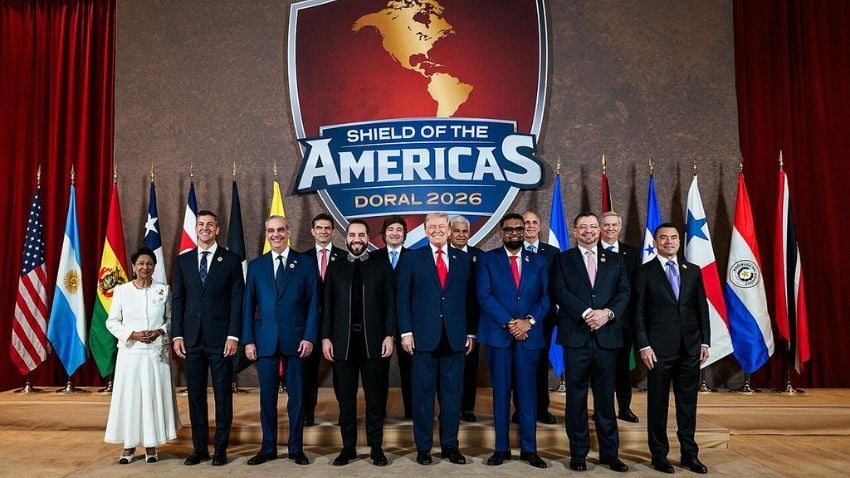
The Shield of the Americas may prove more influential than Trump's political endorsements
TRUMP INFLUENCE AND THE SHIELDS OF THE AMERICAS
Now, let's talk about Trump's influence in Latin America. The Trump administration, and Secretary of State Marco Rubio in particular, has offered open support for right-wing candidates and incumbent conservative presidents across the region. Does that make American influence the real driver of this shift? Not so fast.
Trump's influence on any given right-wing candidate in Latin America is likely limited, if it exists at all. First, Trump's ideological positions are too controversial to sit comfortably with many right-leaning voters. Second, when Trump backs a candidate, it can mobilize opposition and push voters toward the left. Third, Trump did not directly deliver monetary support to any of the countries that ditched socialist governments. Fourth, his tariffs and sanctions on adversarial states have produced backlash in several cases.
What he has built, though, may matter more in the long run: the Shield Of The Americas. This is an international bloc, led by the United States, focused on fighting organized crime and narco-terrorism in Latin America. I don't think it has had any meaningful influence on Latin American elections so far, but if it can make a real dent in regional security, it will benefit pro-security leaders across the board. Colombia's newly elected president, Abelardo De La Espriella, has already said Colombia will join the Shield of the Americas under his administration.
Peace and free trade go hand in hand. If right-wing leaders can open their economies to trade and foreign investment while delivering on security, the radical left will become irrelevant in much of the region. The signals from these leaders point in exactly that direction.

Across Latin America, voters are choosing prosperity over promises and results over rhetoric
THE REAL REASON BEHIND THE RIGHT-WING SWING IN LATIN AMERICA
Socialists are quick to invoke American hegemony but slow to reckon with the consequences of the socialist and progressive policies that have ruined the lives of generations across Latin America. If you want to understand the real reasons behind the right-wing swing, which rejects socialist policies in every meaningful way, listen to people on the street. They want safety and prosperity. It is that simple, and socialist leaders failed them badly.
Take Argentina. Do you really think Argentinians became die-hard libertarians overnight to vote for Milei, who only promised blood, toil, tears, and sweat? Yet most of them have continued to support him, because they can see the results.
Bolivia is another striking example of socialism that led a country to become a failed state. Evo Morales destroyed enormous natural resources and systematically corrupted every public institution to cling to power. Despite Rodrigo Paz winning the presidency in fair elections in 2025, Morales has not given up on destabilizing Bolivia; he has organized riots in the capital to pressure Paz to resign.
The same story of socialist failure played out across every country that has since swung right. People had had enough of the charlatans. They are now turning to leaders who don't promise redistribution but show a real path to creating wealth and connecting to the world.
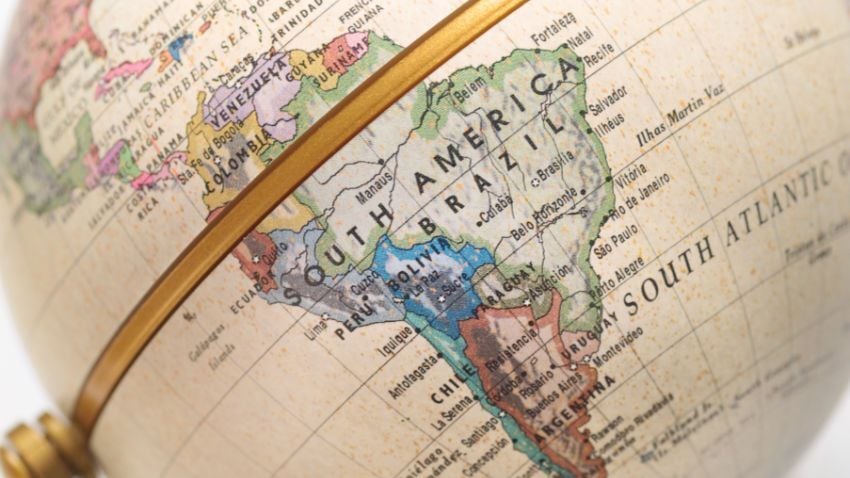
Free markets and functioning institutions cannot be imported. They are built locally and gradually by the people living in that country
WHY FOREIGN AID FAILS EVERY TIME
Foreign aid has always failed in Latin America. The most important reason is that assistance is planned from the center. Planners are officials who attempt to solve underdevelopment through a comprehensive plan announced at a summit, top-down, from Washington to the village. The assistance is designed by planners, not by individuals who start from scratch, researching, testing, and adapting based on what real people actually want. It fails because there is no feedback loop. A business that fails goes bankrupt, but a charity serves donors and bureaucracies in Washington.
Nothing punishes waste or rewards what works. Money flows according to whether the plan looks good on paper. While the West can spend decades and billions this way and still fail to deliver twelve-cent medicines to dying children, the market somehow gets Coca-Cola to the same remote village.
What is really wrong is the conceit to believe that the West can change institutions and create prosperity through arbitrary interventions in a developing society. This is called “the white man's burden,” repackaged under the name of development policy. Free markets and functioning institutions cannot be imported. They are built locally and gradually by the people living in that country.
This is F. A. Hayek's old warning about central planning applied to the aid sector, and it explains precisely why money channelled through an NGO can never deliver what open trade and Latin Americans themselves can. Latin Americans are standing up for themselves.
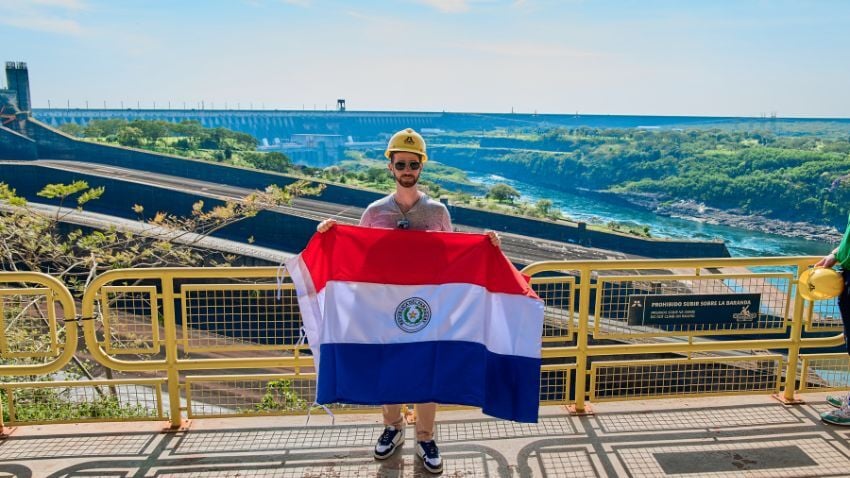
While others debate the future, Paraguay is quietly building it and rewarding those who move early
CONCLUSION
Latin Americans lived under socialism, paid the price with inflation and crime rates, emptied the shelves, and finally said enough is enough. The change that emerges from the people who truly have to live with this is genuine. This is not artificial; it is a grassroots change. This is a structural condition, not a temporary mood. Bolivian voters did not end twenty years of socialism because one of the foreign aid items was cut off. They ended it because they finally refused to continue paying the price for a model that had bankrupted them. You cannot ignore that feeling. It spreads from election to election, from country to country.
For anyone monitoring the region as I do, the result is self-evident. When a continent chooses security over chaos and open markets over centralized planning, it is the first step in a generational change, and the first step is exactly where you want to be.
It's time to take a serious look at Latin America. The opportunities are already here for everyone who makes a Plan-B. With its dollarized economy, regional tax system, and position as the logistics hub of the hemisphere, Panama quietly rewards its investors. Paraguay, which has the lowest taxes and the cheapest energy in the world and has a government that really wants your investment, is where a new wave of investment is forming right now. These are not bets based on an uncertain possibility. These are entry points into a region whose direction has been determined, and this direction is clear, free, and upward.
The radical left spent decades promising a future it could never deliver. Latin America stopped waiting. Now, it is your turn to stop waiting. Start building your own Plan-B now by downloading our free special report on Plan-B Residencies & Instant Citizenships.

















 Mikkel Thorup: October 06, 2026