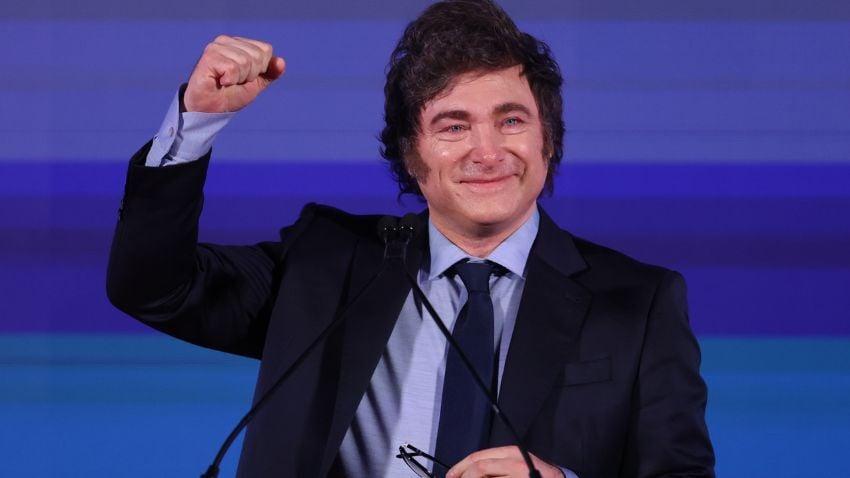
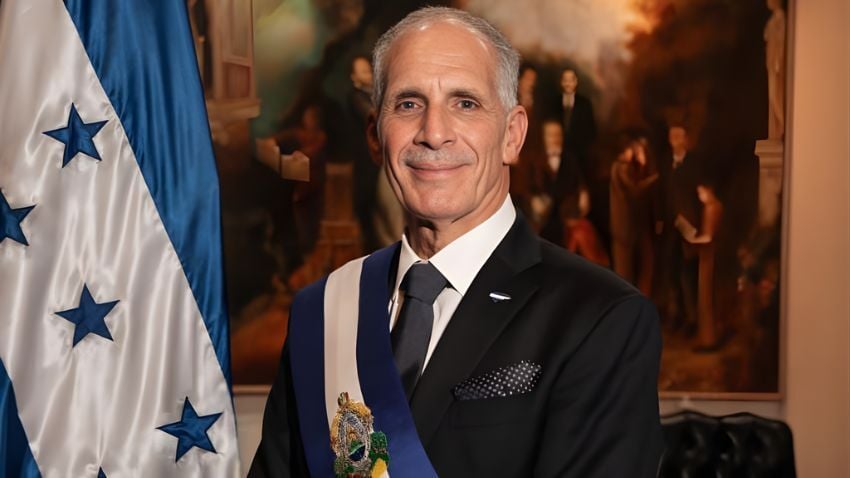
Honduras’ newly elected president, Nasry Asfura of the conservative National Party, was sworn in on January 27, 2026. The election, held on November 30, 2025, was highly controversial, as Asfura won by a razor-thin margin of just 0.74 percentage points over his opponent, Liberal Party candidate Salvador Nasralla. Following numerous appeals to the National Electoral Council, doubts about the results intensified. However, on December 24, 2025, the electoral court issued its final ruling, formally declaring Asfura the legitimate president. Ultimately, Asfura’s inauguration took place in accordance with the constitutional timeline.
Despite a razor-thin margin, Asfura’s victory paved the way for the right-wing politics to regain power in Honduras after a disastrous socialist experiment with former President Xiomara Castro of LIBRE. The election results were a total failure for the left, as the LIBRE candidate, Rixi Moncada, received only 19.3% of the vote. The election pitted a conservative right-wing candidate against a centrist liberal candidate.
President Castro, the wife of former socialist President Manuel Zelaya, who served from 2006 to 2009, peacefully handed over power to the new administration. Castro completed her term amid growing security concerns and economic frustration. She failed to fulfill any of her promises, including establishing institutional transparency or reducing poverty.
Despite post-election disputes, the outcome represents another right-wing win in Latin America. Across the region, countries that experienced more than a decade of socialist rule are now electing conservative, right-wing candidates to improve security, stabilize politics, and restart economic growth.
Although there are nuances in Honduras’ case, voters made it clear that they want to bring the country’s socialist experiment to an end. The consolidation of right-wing rule in Honduras will depend on Asfura’s ability to follow through on his security and economic commitments. U.S. President Donald Trump endorsed Asfura during the pre-election period, and this cooperation is likely to deepen, particularly in response to drug-trafficking-related security concerns and efforts to limit Chinese influence in Latin America.
In this article, we examine Honduras’ complex politics and assess how this election fits within emerging trends in Latin America.
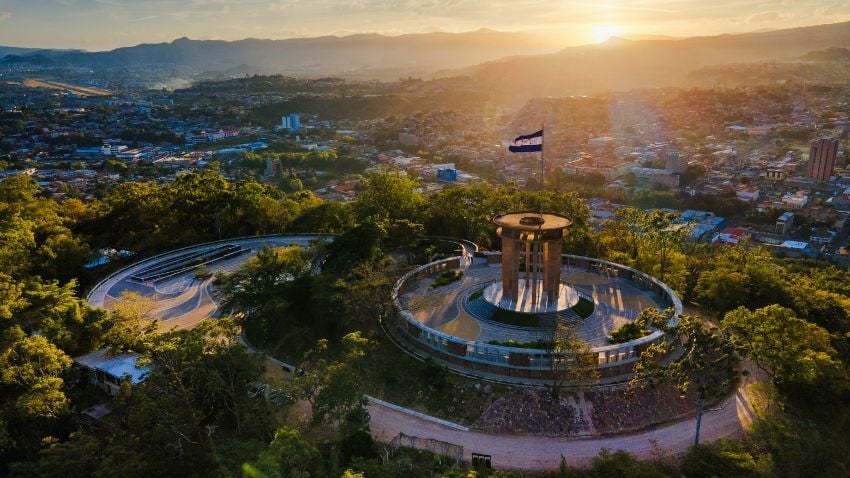
Although small in size, Honduras plays a crucial strategic role in migration, regional security, and great-power competition in Central America
WHY HONDURAS MATTERS
Honduras is a relatively small country in Central America, right between Guatemala, El Salvador, and Nicaragua. Along with Guatemala and El Salvador, it has been a major source of migration toward the U.S. due to poverty, violence, and political corruption.
Honduras' role as a transit corridor for narcotics moving from South America to North America is an ongoing issue. Domestic security policies and, of course, U.S. involvement in Honduras, have been mostly shaped by the need to control ports, territory, and air routes in the region. The constant U.S. military presence in Soto Cano Air Base for military cooperation and humanitarian missions is evidence of American interests in Honduras.
Beyond security concerns, Honduras is entangled in broader geopolitical competition in Central America. As China expands its economic reach in the region, Washington is closely monitoring political cooperation in countries such as Honduras. Despite its small size, Honduras plays a big role in regional order, migration policy, and great-power rivalry.
President Trump has invited a group of politically aligned Latin American leaders to a presidential summit in Miami on March 7, 2026. The goal is to counter China’s growing influence in the region. The invitees reportedly include Javier Milei (Argentina), Santiago Peña (Paraguay), Rodrigo Paz (Bolivia), Nayib Bukele (El Salvador), Daniel Noboa (Ecuador), and Nasry Asfura (Honduras). The summit can be seen as part of a revived Monroe Doctrine aimed at limiting Beijing's economic, infrastructure, and resource partnerships in Latin America. The meeting highlights shared ideological currents among these leaders and reflects a shift toward closer bilateral alignment with the U.S. on security and geopolitical priorities.
FROM “BANANA REPUBLIC” TO FRAGILE DEMOCRACY
You have most likely heard the term “banana republic” used to describe politically unstable countries reliant on a single export. The term was inspired by Honduras, which is often cited as the original example. In the early 20th century, foreign corporations, such as the United Fruit Company, dominated banana production along the northern coast and exerted significant political influence. The issue was not the bananas themselves but structural dependence, concentrated power, and weak institutions.
When Honduras transitioned to civilian democracy in 1982, regular elections and a new constitution restored formal political order. However, politics continued to revolve around patronage and corruption scandals were frequent. Without rule-based governance, economic growth was modest, whereas poverty and the informal economy expanded rapidly.
Politics was dominated by two parties, the Liberal Party and the National Party. Although these parties appeared to represent a divide between liberal and conservative currents, in practice, both were largely centrist and did not treat ideology as a defining force in politics. However, this elite-driven system, built on weak political institutions, was disrupted when President Zelaya sought reelection by attempting to remove the one-term limit. That limit had been one of the few meaningful constraints in Honduran politics and had helped preserve elite stability in the post-1982 period.
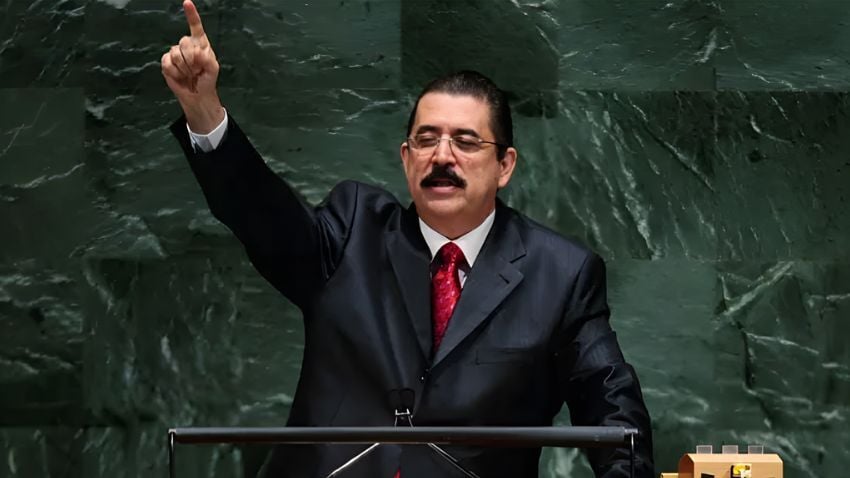
Manuel Zelaya’s confrontational leadership and disregard for institutional limits deepened polarization and triggered the 2009 crisis that destabilized Honduras’ fragile democracy
ZELAYA AND THE END OF THE TWO-PARTY SYSTEM
The unstable balance of Honduras’ post-1982 democracy was shaken in 2009 by President Manuel Zelaya. He was elected in 2005 as a member of the Liberal Party but gradually shifted left during his presidency, aligning himself with regional leaders such as Hugo Chávez. His new political stance openly challenged the traditional elites.
In November 2008, toward the end of his term, Zelaya proposed a national referendum to create a constituent assembly. The opposition viewed the referendum as an attempt to violate Honduras' one-term rule, and the proposal escalated into a political crisis. The Supreme Court intervened and rejected the proposal on the grounds that it could lead to an extension of his presidential term. However, the Supreme Court's decision did not stop Zelaya. As a result, in June 2009, the military intervened, removing him from office and exiling him.
Following this event, Honduran politics inevitably became polarized. Zelaya's supporters formed the LIBRE party, thereby plunging the country into an even more intense ideological conflict. His political movement finally regained power when his wife, Xiomara Castro, won the presidency in 2021, thus avenging the events of 2009. However, despite strong popular support, Castro failed to deliver on her promises to reduce corruption and poverty. In the last election, LIBRE's support fell below 20%.
Although Zelaya's political movement appears to have ended, he exposed Honduras' weak political structure and created a level of polarization that continues to shape Honduran elections today.
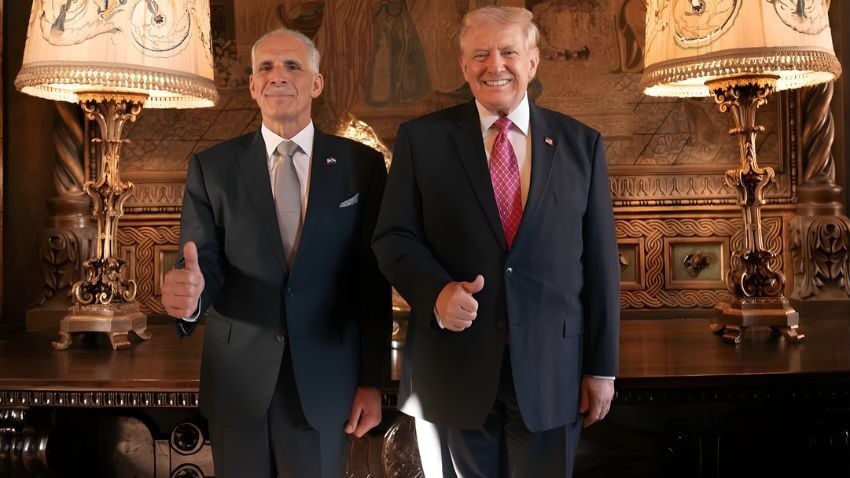
Asfura’s victory reflects Honduras’ strategic importance to Washington, as President Trump’s support strengthens Asfura’s legitimacy while deepening U.S. security and economic influence in the region
ASFURA, WASHINGTON, AND THE U.S. FACTOR
Asfura’s victory should be analyzed within this national and geopolitical context. Honduras holds strategic value for the U.S., and its political cooperation goes beyond domestic politics. Asfura’s security policies and pro-market rhetoric align with broader conservative trends in U.S. and Latin American politics. These are significant developments that should not be overlooked.
From Washington’s perspective, the key priorities are migration management, counter-narcotics cooperation, and limiting China’s influence. Honduras is both a generator of migration and a key transit corridor toward the U.S. border. That is why Asfura’s administration, promising stronger enforcement and closer security coordination, will receive strong diplomatic backing.
As China increases its presence in Latin America, the U.S. has become more attentive to political transitions in the region. Thus, President Trump’s open support for Asfura is another counterbalance measure against Beijing’s influence in Latin America.
Although Asfura does not hold an absolute majority in Honduras, U.S. backing strengthens his external legitimacy and security capacity. This backing could lead to lasting institutional reform, but only time will tell whether Honduras can change its course.
With a revived Monroe Doctrine and ongoing trade tensions between the U.S. and China, geopolitics may work in favour of right-leaning governments in Latin America. One of President Trump’s core priorities is to strengthen and expand the U.S. industrial base in an increasingly fragmented global order shaped by geopolitical crises. Latin America is likely to become a primary market for American companies. As a result, economic and diplomatic ties between the U.S. and Latin American countries are expected to deepen significantly in the coming years.
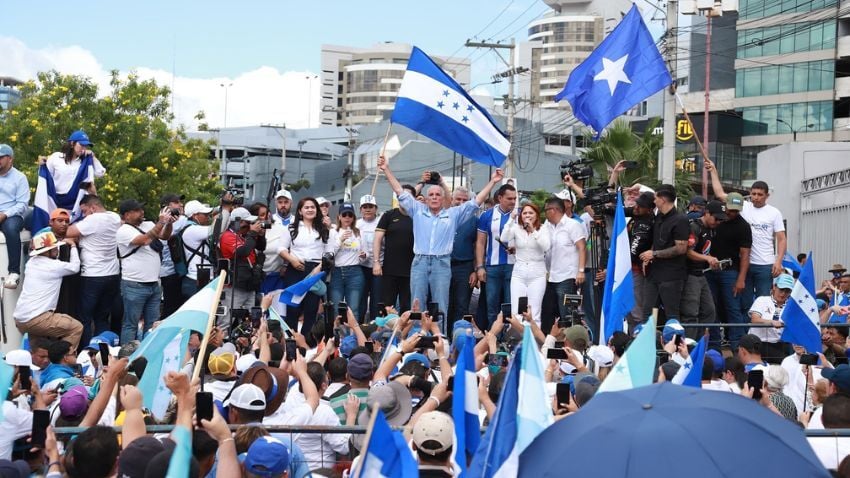
Asfura is combining a hardline anti-crime strategy with pro-business reforms to restore security, attract investment, and stabilize Honduras’ fragile economy
ASFURA’S SECURITY AND ECONOMIC POLICY
Security is the central issue in Honduran politics. For decades, the country has faced high homicide rates caused by drug trafficking, organized crime, and widespread extortion. Groups such as MS-13 and Barrio 18 have influenced entire neighbourhoods, business activity, and migration flows.
Asfura campaigned on restoring order through tougher anti-crime measures, such as anti-gang efforts, and tighter cooperation with U.S. anti-drug agencies. His approach looks like the hardline model seen in El Salvador under Nayib Bukele that prioritizes rapid gang suppression.
Safety is also needed for economic growth, not just for social order. Honduras’ economy depends heavily on remittances, low-value manufacturing, agriculture, and a large informal sector. Income levels remain among the lowest in the region, and poverty is persistent. Weak property rights, bureaucratic inefficiency, regulatory uncertainty, and insufficient access to capital keep Honduras underdeveloped.
Honduras needs predictable rules and true market competition rather than simple political rotation. Thus, Asfura’s pro-business policy promises may initiate institutional reforms that could alter the country’s long-term trajectory.
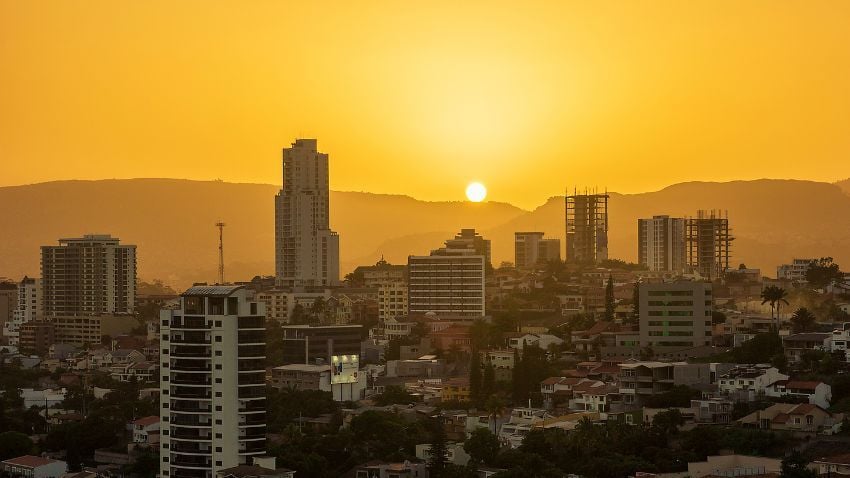
Asfura’s victory signals a shift toward market reform, but Honduras is still far from a reliable expat destination and has significant room for improvement
CONCLUSION
The socialist experiment in Honduras, first under Zelaya and then under his wife Castro, didn’t last long and was abandoned relatively quickly, causing less damage than in some other Latin American countries such as Bolivia and Ecuador. The latest presidential elections reflected a shift in voter sentiment, with many Hondurans expressing support for policies emphasizing market-oriented reforms, wealth creation, and improved security. Finishing far behind conservative Asfura and centrist Nasrallah in the presidential race, the LIBRE candidate Moncade demonstrated that socialism has long been off the agenda for Hondurans.
However, Honduras’ elites must decide whether to continue their old game of economic rents and patronage networks, or deliberately expand economic freedom and open the country to the world in pursuit of genuine growth that addresses the country’s deepest problems.
I value Asfura's renewed emphasis on security and his strong capacity to cooperate with Washington, and I hope that his pro-business stance will create opportunities to develop a free-market economy in Honduras. Otherwise, the cycle of frustration, polarization, and economic decline is likely to continue.
With that said, his victory is proof that people are increasingly rejecting socialism, especially in Latin America. Although Honduras may still be decades away from becoming a reliable expat destination, many other countries have already matured into attractive options, and their appeal is growing rapidly due to the region's increasing importance. Don’t miss out on this opportunity. To explore your options to build a Plan-B, download our special report on Plan-B Residencies & Instant Citizenships.


%20Brazil%20The%20Cash%20Cow%20Opportunity%20That%20I%20Couldn%E2%80%99t%20Ignore%20Any%20Longer-1.jpg?width=800&height=429&name=(BLOG%20BANNER)%20Brazil%20The%20Cash%20Cow%20Opportunity%20That%20I%20Couldn%E2%80%99t%20Ignore%20Any%20Longer-1.jpg)


















 Mikkel Thorup: October 19, 2026