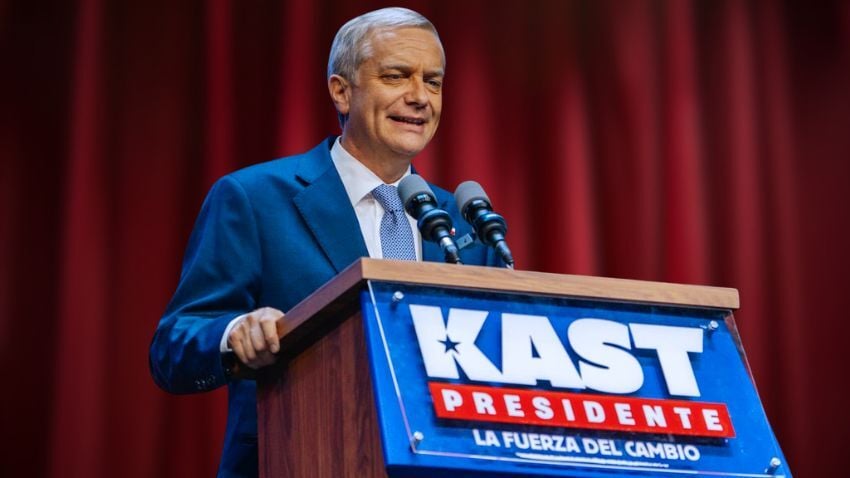
On December 14, 2025, José Antonio Kast, a right-wing politician, was elected President of Chile, receiving 58% of the vote. Kast's clear victory indicates a sharp political correction in one of Latin America’s most advanced economies. After years of rising crime, declining investment, and weakening state capacity in Chile, the election results reflect voter demand for stronger security policies, improved governance, and pro-growth measures.
Chile’s shift is part of a broader regional pattern. Across Latin America, the socialist Pink Tide is rapidly losing ground as political leaders who prioritize public order, fiscal discipline, and institutional stability defeat socialist candidates.
For expats, this shift matters in concrete ways. Chile’s choice of right-wing policies promises a political recalibration toward stability over experimentation and markets over redistribution. The political direction of Latin America has clear implications for those seeking a stable base in the region. In this article, we’ll explore why Kast won the elections, the broader meaning of his win for the region, and why it is important for expats.

Latin American voters are turning away from inefficient socialist models and backing right-wing leaders focused on security, economic stability, and pragmatic, results-driven governance
THE END OF THE PINK TIDE IN LATIN AMERICA
The Pink Tide refers to a wave of left-wing governments in Latin America that emerged primarily in the late 1990s and 2000s. However, the recent rise of right-wing political leaders across Latin America indicates that socialism has been losing ground. Latin American voters have had their fill of inefficient socialist models, which have caused inflation, fiscal strain, and insecurity. They are now backing leaders who emphasize order, market discipline, and pragmatic reform.
The right-wing shift is evident in the rise of politicians such as Daniel Noboa in Ecuador, Nayib Bukele in El Salvador, Javier Milei in Argentina, and Rodrigo Paz in Bolivia. Each of these leaders reflects, in different ways, growing public demand for security, economic stabilization, and governance that prioritizes results over ideology. I analyze Chilean elections in this context, which is increasingly gaining strength across Latin America.

In the 2025 election, Boric supported progressive, identity-based governance, while Kast focused on security, market reforms, and rejecting woke ideology
IDEOLOGICAL CONTRAST IN THE ELECTIONS
The ideological and policy contrast between José Antonio Kast and Gabriel Boric was extremely evident in the 2025 Presidential election. On the one hand, former President Boric represented a continuation of left-wing governance centred on an expansionary state, progressive redistribution, and a gender-based activist social agenda that sought to reshape institutions through identity-based regulations.
On the other hand, Kast’s campaign promised social order, public security, anti-immigration, and market-oriented reforms. He positioned himself as a corrective force against government overreach and social fragmentation. Alongside border security and safety issues, fiscal discipline, private-sector growth, and the restoration of investor confidence were prominent topics during the election.
On social policy, Kast explicitly rejected woke ideology and opposed identity-based governance, expansive cultural regulation, and the politicization of social institutions.
Throughout his political career, Kast has opposed legislation expanding LGBTQ+ rights, such as same-sex marriage. He has also opposed gender-based activism, arguing that left-wing factions were using identity-driven policies to manipulate social debates and asserting that such activism diverted the state from core responsibilities such as public safety and family stability.
However, the most decisive debate concerned immigration and public security. Kast adopted a hard-right position focused on border control and enforcement, emphasizing state authority and public order over permissiveness.
THE HISTORICAL WEIGHT OF KAST’S VICTORY
Kast’s victory carries great historical weight. With his election, Chile installs only its second right-wing president since the Pinochet era, following Sebastián Piñera, whose approach to social and cultural policy was not conservative at all. Kast is explicitly socially conservative and openly critical of progressive identity politics, gender ideology, and cultural activism within the state. This is why Kast's victory represents a shift toward a values-based conservative alternative. The widespread view that recent social policies have transcended economic boundaries and become cultural extremism has enabled conservatism to regain ground in Chile.
His social conservatism was also supported by the rising concern of voters regarding security issues, which they believed had surged because of weak border controls that permitted organized crime to rise. As a consequence, Kast called for stricter immigration enforcement, stronger border protection, and tougher action against organized crime in response to growing public concern over everyday safety and cross-border criminal networks. These policy shifts should be seen as a clear political correction.
WHAT KAST SIGNALS FOR MARKETS AND EXPATS
Chile is close to my heart. Beyond being a beautiful and remarkable country, Chile is the birthplace of my third child, who now holds a Chilean passport. I don’t just believe in Chile’s future—I’ve invested in its promise. The significant change in the political landscape supports my choice.
Kast’s political coalition raises hopes for greater policy predictability, support for private-sector growth, and a deregulation process, all of which are necessary for economic dynamism and growth.
Chile can restore its credibility, attract long-term capital, and reassert itself as one of Latin America’s most stable and investment-friendly economies. Of course, outcomes will ultimately depend on execution and legislative dynamics. Nevertheless, Chile has great potential for expats seeking destinations for long-term stability.
Kast’s victory is an obvious validation of the growing pattern in which voters are prioritizing market-friendly governance, fiscal discipline, and public order after years of volatility associated with socialist governments in Latin America. This trend shows a gradual rebalancing toward policies that favour foreign investment, institutional capacity, and economic realism over managed economies and social engineering across the region.
While so-called developed economies don’t know which way to turn, struggling with rising public deficits, declining economic efficiency, and eroding social cohesion, many countries in Latin America are offering a predictable, peaceful, and safe future.

For expats and investors, Chile points to stabilization and predictability, while Latin America still offers diverse Plan-B options
CONCLUSION
Kast's victory is not a radical departure from Chile's established institutional structure, which supports political and economic stability. Rather, it is a political correction within the country's well-established democratic system. Voters made it clear that Chile's urgent needs are greater security, fiscal discipline, and government capacity. Government intervention in social matters through progressive policies has also created great discontent among Kast’s supporters.
For expats and investors, Chile is signalling stabilization rather than disruption, a recalibration away from policy volatility toward predictability and balance. Although we will need to monitor Kast’s performance in the office, the direction of travel suggests adjustment and consolidation. While observing developments in Chile, I must remind you that many countries in Latin America are ideal for expats with different priorities. If you have not yet started to consider your options for Plan-B, download our free special report on Plan-B Residencies & Instant Citizenships.



%20Brazil%20The%20Cash%20Cow%20Opportunity%20That%20I%20Couldn%E2%80%99t%20Ignore%20Any%20Longer-1.jpg?width=800&height=429&name=(BLOG%20BANNER)%20Brazil%20The%20Cash%20Cow%20Opportunity%20That%20I%20Couldn%E2%80%99t%20Ignore%20Any%20Longer-1.jpg)



















 Mikkel Thorup: October 19, 2026