I wrote about Peru’s election chaos before and made a simple argument: a country doesn’t need tanks in the streets to scare capital away. Sometimes, all it takes is an electoral office that can’t deliver ballots on time. The real story was about fragility and weak institutions.
Peru eventually held its presidential runoff on June 7, 2026. After weeks of vote counting, legal challenges, and political disputes, the electoral process concluded on June 30, when the final results confirmed Keiko Fujimori as the winner with 50.135% of the vote, narrowly defeating the socialist candidate Roberto Sánchez. The razor-thin margin brought an end to one of the closest and most contentious presidential elections in Peru's recent history.
In this article, I will explain who Keiko Fujimori is, what she promised during her campaign, and what her presidency is likely to mean for Peru, its economy, and the country's expat community.
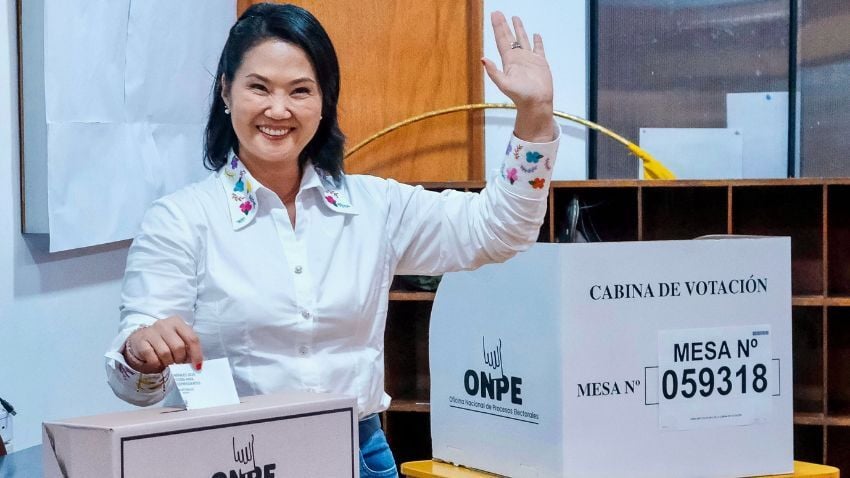
Keiko Fujimori is promising order, security, and a market-friendly Peru, but her name still carries the full weight of the Fujimori dynasty
WHO IS KEIKO FUJIMORI?
She is, first and foremost, the heir to a political dynasty. Keiko Fujimori is the daughter of Alberto Fujimori, who ruled Peru from 1990 to 2000. To his supporters, he was the man who crushed hyperinflation and defeated the Shining Path, the Maoist guerrilla movement that launched an armed insurgency against the Peruvian state in 1980. To his critics, he was a president convicted of crimes against humanity for death squad killings and implicated in numerous corruption scandals. He was pardoned, regained his freedom, and died in 2024. Both versions of his legacy coexist, and for the Fujimori family, they are not mutually exclusive.
Keiko Fujimori grew up at the center of that political machine. At just 19, after her parents separated in 1994, her father appointed her Peru's First Lady. Yes, his daughter rather than a spouse. She held the largely ceremonial position until his government collapsed in 2000. Now 51, she has led the Fuerza Popular party for years and has been one of the country's most prominent political figures for over a decade. Before her victory in 2026, she had lost three presidential elections: to Ollanta Humala in 2011, to Pedro Pablo Kuczynski in 2016 by just 0.2 percentage points, and to Pedro Castillo in 2021 by roughly 44,000 votes.
Her political career has also been marked by legal controversy. Fujimori spent 16 months in pre-trial detention over money-laundering allegations related to illegal campaign financing. Although she has consistently denied wrongdoing and has not been convicted in those proceedings, her election means that Peru's new president is someone who once spent more than a year in pre-trial detention while facing one of the country's highest-profile corruption investigations.
WHAT HAS SHE PROMISED TO DO?
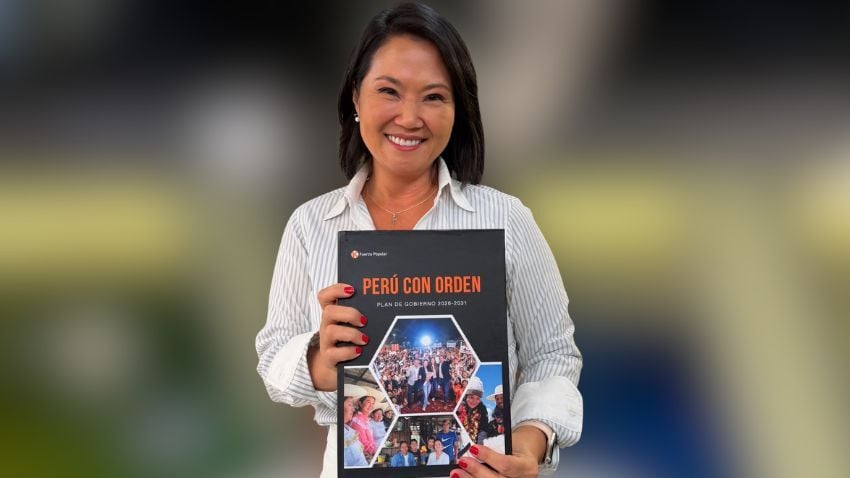
Her campaign ran under one motto: “Perú con Orden (Peru with Order).” Everything flows from it. Like in other right-wing electoral victories in Latin America, security comes first in presidential campaigns. Crime, extortion, and homicide have climbed for years in Peru, and Fujimori built her pitch on "mano dura" (the Iron Fist). Her opening moves are expected to be the following:
-
Maximum-security mega-prisons
-
Police and military deployed jointly on the streets, enabled by emergency decrees
-
10,000 interconnected surveillance cameras
-
A thousand "smart" patrol cars
-
200 modernized police stations
-
AI tools to flag corruption in public procurement
It sounds like Bukele’s playbook with a Peruvian accent, but she insists that it will remain within democratic limits.
The economy comes second. Here she’s an orthodox conservative. She has promised to protect private investment, hold fiscal discipline, and build a market-friendly framework. She also emphasized staying friendly to the mining sector, as copper is the country’s lifeblood. That is why there would be no nationalizations, no rewriting of the constitution, and no economic experiments. In one line, Fujimori is promising the 1990s without the dictatorship.
In Peru, even hope comes with a reminder: real change takes more than one election
CAN KEIKO FUJIMORI ACTUALLY CHANGE PERU?
Although we need to be cautious about our expectations for Peru, we can stay hopeful because Fujimori has real potential to put the country back on track. However, a president is not a magic wand. Peru has gone through a long line of leaders in less than a decade, with impeachments, resignations, and even one former president serving time in prison. Fujimori inherits the same Congress filled with small parties, the same prosecutors, and the same courts.
Her party performed well in the legislative elections and will hold a sizeable bloc in Congress. However, it does not have a majority. As a result, Fujimori will have to govern by building coalitions and negotiating vote by vote within a political system that often rewards blocking the president rather than working with them.
That is why Fujimori's agenda will not be easy to implement. Even so, if you zoom out, this moment may prove different for Peru. Fujimori's victory is not just a Peruvian story. It is also part of a broader regional trend, one that could reshape the political balance across Latin America.
PERU AND THE GROWING RIGHT-WING WAVE
For most of the last twenty years, Latin America has been governed by left-wing governments from Mexico City to Buenos Aires. However, that era is over now. Argentina elected Javier Milei, the libertarian who wielded a chainsaw, and subsequently achieved significant success in the midterm elections. El Salvador’s Nayib Bukele built the safest country in Latin America and turned mass incarceration into an export brand. Ecuador elected the business-friendly Daniel Noboa. Bolivia ended nearly two decades of socialist rule. Chile, Honduras, Costa Rica, Paraguay, and Panama all sit on the right. Colombia has sent a right-wing candidate into its runoff, and has closed the book on Gustavo Petro’s socialist experiment. In Brazil, we need to wait until the October elections to see how developments will unfold.
The region that spent a generation experimenting with socialism is now turning to security and free markets. With Keiko Fujimori's victory, Peru has now joined that broader regional shift.
WHAT THIS MEANS FOR YOU
A rightward turn means lower taxes, friendlier rules for private entrepreneurs, fewer nationalization threats, and a warmer welcome for foreign investors and expats. If Latin America's notorious reputation for its old, confiscatory politics has put you off, the current map presents its friendliest appearance in the last two decades.
A regional shift matters because it creates an ecosystem where governments reinforce each other through shared policies, producing harmony rather than conflict across the region. Apparently, voters have also been influenced by other countries' achievements, encouraged by the idea that they can actually change their own country's course for the better.
In addition to the right turn in Latin America, the Shield of the Americas, a U.S.-led Western Hemisphere security initiative, held its first summit at Trump National Doral in Miami on March 7, 2026. The initiative is built not only on joint security policies and operations, but also on a shared political will to defend and support member states, seventeen countries at present. You may also see it as a policy change of the U.S. reasserting its dominance in Latin America against Chinese influence in the region. In whatever way you read the Shield of the Americas, it is telling you a story about a changing trend with strong wind behind it.
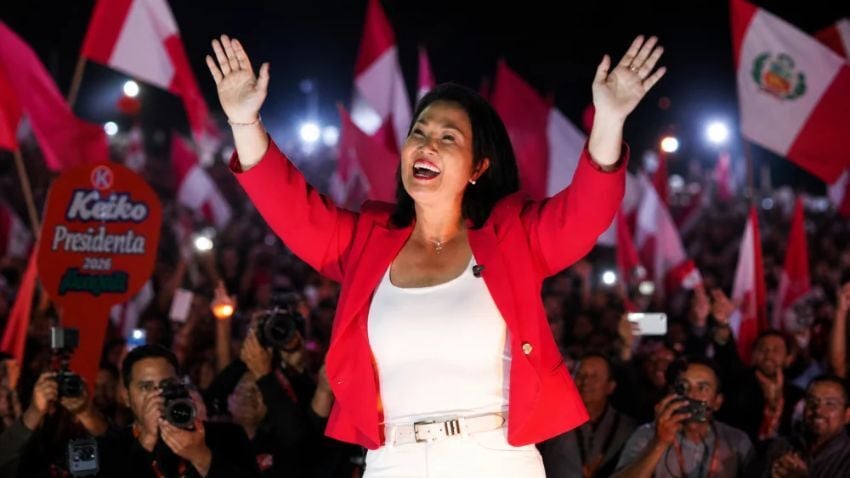
Keiko Fujimori finally won the office she has pursued for fifteen years, but Peru’s uncertainty is a reminder that your family’s Plan-B should not depend on any single election
CONCLUSION
The first round in Peru served as a warning about institutional fragility. The second round, however, showed that even fragile political systems can ultimately produce a clear outcome. It also reinforced a broader regional trend, as Peru joined the growing list of Latin American countries moving to the right.
Keiko Fujimori spent fifteen years and four presidential campaigns chasing this office. She has finally won it. Whether she can achieve anything lasting with it depends on institutions that she did not build and cannot easily fix.
However, you don't have to wait for political change in countries that are only beginning to embrace pro-market policies and a tougher approach to public security. There are already excellent expat destinations in the region that offer economic and political stability, territorial taxation, clear residency pathways, and modern amenities at a low cost of living. Panama and Paraguay are just two strong examples, with institutions and policies that you can incorporate into your long-term plan.
I will watch what happens next in Peru. Just don’t bet your family on it. You must build a structure that survives whoever wins. If you want a place to start, download our free special report, Plan-B Residencies & Instant Citizenships.





















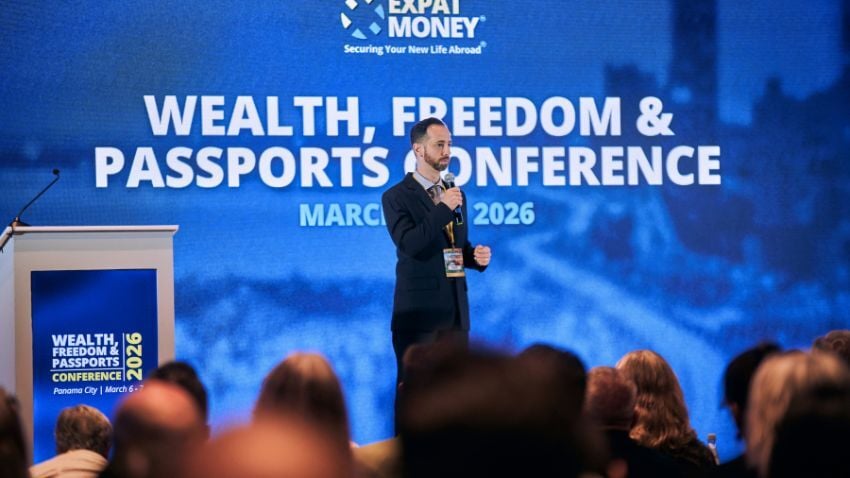
 Mikkel Thorup: July 20, 2026