Winter is coming, and Europe is not ready for it. EU gas storage stood at 65.4% as of September 1, 2026, well below the five-year average, and Europe's benchmark natural gas price has risen 159% in a year. This will be the fifth consecutive winter in which European gas supply has been a live security concern.
I have been warning about this since well before it was fashionable. Europe spent years reducing its own energy production while assuming it could always buy what it needed from somewhere else. That assumption is now being tested by war, damaged infrastructure, vulnerable shipping lanes and political decisions that have left ordinary Europeans with fewer options.
Expensive energy does not stay an energy problem for long. Factories shut down. Businesses move somewhere cheaper. Then the restrictions start arriving: what you can heat, what you can cool, what you can drive, what you are allowed to install in your own house.
In this article, I will cover how the EU lost its suppliers, how its own policies affected energy supply, and why Latin America keeps coming up as the answer.
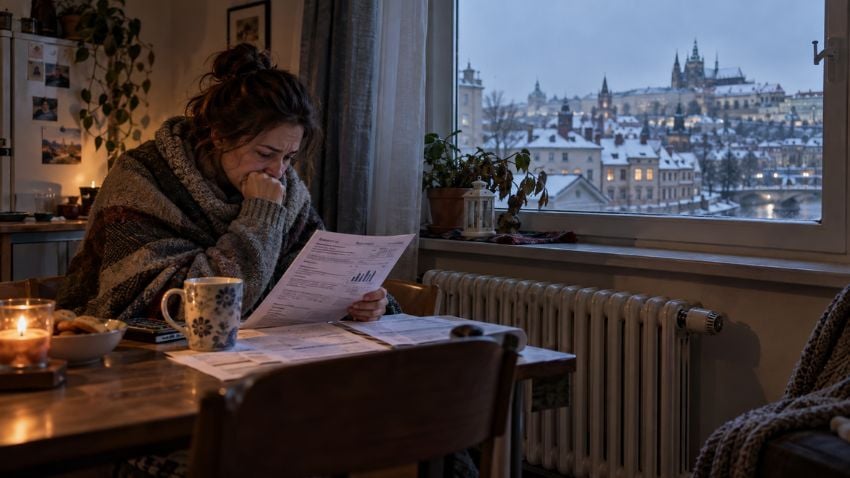
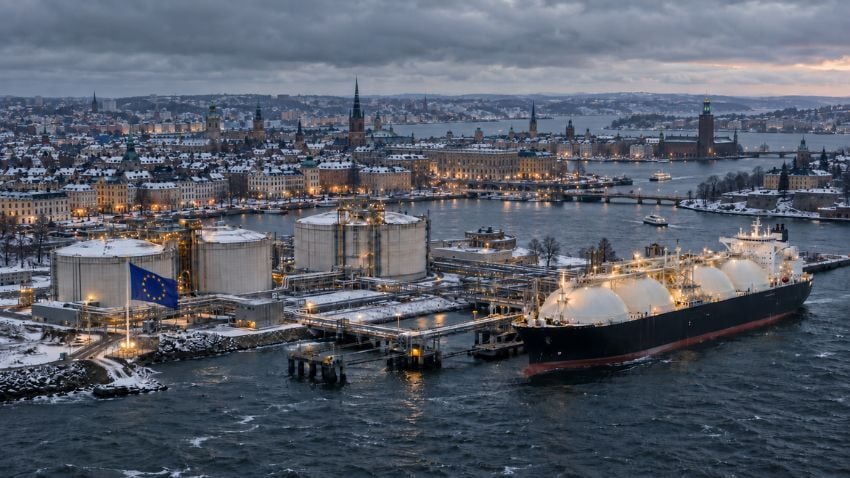
Europe’s energy model has become brutally expensive: high taxes, costly imports, and policies that restrict domestic production all end up on the same bill paid by households and businesses
THE EU HAS NOTHING TO BURN
If you want to see what energy dependency actually costs, look at Europe. The EU imports 57% of the energy it uses, over 95% of its crude and more than 80% of its gas, and that came to €336.7 billion in 2025. That was the cheap year. In 2022, the bill was €693.4 billion. Put that on a household budget. Your biggest monthly line, bought from people you cannot negotiate with, priced by events on the other side of the world.
Some of the shortfall is due to geology. The rest was chosen. Groningen was the largest gas field in Europe until the Dutch government wound it down and closed it. Germany banned fracking outright, which did not stop Germans from burning fracked gas. It only meant somebody else fracked it and charged German buyers for shipping it. Britain, outside the EU but working from the same assumptions, spent twenty years layering taxes and licensing delays onto the North Sea until investment went elsewhere.
They called it "climate leadership". Europe did not reduce its consumption of hydrocarbons by much at all. It reduced its own production of them and bought the difference from Russia, Qatar and the U.S. The emissions moved abroad, but the dependence stayed home. This level of hypocrisy is sheer nonsense.
Brussels can do little about any of that, and a great deal of its energy policy has been built around the one thing it can control, which is European consumption. It set a 15% demand reduction target in 2022, extended it into 2024, then followed it with a voluntary recommendation running to March 2025. Then you have the efficiency directives, the insulation mandates, the thermostat rules for public buildings. As you see, every single measure is about making Europeans use less. Not one of them puts a cubic metre of gas into the system. Brussels chose not to produce the energy. Now that there is a shortage, its answer is to tell you to use less of it.
EUROPE HAS PUNISHED ITSELF
Russia was supplying about 45% of the EU's imported gas before the war in Ukraine. It is 12% now, and Brussels treats that as one of its great achievements. Fine, but replaced with what? Bought from whom, shipped how, and at what price? Nobody in Brussels seems keen to answer that part.
In January 2026, it stopped being policy and became law. The EU will stop imports under the remaining long-term Russian pipeline gas contracts in autumn 2027, and about 35 billion cubic metres a year comes off the market on that timetable.
Strip out the language about values and independence and the trade looks like this. The EU gave up its cheapest supplier, on a schedule it has committed itself to in law, for greater reliance on LNG markets in which Europe competes with Asian buyers. It did this while its own production was falling and before securing a replacement at comparable cost.
THE GULF IS CLOSED
The plan was always LNG. Build the terminals, sign the contracts, ship it in from the U.S. and Qatar. Europe spent more than three years and a lot of money on that answer.
Before the numbers, understand the problem, because most commentary gets this wrong. This is not a production crisis. Oil and gas still exist. This is a deliverability crisis. Supply is not what sits in the ground somewhere. Supply is what can physically reach a buyer through an open shipping lane, on a vessel somebody will insure, at a price that works commercially and politically. Those are very different things, and Europe built its entire energy strategy on the assumption they were the same.
However, on February 28, 2026, the U.S. and Israel started bombing Iran, and Iran shut the Strait of Hormuz. Qatar ships about 93% of its LNG through there. Its exports have dropped by as much as 96%, roughly $24 billion USD in lost sales, and European buyers have been watching cargoes get cancelled since the spring. Reopening the strait will not fix that quickly. The loading facilities took damage, and Gulf insurance now costs several times what it did in January 2026.
Crude found another way out. The Saudis have a pipeline that runs 1,200 km from the eastern oilfields to Yanbu on the Red Sea, skipping Hormuz altogether, and Aramco pushed it to its full 7 million barrels a day by late March. Exports through Yanbu went from about a million barrels a day in February 2026 to roughly five million.
However, that did nothing for gas. You cannot put LNG in an oil pipeline. It just kept crude prices off the worst levels, right up until this month, when drone strikes hit the line and took 4 to 5 million barrels a day out of the market.
In July 2026, the Houthis blockaded Saudi ports, and tankers carrying Saudi crude began turning around mid-voyage. Then on September 11, 2026, they seized Mayun Island and a stretch of the Yemeni coast facing Bab el-Mandeb. That strait is the southern entrance to the Red Sea, and the way to Suez, and about 12% of global seaborne trade passes through it. Ships are still getting through. They do so at the discretion of people who now control the coastline and have the weapons to stop them.
That leaves Europe buying energy that has to clear two straits, one held on its northern shore by Iran and the other overlooked by Iranian arms. The alternative is around Africa: a Gulf-to-Rotterdam voyage stretches from 19 days to about 35.
EUROPE SHUT DOWN WHAT IT HAD LEFT
Two wars closed the supply lines, but the EU did the rest to itself. Germany set the pattern, shutting its last three reactors on April 15, 2023, in the middle of the worst energy crisis Europe had seen in fifty years. The lost output was covered mainly with imported electricity from neighbours, much of it French nuclear and Scandinavian hydro. German industry now pays some of the highest electricity prices in the developed world, and its chemical and steel companies have been moving production abroad ever since.
Spain is walking the same road. In 2019, it decided to close all seven of its reactors by 2035, about a fifth of the country's electricity. Then, in April 2025, the Spanish and Portuguese grid went down, and 60 million people spent half a day without power. Last month, Madrid gave Almaraz and its two reactors until 2030, citing the Middle East, Ukraine, price swings and energy security. Nothing changed about the plant. What changed is that closing it had become politically impossible, so two got a reprieve, and the other five stayed on the calendar.
The horrible carbon tax is the part almost nobody is paying attention to. ETS2 puts a carbon tax on the fuel you burn at home, heating, petrol, diesel. Europe is short of energy, industry is leaving, people died in their flats last summer, and Brussels looked at all of that and decided what the situation really needed was another charge on heating oil.
It was meant to start in 2027. It starts in 2028 now, because the legislators went back and amended the European Climate Law to delay it, on the grounds that energy had become too expensive to add a carbon price on top of. Read that again. The people who wrote the tax have formally conceded that Europeans cannot afford it, and they postponed it rather than scrap it. It is still coming. They just want you to be slightly less broke when it arrives.
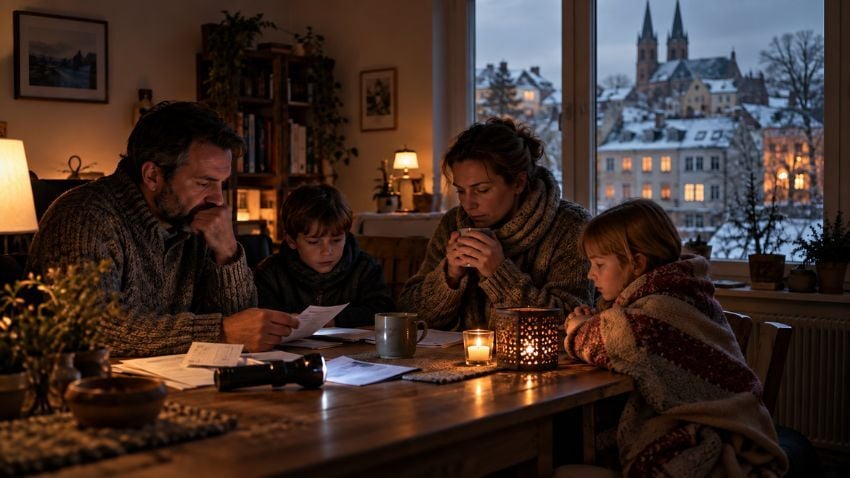
When governments cannot guarantee enough energy, they stop asking how to produce more and start telling you how much you are allowed to use
WHEN SUPPLY RUNS SHORT, THEY RATION
A government that cannot produce energy has one tool left. It can tell you to use less. Spain did this by law in 2022. Shops, offices, cinemas, stations, and airports could not set air conditioning below 27°C in summer or heating above 19°C in winter. Doors had to stay closed while the cooling ran, and shop window lights went off after closing. France began fining businesses up to €750 for running air conditioning with the door open. These were emergency measures, and most have since expired, but they reveal exactly what will happen in the next crisis.
Britain has no temperature rule. Instead, in June 2026, when the country hit nearly 40°C, councils in some London conservation areas ordered residents to tear out air conditioning they had already bought and installed, then sent officers to check. London planning policy treats mechanical cooling as a last resort, permitted only once shading and ventilation have been tried and found wanting.
Continental Europe does not do much better than the UK. Only around one in five European buildings has air conditioning, even though summer temperatures can exceed 40°C. Here is what that costs. A study published in Nature Medicine estimated 62,775 heat-related deaths in Europe between June and September 2024, up 23.6% from the previous summer. These are preventable deaths, in the richest countries in Europe, where the grid exists, and the technology has existed for a century.
The political aspect bothers me most. Groups that define themselves as pro-worker and pro-labour have created an economy where people collapse from the heat in their workplaces. What benefit does this offer the ordinary worker? A man sweating through his shift in a 40-degree warehouse is neither more productive nor safer. It seems no one in Brussels ever asked him about this.
I built my house here in Panama and put in central air. Two units, each about two and a half metres tall, run the whole house. In the part of the world Europeans still call the third world, even the poorest households have air conditioning. Nobody here treats cooling as a luxury, and no official has ever suggested my thermostat is his business.
Rationing is what a government does when it has run out of supply and will not say why. These rules are not environmental measures. They are an admission that Europe does not have enough energy for the way its people want to live.
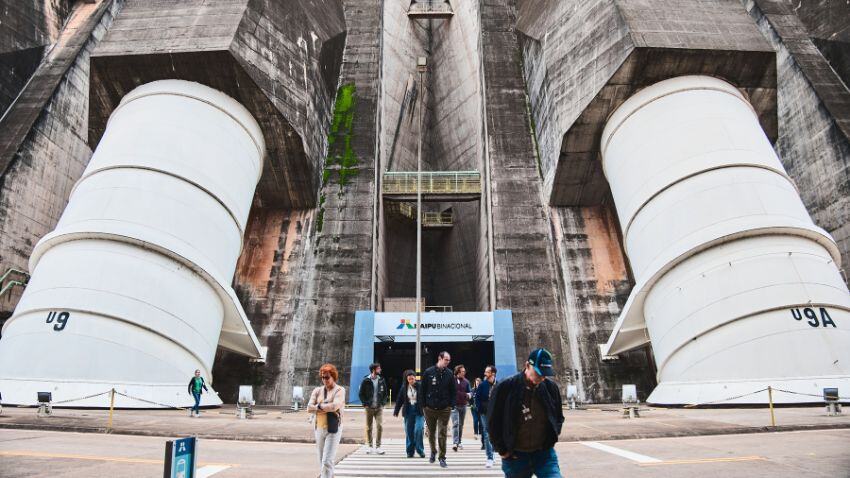
Paraguay generates surplus energy due to the Itaipu Dam. As a result, this small country holds an advantageous position in regional energy markets, becoming a hub for energy-intensive industries
LATIN AMERICA DOESN'T HAVE THIS PROBLEM
Everything above describes a continent that buys its energy from a region at war after having destroyed its own alternatives. However, things are quite different in Latin America. Global crude production is expected to grow by about 800,000 barrels a day this year, and Brazil, Guyana, and Argentina account for half of that. Guyana pumped almost no oil in 2020. It now produces over 900,000 barrels a day, in a country of fewer than a million people. Argentina's shale has gone the same way. Vaca Muerta was marginal a decade ago and supplies 72% of national crude today, a record set in July.
Electricity is an even greater advantage for the region. Around 60% of Latin American power comes from renewables, and hydropower is the largest single source across most national grids, generated domestically on rivers within the borders of the countries that use it. No tankers, no chokepoints, no bidding against Asia for a cargo.
Paraguay generates all of its electricity from hydro, sells the surplus to Brazil and Argentina, and has some of the cheapest industrial power in the hemisphere. Its economy grew 6.6% in 2025. Costa Rica has generated more than 90% of its electricity from renewable sources for years. Outside the dry season, Panama generates roughly 84% of its electricity from domestic renewable sources.
Run that forward ten years. A decade of stability, security, low taxes and deregulation, in a region that already produces its own power and is discovering its own oil. Then look at where Europe will be in 2036 on its current trajectory. I do not think the comparison will be close, and I do not think we will still be using the same labels for these two places. The labels of first world and third world are flipping in front of our very eyes.
WHY EUROPEANS NEED A PLAN-B OUTSIDE OF EUROPE
The problem with keeping your entire life inside one jurisdiction is that you are exposed to every decision that jurisdiction makes. Energy policy is only one example. All governments are oppressive to some degree, but the EU, a supranational entity capable of turning your life upside down with a single directive, is uniquely obsessed with regulation. This is called exposure risk, and the only way to reduce it is to plan for jurisdictional diversification.
You should stop keeping everything in a single jurisdiction. That can mean maintaining residency abroad, holding bank accounts in a different financial system, establishing legal structures, and purchasing real estate across multiple jurisdictions.
Latin America is where this works most cleanly at the moment. Several countries in the region operate territorial tax systems, offer straightforward residency programs, and provide a standard of living that costs considerably less than the equivalent in Western Europe. Panama, Paraguay, and Costa Rica are the three countries worth considering.
Panama is the largest international banking centre in Central America, has long-established residency programs for people with income or investment, and uses the U.S. dollar, which removes the currency question entirely. Energy-independent Paraguay provides easy residency programs for expats and launched the Investor Pass Program, which streamlines the permanent residency process.
Costa Rica has welcomed foreign residents for decades as an established expat destination and has not maintained a standing army since 1948. All three countries run programs under which an investment in real estate can qualify you for residency, so the money that buys your position is still your money.
Europe’s energy crisis may eventually ease, but the lesson is permanent: build your Plan-B before the next crisis forces you to
CONCLUSION
Europe's problem is not just this winter. It is that a continent dependent on imports for most of its energy has spent a decade closing what it had, tying its remaining supply to shipping lanes controlled by people at war with its allies.
The energy shortage will ease at some point. Hormuz will reopen. The war in Ukraine will end. Gas prices will fall from where they are now. But even if oil routes reopen and wars come to an end, prices will not come down immediately. Loading facilities were bombed, and terminals were damaged, and that infrastructure takes years to rebuild rather than weeks. Shipping companies that rerouted around Africa will not reroute back on the first calm week.
What exactly is the plan? Sit tight and wait for the world to settle down on its own? Europe has spent more than three years doing that, and each winter has been harder than the one before it. Waiting is not a strategy. It is what you do when you have run out of them.
You can watch that happen from inside, or you can arrange things so it concerns you less. The second option takes longer than people expect. I have watched people start this process in a panic, and panic is expensive. Residency applications, documents, and banking relationships all take time. It is the kind of work you have to do before you need it, which is exactly why most people leave it until they need it.
Panama, Paraguay, and Costa Rica are not hiding places. They are functioning countries with territorial tax systems, cheap domestic power, and governments that are not trying to fund wars and a green transition with taxes on your wealth. That is a big difference, and it will help you protect what you have built.
If you want to understand what is available and how the process actually works, start with our special report on Plan-B Residencies & Instant Citizenships.


%20Brazil%20The%20Cash%20Cow%20Opportunity%20That%20I%20Couldn%E2%80%99t%20Ignore%20Any%20Longer-1.jpg?width=800&height=429&name=(BLOG%20BANNER)%20Brazil%20The%20Cash%20Cow%20Opportunity%20That%20I%20Couldn%E2%80%99t%20Ignore%20Any%20Longer-1.jpg)


















 Mikkel Thorup: October 12, 2026