Singapore is often described as a city that works, and it totally deserves its reputation. This small island nation in Southeast Asia has built one of the most efficient and economically advanced societies in the world. Skyscrapers rise above orderly streets, public transport runs on time, corruption levels are so low, and services always operate on time. It is easy to see why Singapore attracts professionals, entrepreneurs, and multinational firms. With its limited government and a free-market economy, Singapore transformed from a swamp into one of the world's richest countries. Currently, Singapore may have more millionaires per capita than many other countries.
However, beneath the polished skyline, you will find a highly structured and tightly regulated society. The cost of living is also among the highest in the world. Immigration rules are selective and increasingly strict. Political life is stable, but democratic competition is limited. Some may think Singapore is the model of modern governance. However, others may also believe it is overly managed.
I have to say that Singapore is one of the most impressive urban systems I have ever seen. However, if you are considering it as a long-term base, especially as part of a Plan-B strategy, you need to understand both its strengths and its limits. In this article, I will break down the pros and cons of living in Singapore.
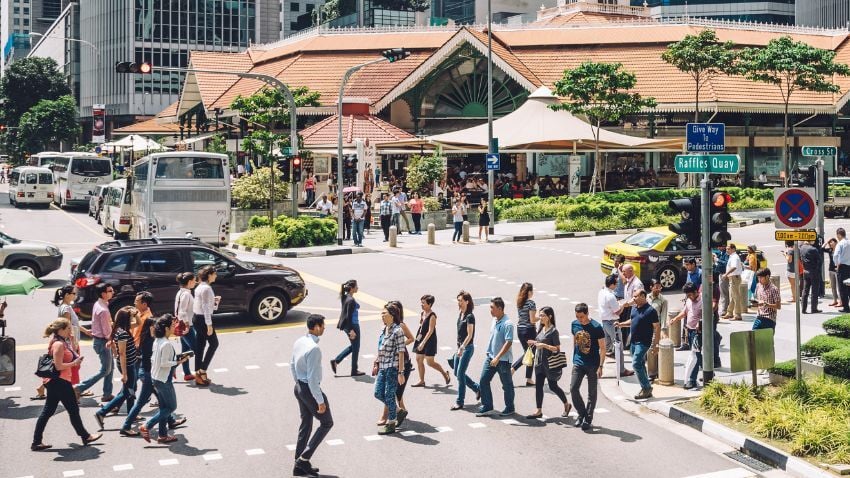
Singapore shines with efficient digital government, world-class transit, safe streets, top healthcare, strong finance, amazing food and global flights. English makes settling in easy
PROS OF LIVING IN SINGAPORE
Let’s begin with what Singapore does exceptionally well. This small island nation has an efficient government, an advanced economy, established public safety, and high-quality healthcare services.
A COUNTRY THAT RUNS WITH PRECISION
Singapore government services are digitized and streamlined. Permits, visas, tax filings, and business registrations are handled through clear systems with minimal friction. Even its bureaucracy is predictable and consistent, at least more bearable than most Western countries. Public transport is among the best in the world. The subway system is clean, punctual, and safe. Roads are orderly, public spaces are maintained to extremely high standards, and infrastructure rarely fails.
GLOBAL BUSINESS HUB
Singapore is one of the world’s leading financial centers. It competes with London, New York, and Hong Kong as a regional headquarters hub. Corporate tax rates are competitive, and the regulatory environment is pro-business. Many multinational corporations, tech firms, commodity traders, and wealth management companies use Singapore as their Asian base. The banking system is sophisticated enough and internationally connected. For global companies and professionals, Singapore’s financial ecosystem is credible and operationally secure.
SAFETY AND RULE OF LAW
Singapore consistently ranks among the world's safest countries. Violent crime is rare. The homicide rate is 0.1 per 100,000 people, and Numbeo’s Safety Index scores Singapore around 77 out of 100, which is impressive. Laws are strictly enforced, and vandalism, disorderly conduct, and financial crimes are prosecuted seriously. Thus, you feel safe both day and night.
STRONG HEALTHCARE SYSTEM
Singapore’s healthcare system is widely regarded as one of the best in Asia. Hospitals are modern, well-equipped, and staffed by highly trained professionals. The country consistently ranks near the top in global health outcomes. Appointments are generally accessible, and wait times are shorter than in many Western countries. However, private healthcare insurance is common among expats and provides access to top-tier private facilities. Private healthcare insurance costs range widely from $1,000 USD to more than $15,000 USD, depending on your age, health risks, and coverage.
FOOD, CONNECTIVITY, AND LIFESTYLE
Of course, you can’t talk about Singapore without mentioning the food. When you are in Singapore, you should definitely try the Hawker centers. These are open-air food courts that provide affordable, high-quality local dishes. However, if you prefer Michelin-starred restaurants, they are also within close range since Singapore is one of the richest countries in the world. The variety of food is also great, with Chinese, Malay, Indian, Western, and fusion cuisines.
Connectivity isn’t a problem in Singapore, thanks to Changi Airport, one of the best-connected airports in the world. You can easily find direct flights linking Singapore to Europe, Australia, the Middle East, and North America.
What is even better is that English is one of the official languages, which significantly reduces integration issues compared to many Asian countries.
CONS OF LIVING IN SINGAPORE
Despite its strengths, Singapore has many downsides, especially for long-term expats looking for a strategic destination for building Plan-B.
EXTREMELY HIGH COST OF LIVING
The first thing you should consider is the extremely high cost of living in Singapore. It is among the most expensive cities in the world, and housing might feel unaffordable for many. Including rent, the overall cost of living in Singapore is around 30% higher than in the U.S.
Rent for centrally located 3-bedroom apartments can easily exceed $5,000 USD per month. Buying property is even more challenging for foreigners because of restrictions and additional stamp duties.
Because of the Certificate of Entitlement (COE) system that artificially limits vehicle ownership, car ownership requires a fortune. For example, you must pay around $160,000 USD for a Volkswagen Golf. As a result, most residents "prefer" to use public transport. The government thinks that this is the only way to manage congestion.
LIMITED LONG-TERM OPTIONALITY
As a small island nation, Singapore is very restrictive about immigration. Permanent residency approval is competitive, and even if you have a job offer, high salary thresholds (around $4,800 USD) limit entry. Citizenship is even more selective and usually requires renouncing prior citizenship.
Singapore does not offer a casual path to permanent settlement because it prioritizes economic contribution and demographic planning. For expats seeking a second passport or a fast-track naturalization route, Singapore isn’t the option you are looking for.
POLITICAL STRUCTURE AND CIVIL LIMITS
Although Singapore is politically stable, elections here are strictly controlled. The ruling party has governed since independence, but public dissent is limited thanks to the economic wealth created by the system. Nevertheless, this trade-off produces stability and growth. However, if you prioritize political freedom, you may not feel comfortable.
SMALL SIZE AND STRUCTURAL LIMITS
One other thing to consider before moving to Singapore is its limited and undiversified geography. It has managed parks rather than wild landscapes. If you want a weekend escape, you must fly to neighbouring countries. That is why you can’t compare Singapore with some of the countries in Latin America, like Panama. You may not fully enjoy the international community, as many expats treat Singapore as a temporary posting rather than a permanent home.
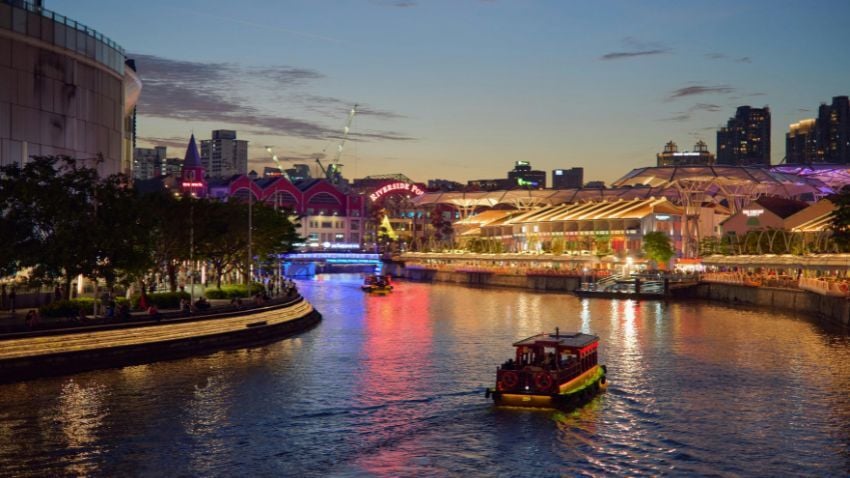
Singapore offers safety, efficiency, economic strength and global connectivity that few countries can match. Yet high costs, strict immigration and limited freedoms mean it suits only a narrow group seeking a stable Asian base
CONCLUSION
Singapore is impressive in many ways, and it is certainly one of the most important urban experiments in the world. I was truly amazed during my time there by the country’s rapid development and how much it achieved in such a short period. It offers safety, efficiency, economic strength, political stability, and global connectivity that few countries can match. For professionals, executives, and entrepreneurs seeking a stable Asian base for their career and business, it is a real deal.
However, Singapore works as a Plan-B only for a very limited group of expats. Immigration rules aren’t straightforward, the cost of living is extremely high, the citizenship path is not advantageous, and limited civic freedom may make you uncomfortable.
That is why if your goal is long-term optionality and regional flexibility, you may eventually need a better strategy. If you’d like to consider your options for Plan-B, download our special report on Plan-B Residencies & Instant Citizenships.




 Mikkel Thorup: April 10, 2026