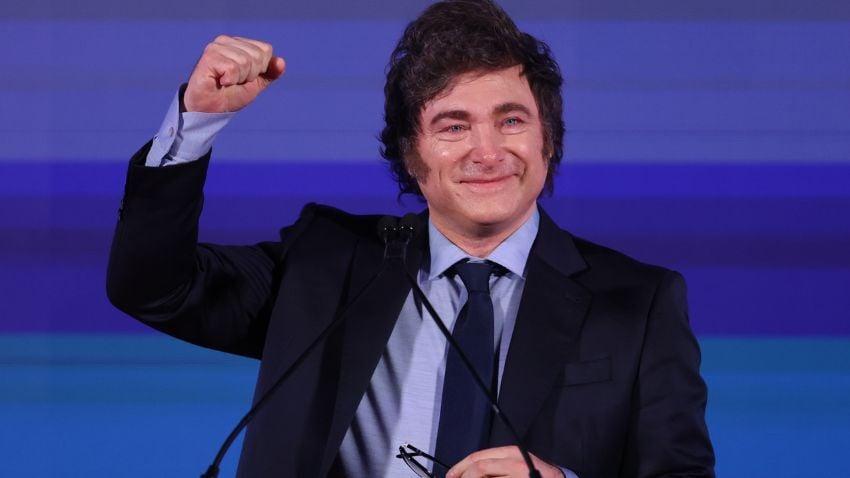
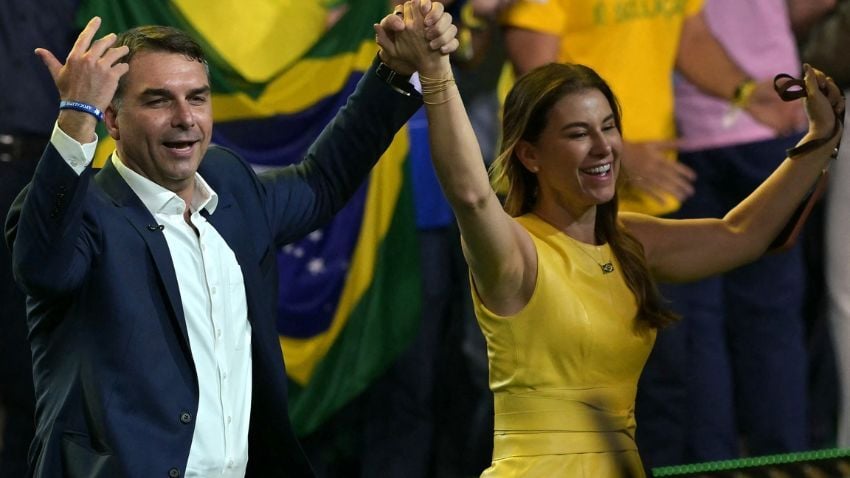
Colombia witnessed a historic moment on May 31, 2026, with the first round of its presidential election. Contrary to polls, right-wing candidate Abelardo de la Espriella won the first round decisively, securing 43.74% of the vote. He promises a return to pro-market economic policies and Bukele-style hard security. De la Espriella’s main rival is the socialist Iván Cepeda, who fell short with 40.90%.
Although the results seem somewhat close, the picture changes when we factor in centre-right conservative Paloma Valencia, finishing third at 6.9%, who has already endorsed De la Espriella for the run-off. That is why De la Espriella's victory in the second round on 21 June 2026 appears all but certain.
Colombia is one of the most important countries in Latin America for expats with its large, modern economy, low cost of living, established expat communities in cities like Medellín and Cartagena, real residency paths for investors, remote workers, and retirees, and a growing set of investment opportunities.
The country started a strong reform process in the 1990s through establishing pro-market economic policies and strong political institutions. However, that process was interrupted in 2022 by the election of Gustavo Petro, a former guerrilla fighter who became the country's first left-wing president in over two centuries of independence.
He followed redistributional policies, raised taxes on the wealthy, negotiated peace with every armed group in the country, and stopped new oil exploration. Four years later, coca production hit record highs, armed groups grew stronger, investment dried up, economic growth stalled, and fiscal deficit blew past 3.7% of GDP. Colombians have been left poorer and less secure under his so-called progressive policies.
The encouraging part is that Colombia is bigger than one president. The institutions held, the legislature blocked Petro's most radical proposals, and the Constitutional Court pushed back.
Then, on May 31, 2026, Colombians voted, and they gave their answer. Colombia is counting down the days until the second round of elections on June 21st, hoping to join the wave that has swept the left out of power across Latin America.
In this article, I break down what Petro actually did in four years, how badly he damaged relations with Washington, who ran to replace him, and what the May 31st result tells us.
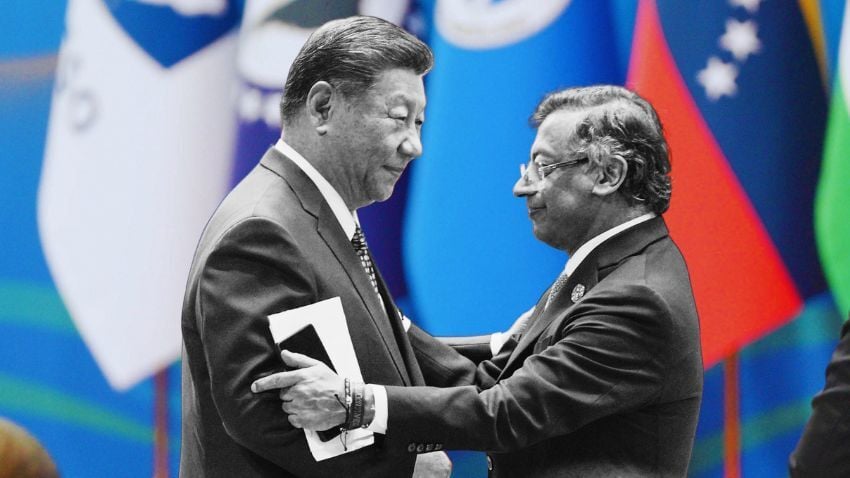
Petro's socialist experiment delivered higher taxes, weaker investment, and failed security policies across Colombia
PETRO'S DISASTROUS FOUR-YEAR RECORD
Petro was determined to apply some of the most ambitious socialist policies in Colombian history. His first move was a sweeping tax reform, passed within his first 100 days. It doubled the dividend tax on foreign entities from 10% to 20%, introduced a permanent wealth tax on individuals and foreign companies holding assets in Colombia, added a 15% tax on free trade zone companies that failed to meet export thresholds, and pushed the effective tax burden on oil company profits from roughly 36% to a staggering 70%.
As a result, foreign direct investment dropped from $17.18 billion USD in 2022 to roughly $9.2 billion USD by 2025. Investment as a share of GDP fell to 16%, the lowest level in two decades. Exxon packed up and left the country almost entirely. Mining output contracted 6.2% in 2025.
"TOTAL PEACE" TURNED INTO A TOTAL FAILURE
Petro's signature policy was "Total Peace," simultaneous negotiations with every armed group operating in Colombia, including the National Liberation Army, FARC dissidents, the Clan del Golfo, and various narco-trafficking organizations. The moronic idea was to talk to every terrorist organization and drug cartel at once to come to a peaceful agreement once and for all, without using violence. In practice, the opposite happened. Armed groups used the negotiations as cover to regroup, recruit, and expand their territorial control.
Coca production hit record highs on Petro's watch, and Colombia destroyed its relationship with the U.S., which led to sanctions on Petro. Negotiating with criminals from a position of weakness does not bring peace. El Salvador and Ecuador learned that lesson, but Colombia had to learn it the hard way.
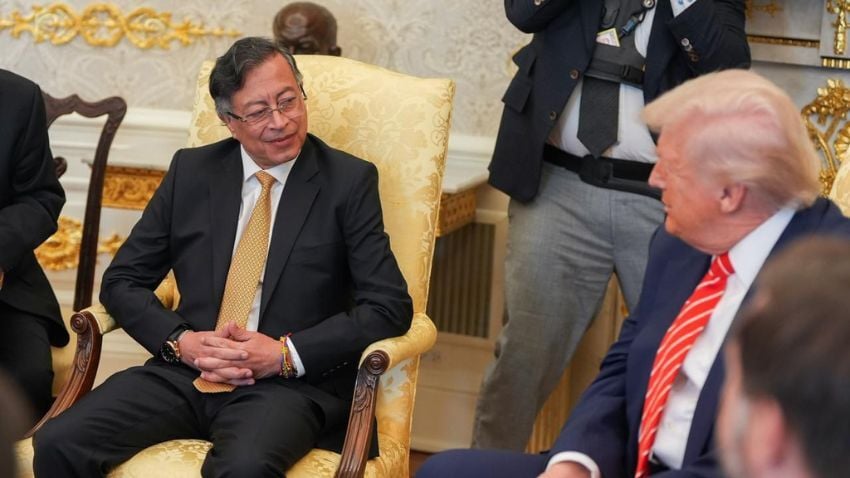
Petro challenged Washington and lost, leaving Colombia's most important international relationship weakened
PETRO'S DECLINING APPROVAL RATINGS
It didn’t take long for Petro to lose public support. Petro's Pacto Histórico coalition had lost control of the Senate, and his minority in the House meant his remaining legislative ambitions were effectively dead by April 2024. He blamed the opposition and called institutional checks a "coup," pushing for a referendum to take his proposals directly to the people. The Senate voted it down. By mid-2025, his approval rating had sunk to the mid-30s, with over 60% of Colombians disapproving of his leadership. His coalition had collapsed, and his reforms were dead or dying.
TRUMP VS. PETRO
Petro’s anti-American stance created a political crisis between Colombia and the U.S. in January 2025. It all began when Petro refused two U.S. military deportation flights that carried Colombian migrants. In response, Trump imposed a 25% emergency tariff on all imports from Colombia, revoked the visas of government officials, and stepped up inspections of Colombian citizens and cargo. Although Petro announced he would impose retaliatory tariffs, he backed down within 48 hours and accepted the flights. However, the damage was done, and relations have yet to improve.
The crisis hasn’t stopped there, and Trump officially determined that Colombia had clearly failed to meet its anti-drug commitments and revoked Petro’s visa in September 2025. The Treasury Department sanctioned Petro personally, along with his wife, his son, and Interior Minister Armando Benedetti, under counternarcotics authorities, in October 2025.
This was all bad news for Colombians. The U.S. is Colombia's largest economic partner, with bilateral trade exceeding $50 billion USD a year. Decades of security and development cooperation with Washington have formed Colombia's stability. When that relationship deteriorates, it hits trade flows, investor protections, and the institutional confidence that foreign capital depends on. Colombia's next president inherits this damage, and repairing the relationship with Washington will be the most consequential foreign policy task from day one.
PETRO’S FAILED PLANS TO RUN AGAIN
Colombian presidents have been constitutionally barred from seeking a consecutive second term since 2015, and Petro is no exception. Of course, that did not stop the speculation. His former chief of staff, Alfredo Saade, repeatedly floated a constitutional reform that would let Petro stay in office, and Petro himself pushed for a popular referendum to bypass Congress on his stalled reforms. None of it went anywhere. His coalition had already lost its Senate majority by April 2024, the legislature voted the referendum down, and the Constitutional Court made clear it would review any attempt to alter term limits.
Therefore, instead of insisting on a second term, Petro threw his support behind Senator Iván Cepeda, a longtime Pacto Histórico ally running as the continuity candidate. A vote for Cepeda was a vote to keep the same program running for another four years.
WHO IS ABELARDO DE LA ESPRIELLA: COLOMBIA’S LIKELY NEW PRESIDENT
The man who finished first on May 31, 2026, and who is now favoured to win the June 21 run-off, had never held public office before this race.
Abelardo de la Espriella is a 47-year-old criminal defence lawyer. He was born in Bogotá in 1978 and raised in Montería, on Colombia's Caribbean coast, a connection he plays up constantly. He studied law at Sergio Arboleda University and founded his own firm, De la Espriella Lawyers, in 2002, building it into one of the country's best-known practices with offices in Colombia and the U.S. He holds Italian citizenship by descent and obtained a U.S. passport in 2023, after four years of permanent residency. Before entering politics, he spent much of his time in Florence, where he ran rum and wine businesses and recorded albums of traditional music. He brands himself "The Tiger."
His career was built defending high-profile, often controversial clients, including business figures and politicians accused of corruption. It made him a household name through years of television appearances, and it gives his opponents plenty to attack. However, he never runs from the controversy. That personality constitutes a large part of his political identity.
He is the complete opposite of the Petro program. De la Espriella models himself on Javier Milei in Argentina and Nayib Bukele in El Salvador, and he is openly pro-Trump. De la Espriella, who says he entered politics to prevent the left from ruining Colombia, appears to have crafted his campaign platform specifically to reject the past four years: end Petro's "Total Peace" negotiations and confront the armed groups militarily, build high-security prisons for crime bosses, cut the size of the state substantially, slash regulations, lower taxes, and reopen the hydrocarbon sector to foreign investment. He defends private property and free enterprise in blunt terms and frames the election as a choice between continued socialism and a return to a functioning market economy. He ran the most aggressive social media campaign in the field, and it worked. He connected with a large bloc of Colombians frustrated by insecurity and four years of anti-business government.
He was not supposed to win. For most of the race, the favourite was Iván Cepeda, Petro's handpicked successor, a 63-year-old senator and lifelong leftist who took part directly in the Total Peace negotiations, whose platform references Petro 140 times. He promised more of the same, expanded welfare spending, continued talks with armed groups, and higher taxes on the wealthy. Cepeda led nearly every poll, in some cases by double digits. On the day, he came second.
The third major candidate was Paloma Valencia of the Centro Democrático, a 48-year-old senator and self-described "100% Uribista" who campaigned to restore the security-first, pro-market model of former President Álvaro Uribe Vélez, who governed Colombia from 2002 to 2010. She proposed 60,000 new security forces, a Plan Colombia 2.0 with the United States, lower taxes, and a smaller state. She represented the traditional center-right, and in a year when voters wanted an outsider, that establishment label sank her. She finished a distant third and immediately threw her support behind de la Espriella, which is most of the reason he is now the clear favourite for the run-off.
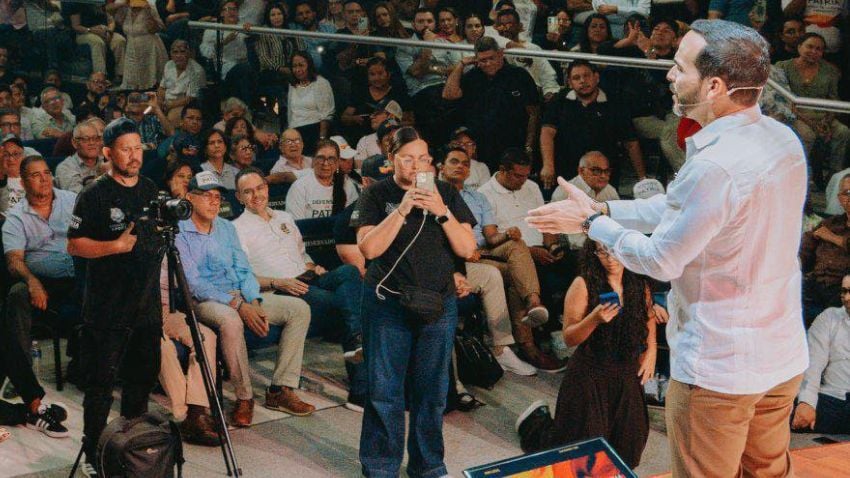
Colombia's election may mark the beginning of a major political and economic realignment
THE RESULT: COLOMBIA JOINS THE RIGHTWARD SHIFT
For months, polls put Cepeda comfortably ahead. The final poll before the vote showed Cepeda at 44.6% and De la Espriella at just 31.6%. However, the order was reversed on May 31. De la Espriella finished first with 43.74%, Cepeda second with 40.90%, and Valencia a distant third at 6.9%. Turnout reached roughly 56%, among the highest in a Colombian presidential first round in recent history. No candidate cleared 50%, so the contest moves to a runoff on June 21, 2026.
In recent years, one Latin American electorate after another has rejected the left and the socialist model it sells. Argentina handed Javier Milei a midterm mandate. Ecuador re-elected Daniel Noboa. Bolivia ended almost twenty years of socialist rule. Chile gave José Antonio Kast a runoff win of 58%, and Costa Rica's February 2026 vote went the same direction. Colombia is now the latest country in that line. That is why expats shouldn’t see the May 31 result as a one-off protest vote. It is Colombia catching up to a regional turn toward security-first governance, lower taxes, and open alignment with Washington.
The run-off math favours De la Espriella. Valencia endorsed him within hours, telling her voters to keep "new communism" out of the Casa de Nariño, the presidential office. This is securing center-right votes for his camp even before the second-round campaign has begun. Cepeda holds the Petro base, but that base topped out near 41% on the day his coalition was supposed to peak, and there is little uncommitted vote left for him to win. Prediction markets now put de la Espriella's chance of taking the presidency at roughly 70%.
That is why it is worth looking closely at what De la Espriella has promised. He ran as a Colombian version of Bukele and Milei: end Petro's "Total Peace" negotiations and confront armed groups militarily, build high-security prisons, cut the size of the state by around 40%, lower taxes, and reopen the hydrocarbon sector to foreign investment. He has spoken openly in favour of Trump, and repairing relations with Washington would be among his first moves after the damage of the Petro years. The direction is a hard reversal of everything covered in the sections above.
For anyone watching Colombia as a place to invest or live, this is the signal to pay attention to. The country is positioned to swing back toward the pro-market, pro-security model that governed it for most of the two decades before Petro. More importantly, I believe that Colombia’s political institutions have demonstrated their maturity by standing firm in the face of the excesses of the Petro era. This is a vital indicator for making an investment in any country.
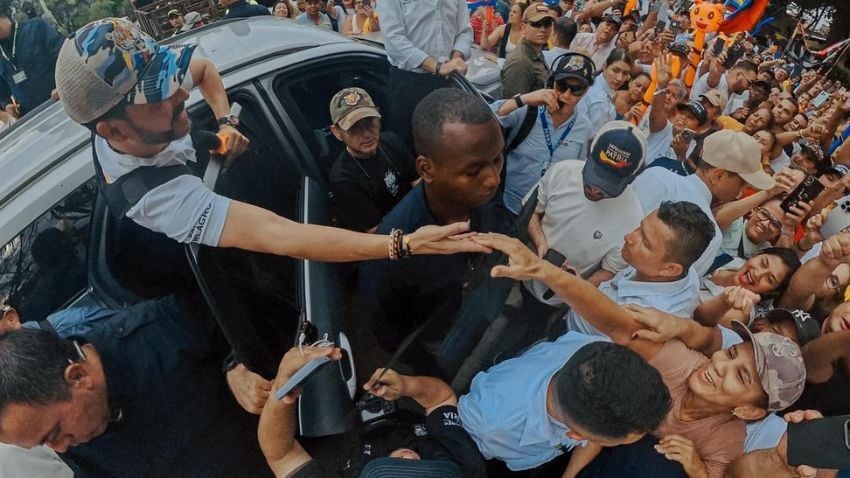
Colombia's next chapter may bring renewed confidence, stronger institutions, and a more welcoming environment for investment
CONCLUSION
Petro came to office promising to remake Colombia and spent four years showing why the socialist model does not work. Now, De la Espriella, a successful lawyer and entrepreneur, extremely media-savvy, highly outspoken, aggressively anti-socialist, and a mix between Bukele, Milei, and Trump, is most likely to run the country. I have been investing in Colombia even under the previous socialist government, because I was confident about where the country was headed. Imagine what the country is going to be capable of under the rule of an anti-establishment, right-leaning and pro-market figure. De la Espriella is the guy who will turn things on their head.
Investment was drained, the armed groups Petro tried to negotiate with grew stronger, and the country's most important alliance fell apart to the point of personal sanctions. On May 31, Colombians delivered the first half of their verdict. On June 21, they are likely to finish the job by electing a president who has promised to undo nearly all of it.
Expats should know that all the things that made Colombia attractive in the first place are still there. The low cost of living, the established communities in Medellín and Cartagena, a large, diversified economy, and the residency options have not changed because of Petro. However, in the run-off, the government's posture toward those who bring in capital will improve immensely. A De la Espriella administration would court foreign investment, reopen the energy sector, cut taxes, and rebuild the relationship with Washington. The country that spent four years making itself harder to invest in is about to start making itself easier again.
Although Colombia is becoming promising for expats and investors, there are already great expat destinations in Latin America that you can evaluate for your long-term strategic plans. Start building your Plan-B today by downloading our free special report on “Plan-B Residencies & Instant Citizenships.”



%20Brazil%20The%20Cash%20Cow%20Opportunity%20That%20I%20Couldn%E2%80%99t%20Ignore%20Any%20Longer-1.jpg?width=800&height=429&name=(BLOG%20BANNER)%20Brazil%20The%20Cash%20Cow%20Opportunity%20That%20I%20Couldn%E2%80%99t%20Ignore%20Any%20Longer-1.jpg)

















 Mikkel Thorup: October 19, 2026