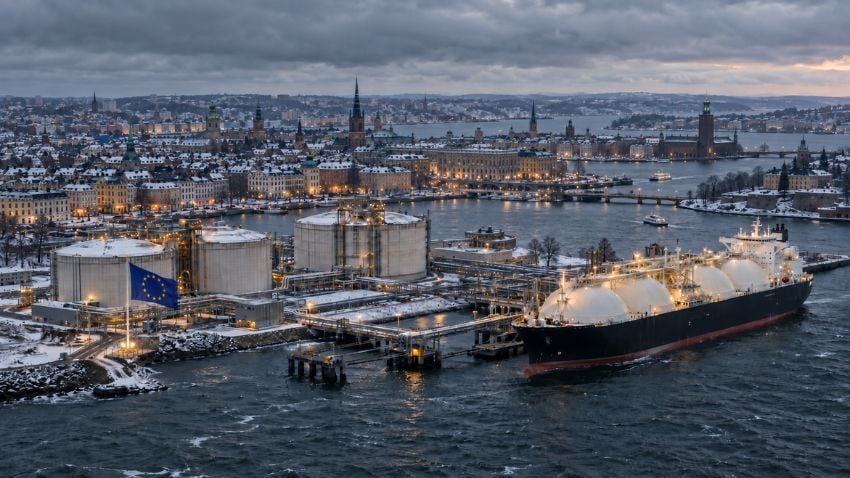
The word "Japan" brings to mind many things: high-tech, sushi, anime, samurai, and cherry blossoms. It is one of the most intriguing countries in Asia, with a highly advanced, highly organized modern economy alongside a hierarchical, tradition-bound society.
I have visited Japan many times as a tourist and have been fascinated by its history, architecture, and beauty. Although it is definitely not an expat destination for many good reasons, history, culture, and food enthusiasts should place it at the top of their travel list in Asia. It might be one of the few places where high-tech robotics is harnessed alongside a traditional lifestyle. In that sense, Japan is a futuristic destination you should experience.
Safety will be the least of your concerns when you visit Japan. It is one of the safest countries, not just in Asia but also in the world. In fact, if you disqualify some Asian countries due to geopolitical risks, Japan ranks easily among the top five for safety.
In this article, I will explain how safe Japan is by blending my experience with data, and then give you a brief account of Japan from the perspective of an expat.
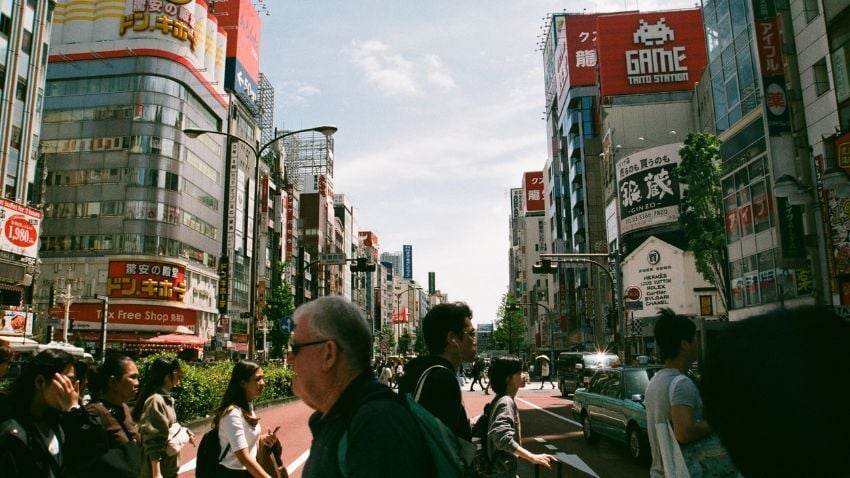
In Japan, where safety is reflected not just in statistics but in everyday life, people walk peacefully through Tokyo’s streets, day or night, in one of the safest countries in the world
How safe is Japan statistically?
Numbeo’s Safety Index gives Japan a score of around 77 out of 100, ranking it 12th in the world. This index is based on visitors' perceptions and experiences regarding the country they visit. However, safety perception in Japan can be easily supported by statistics based on reported incidents. I must add that my experience, based on my several visits to Japan, confirms these data. I will provide brief, categorized data on safety in Japan to help you better understand security in Japan.
VIOLENT CRIME
Let’s start with Japan's homicide rate, which is quite low compared to the Western world. Its homicide rate typically sits around 0.2–0.3 per 100,000 people. Considering the U.S. homicide rate sits around 5-6, Canada about 2, and France roughly 1.3 per 100,000 people, Japan, with its population over 120 million, has been doing a great job creating a secure social order.
Of course, Japan has organized crime as well, most notably the Yakuza. However, organized crime in Japan rarely spills over into random civilian life, and the Yakuza’s numbers and political influence diminished radically since the 1990s.
ASSAULT AND VIOLENT INCIDENTS
What about assault and other violent incidents in Japan? Once again, when you compare Japan with Western countries, it stands out here as well. Japan's violent crime rate (primarily assaults) is extremely low, around 24 per 100,000 in recent years, compared to 500–1,500 per 100,000 in countries like the UK or France.
Even megacities like Tokyo routinely report lower levels of street violence than cities such as London, Paris, or New York City. For instance, according to Numbeo’s Safety Index, Tokyo’s safety score for walking alone at night is around 73 out of 100. The comparable figure is about 46 for New York and just 37 for London. However, expats and tourists should be aware of the rising number of financial scams organized by “tokuryu”, a new-generation high-tech gang.
Although these data don’t mean that harassment doesn’t exist in Japan, they do show that systemic patterns of violent crime are far less prevalent there than in most large Western cities. I have never felt unsafe in Japan, as long as I took my usual security precautions. That said, just to be safe, it’s wise to avoid deserted, poorly lit streets, especially in large cities.
PETTY CRIME
Among the reported crimes, theft takes the first place with roughly 70% of recorded offences. However, according to Numbeo’s Safety Index, worries about home being broken into and things stolen, and about cars being stolen or being robbed, are below 20 out of 100, which is considered very low.
One of the more common petty crimes is bicycle theft, with hundreds of thousands of cases reported annually. However, these incidents are rarely violent. I should also note that petty crime increases in nightlife districts, such as Shinjuku and Roppongi in Tokyo, as well as Namba in Osaka.
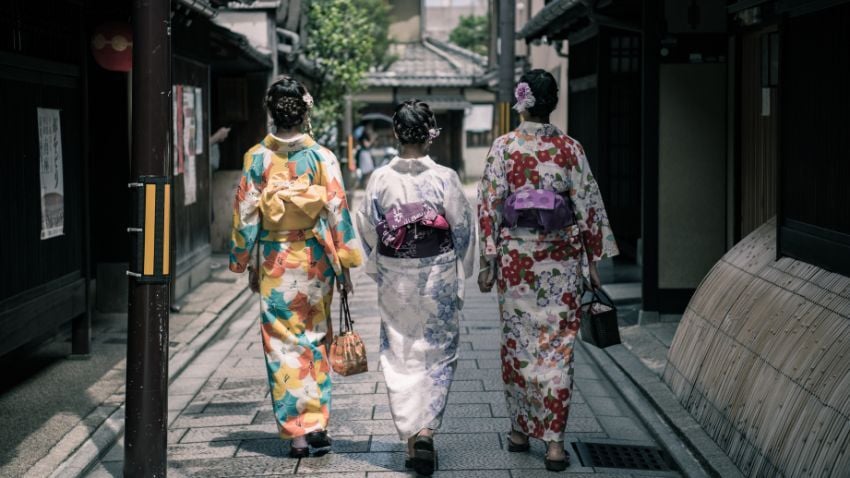
Although Japan is exceptionally safe and welcoming to visitors, its subtle social codes, indirect communication, and reserved cultural norms can make it one of the more challenging developed countries for outsiders to fully integrate into
A CULTURALLY CLOSED SOCIETY
Although I love the country as a tourist, as an expat destination, it is one of the least favourable countries in the world. Obviously, it isn’t because Japan is unsafe or it lacks infrastructure. But it is one of the hardest places in the "developed" world to enter as an outsider.
You can travel through Japan, visit city after city, and meet people who are polite, helpful, and interesting. However, understanding Japanese social cues can be difficult, and “what you see” is not always what is happening beneath the surface. The country can feel culturally closed in a way that even other Asian societies don’t. I often contrast this with China, since it is my wife’s home country, where I felt it was far easier over time to understand the culture and build genuine relationships.
There are also limited options for residence in the country. Immigration pathways aren’t designed to welcome large numbers of foreign residents, and most likely your citizenship application will be rejected, even after years of residence and fluency in Japanese.
It is difficult for a Westerner to encrypt subtle social codes, indirect communication, and norms established around hierarchy and group harmony. What you see on people’s faces is not what's going on behind their eyes. I am not saying that the Japanese are rude; on the contrary, they are very polite people, but politeness doesn’t always equal openness.
HIGH TAX BURDEN IN AN AGING POPULATION
Japan is the textbook example of population collapse, with almost a third of its citizens aged 65 or older and about one in ten aged 80 or above. Japan has been handling the situation with high-level automation in factories and daily life, but it only delays the inevitable social and financial crisis.
Because population collapse in Japan has a high negative impact on taxation and social contributions. Japan Ministry of Finance data shows that the ratio of income tax and social security contributions to national income, often called the “national burden,” has hovered around 45–46% in recent years. Average-income earners pay 40% of their income in taxes and social security. Including social contributions, the tax burden for high earners can reach up to 55% of annual income. Once you factor in capital gains taxes, which vary by asset type, Japan becomes a very unattractive destination for expats. That is why Japan’s safety and stability come with a very high cost that residents may feel personally in their wallets.
CONCLUSION
Japan is a great country to visit. You will have an amazing time seeing its thousands of years of history and wonderful nature, and you will greatly expand your knowledge and culture. Even if you are not used to Japanese food, I bet you will develop a taste for it after experiencing some of the best sushi and ramen in the world. As a tourist, it is a country high on my list of Asian destinations.
As I have shown in this article and experienced firsthand, Japan is one of the safest countries in the world. Walking safely in the street day and night, without worrying about house break-ins or assault, is important when you want to live your life according to your preferences. Japan offers a predictable, well-organized social structure supported by strong law enforcement.
However, as an expat, I must warn you: Japan is one of the least favourable destinations for expats looking to build a long-term base or a sound Plan-B strategy. Frankly, I wouldn’t even consider Japan as an option for a long-term life experience abroad. I expect to find a culturally open society that gives foreigners the opportunity to integrate and truly enrich their experience. Japan largely eliminates that crucial possibility for expats living abroad.
Once you also factor in high taxes, a rapidly aging population, a heavy social contribution burden, and limited naturalization prospects, Japan stays far outside the shortlist for most expats.


%20Brazil%20The%20Cash%20Cow%20Opportunity%20That%20I%20Couldn%E2%80%99t%20Ignore%20Any%20Longer-1.jpg?width=800&height=429&name=(BLOG%20BANNER)%20Brazil%20The%20Cash%20Cow%20Opportunity%20That%20I%20Couldn%E2%80%99t%20Ignore%20Any%20Longer-1.jpg)



















 Mikkel Thorup: October 06, 2026