Chile remains one of the most recognized countries in Latin America due to its strong institutions, political stability, and relatively predictable economy. For travellers and those considering relocation, questions like “Is Chile safe to visit?”, “How safe is Chile?” and " What are the best places in Chile?” often come up early in the planning process.
Stretching from the Atacama Desert to Patagonia, the country offers an impressive variety of climates and landscapes, along with many places to visit in Chile that attract visitors from around the world.
For decades, Chile stood out for what is often described as Chilean exceptionalism. It maintained low levels of corruption, stable democratic institutions, and a well-established middle class. Unlike several neighbouring countries, Chile largely avoided the severe violence linked to drug cartels.
However, anyone asking “Is Chile safe to visit?” should take recent developments into account. The country is not crime-free. In recent years, there has been a noticeable increase in petty theft, property crime, and, in certain areas, rising levels of violence. The growing presence of transnational criminal groups has also influenced the security landscape.
At the same time, the political environment has shifted. The election of José Antonio Kast in 2025 signals a move toward stricter security policies, alongside pro-market reforms and fiscal discipline. This shift may contribute to improving conditions over time.

Chile saw low homicide rates in the 2010s, which rose after 2019, peaking in 2022, then declined by 2025. Crime concerns grew due to organized groups, but petty theft remains the main risk for most residents
HOW SAFE IS CHILE?
If you are asking about how safe Chile is, one of the first things to consider when assessing a country's safety conditions is its homicide rate. Chile had one of the lowest homicide rates in Latin America, which was around 3 to 4 per 100,000 inhabitants for most of the 2010s. However, the figures climbed sharply after 2019, peaking at approximately 6.7 per 100,000 in 2022. The good news is that the trend has reversed. According to the latest data, the homicide rate fell to 5.4 per 100,000 inhabitants in 2025.
Numbeo's Safety Index rates Chile at around 40 out of 100, but this index is based on user perceptions rather than official crime statistics. For context, the U.S. scores around 50 on the same index, which shows how limited it can be as a measure of overall safety.
The rise in violent crime is largely tied to the growing presence of transnational criminal networks, particularly groups originating in Venezuela and Colombia. However, the rise in violent crimes generally doesn’t affect ordinary citizens or expats who aren't connected to these criminal disputes. For most people, the more realistic day-to-day concern is non-violent crime, especially petty theft.
Even though the level of organized crime in Chile is quite low compared to many neighbouring countries, public security became the defining issue of Chile's 2025 presidential election. As a result of this debate, José Antonio Kast was elected as the president. He took office on March 11, 2026, with a campaign focused on dismantling organized crime and tightening border controls. He has also endorsed El Salvador's President Nayib Bukele as an inspiration, indicating a tougher approach to confronting criminal groups.
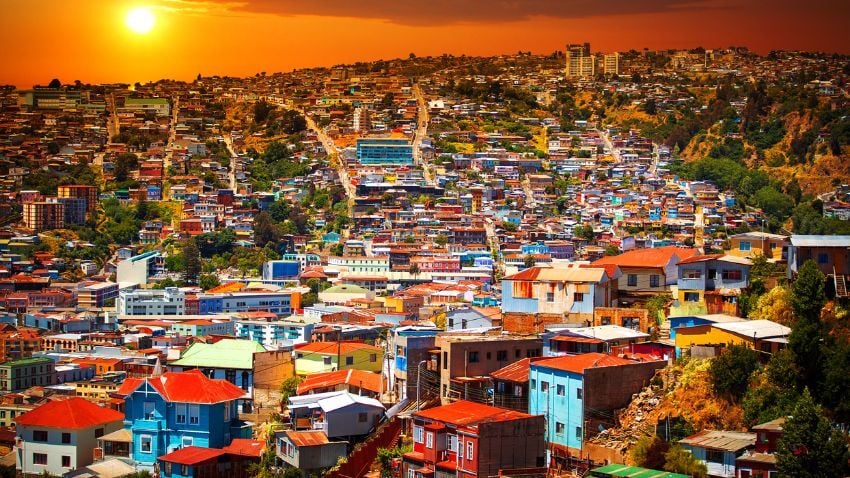
Crime in Chile varies by location. Valparaiso has seen rising theft, while nearby Vina del Mar and southern towns remain safer. Choosing the right neighbourhood matters more than national averages
THE BEST PLACES IN CHILE
When considering the best places in Chile, it is important to understand that crime levels vary significantly by region. Large cities, especially Santiago, tend to experience higher rates of petty crime, but they also offer some of the safest and most desirable neighbourhoods.
In Santiago, areas such as Vitacura, Las Condes, Providencia, Lo Barnechea, and Ñuñoa are among the most popular with international residents. These districts feature modern infrastructure and strong private security, contributing to improved Safety in Santiago, Chile.
More central and densely populated areas generally report higher numbers of incidents, particularly at night, so extra caution is advised in those locations.
Beyond the capital, there are many places to visit in Chile that combine quality of life with lower crime rates. Viña del Mar is well known for its coastal lifestyle, while cities like Valdivia, Puerto Varas, and Punta Arenas offer quieter environments and strong community ties.
If you are looking for the best places to go in Chile, the southern regions are often ideal, especially for those seeking nature, tranquillity, and reduced exposure to urban risks. In contrast, northern border cities tend to experience more activity related to organized crime and should be approached with greater awareness.
THE BEST SAFETY TIPS
The first thing to do to improve your safety is to choose the right cities and neighbourhoods in Chile, where you have many options. As a matter of fact, wherever you live in the world, you should always follow common-sense precautions. Although foreigners are rarely the direct targets of violent crime, petty theft exists as a persistent issue in urban and tourist zones.
Your housing choice is also an important security decision. The eastern comunas of Santiago, including Vitacura, Las Condes, Providencia, and Lo Barnechea, have far lower crime rates than central Santiago. These neighbourhoods have modern infrastructure, a visible security presence, and a large, established expat community. Viña del Mar, Valdivia, and Puerto Varas are cities located outside of Santiago and offer a quieter lifestyle with lower crime rates.
It is always prudent to have an additional layer of protection by installing security systems. Alarm systems with monitoring, motion-sensor lighting, or reinforced entry points are becoming standard in many residential buildings in safer neighbourhoods.
Along with security systems, your daily habits are important factors in increasing your safety. Avoid displaying expensive electronics or jewellery in public, be especially vigilant on the Santiago Metro and buses where pickpocketing is common, and don't leave valuables visible in parked vehicles. Use registered ride-hailing services at night rather than hailing taxis from the street. Carrying a large amount of cash also isn't advisable anywhere in the world.
I also think that insurance is vital to cover possible incidents. Insurance for theft, natural disasters, including earthquakes, and health care is typically recommended for expats. Expats should also designate a local emergency contact, register with their embassy, and maintain a basic emergency kit that includes copies of passports and key documents, as well as accessible funds.
WHAT IS THE BEST TIME TO VISIT CHILE?
Understanding the best time to visit Chile can greatly enhance your travel experience. Because the country stretches across such a long distance, climate conditions vary widely depending on the region.
For southern destinations like Patagonia, the best time to visit Chile is during the summer months, from November to March, when weather conditions are more favourable. The Atacama Desert can be visited year-round, although spring and autumn typically offer more comfortable temperatures.
If you are wondering about the best month to visit Chile, January and February are the most popular due to the summer season, but they are also the busiest. Travelling during the shoulder seasons can provide a more relaxed experience with fewer crowds.

Chile’s 2025 election marked a shift toward stronger security and economic reforms. President Kast prioritizes border control, fighting organized crime, and boosting growth, though results depend on execution
A POLITICAL SHIFT IN THE RIGHT DIRECTION
Chile's safety outlook cannot be separated from its political trajectory, and the direction of travel is encouraging. President Kast’s victory in 2025 represents far more than a change in leadership. It is a strong example of the right-wing shift in Latin American politics over the past few years. Chilean voters made it clear that the country's urgent needs are greater security, fiscal discipline, and government capacity.
Within his first week in office, he began construction of border infrastructure along Chile's northern frontier and launched coordination with neighbouring countries to combat transnational crime. President Kast's coalition raises hopes for greater policy predictability, support for private-sector growth, and a deregulation process, all of which are necessary for economic dynamism and growth. Of course, outcomes will ultimately depend on execution and legislative dynamics.
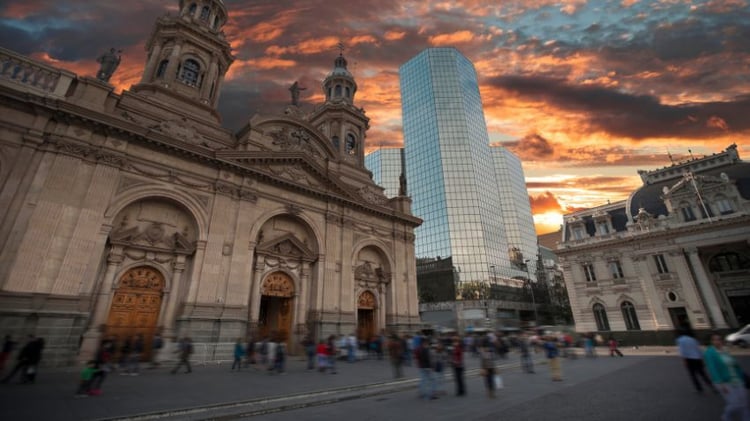
Chile offers stability, manageable risks, and strong expat appeal. Crime has risen but is uneven and improving since 2022. With safer regions and a pro-market government, the outlook remains positive
CONCLUSION
Although there are some manageable crime risks in Chile, it is one of the most institutionally stable and predictable countries in South America. For many expats, that balance between lifestyle, stable politics, growing economy, and manageable risk makes it a viable Plan-B destination.
Organized crime activity in Chile has increased in recent years, with international criminal organizations invading the country in the post-COVID-19 period. However, this is not a situation that affects the whole country equally. Violent crime is largely concentrated in specific northern border cities and is related to organized criminal activities.
The homicide rate, after peaking in 2022, has declined for three consecutive years, and the new Kast administration is dedicated to fighting them. Combined with his pro-market economic agenda and fiscal discipline, Chile's political direction looks bright.
There are many popular expat destinations with high security standards, despite the alarming headlines you see every day. To evaluate your many options, download our free special report on Plan-B Residencies & Instant Citizenships.




%20Brazil%20The%20Cash%20Cow%20Opportunity%20That%20I%20Couldn%E2%80%99t%20Ignore%20Any%20Longer-1.jpg?width=800&height=429&name=(BLOG%20BANNER)%20Brazil%20The%20Cash%20Cow%20Opportunity%20That%20I%20Couldn%E2%80%99t%20Ignore%20Any%20Longer-1.jpg)


















 Mikkel Thorup: October 19, 2026