Interest in Paraguay, a rising star in Latin America, has been steadily growing among expats drawn by its territorial tax system, low cost of living, easy residency options, political stability, and business-friendly regulations. Now, the new Investor Pass program is accelerating that interest.
In April 2026, Paraguay gave foreign investors a shortcut to permanent residency. The new Investor Pass adds tourism, real estate, and financial-instrument tracks to the $70,000 USD business route that already existed.
All four allow qualifying investors to apply directly for permanent residency, bypassing the two-year temporary-residence stage required under the standard route, with minimums running from $70,000 USD to $200,000 USD.
In this article, I will break down the four investment tracks, what each one actually requires, and why the no-investment route deserves a hard look right now.

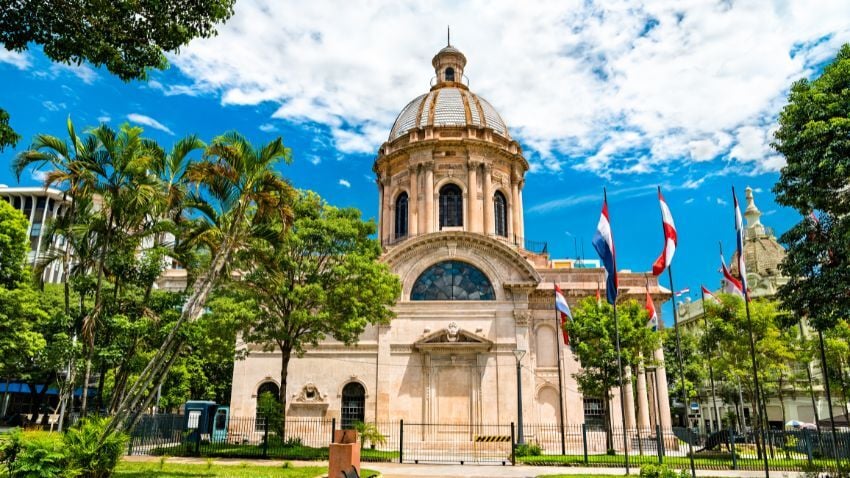
The Paraguay Investor Pass grants qualified foreign investors immediate permanent residency in Paraguay through investment, without the usual two-year waiting period
THE PARAGUAY INVESTOR PASS
Paraguay already offers a standard residency route that requires no qualifying investment. You obtain temporary residency first, and after two years you apply to change to permanent status, which includes meeting the economic-solvency requirements in force at that time. Temporary residency remains by far the more common type of application, and the route is still open.
The Investor Pass is a second door for people ready to invest capital for permanent residency. You make a qualifying investment and the Ministry of Industry and Commerce (MIC) issues you a Foreign Investor Certificate. With that certificate, you apply for permanent residency straight away. The legal basis has been in Paraguay’s 2022 migration law all along, as it exempts qualifying investors from the temporary stage. Until this year, however, the main route was the productive-investment model, built on a business project and local job creation.
The new rules came in April 2026 under Resolution 0283/2026, which added three new categories. The property and securities tracks require no operating business, while tourism still means running a project under a business plan.
Paraguay did not need a new program to get noticed. Migraciones received 47,687 residency applications in 2025, 63% more than the year before, and applications in the first quarter of 2026 were up another 85%. Most of those applications were for temporary residency. The Investor Pass is designed to channel some of that interest into investment in Paraguay.
Related content: Paraguay: A Top Destination For Food And Energy Security
HOW MUCH DO YOU NEED TO INVEST? THE FOUR TRACKS, COMPARED
The Investor Pass has four separate investment tracks, each with its own threshold, requirements, and target investor profile. The table below summarizes what you need to know about each track.
|
Track
|
Min. Investment
|
Business Plan
|
Jobs Required
|
Key Conditions
|
|
Productive Business
|
$70,000 USD
|
Yes
|
5 formal jobs
|
Tangible assets only - no rent, salaries, or utilities
|
|
Financial Instruments
|
$200,000 USD
|
No
|
No
|
2-year hold; Banco Central del Paraguay (BCP)-authorized entity; annual reporting
|
|
Real Estate
|
$200,000 USD
|
No
|
No
|
30% upfront pathway available; no personal/family-use property
|
|
Tourism
|
$150,000 USD
|
Yes
|
No
|
Semestral progress reporting required
|
THE $70,000 USD PRODUCTIVE BUSINESS TRACK
This track keeps the productive-investment route that already existed through SUACE, now under the new resolution’s rules. You need a business plan in industry, commerce or services, and you have to formally employ at least five people and make the required monthly social security contributions. The $70,000 USD has to go into assets the business actually uses, like machinery, equipment, or premises. Rent and salaries do not count.
THE $150,000 USD TOURISM TRACK
The tourism track suits investors who want to build or run something in Paraguay's tourism sector, such as a hotel, a lodge, or another tourism project. You need at least $150,000 USD and a business plan, and the ministry monitors the project once it is underway. The rules set no hiring minimum, but they do not yet spell out what a good plan looks like or how the monitoring works.
THE $200,000 USD FINANCIAL INSTRUMENTS TRACK
The financial instruments track works for anyone who wants residency from a passive investment. Financial instruments here include corporate or government bonds, company shares, and units in investment funds. You buy them through a brokerage or fund manager licensed by Paraguay’s securities regulator, which sits within the Central Bank. Invest at least $200,000 USD, hold the investment for two years, and send in a report once a year.
THE $200,000 USD REAL ESTATE TRACK
I expect most foreign money to go here. A $200,000 USD property investment qualifies you without requiring a business plan or employees. The key condition is that the property has to earn money or be held as an investment. Buying an apartment in Villa Morra and living in it does not count, but renting that same apartment to a tenant does. If you would like to visit Paraguay to explore your options on the ground, join us on our upcoming Paraguay Tour.
The real estate track also gives you a way in without paying the full price up front. The qualifying investment is still $200,000 USD, but you can apply for the Investor Pass once you have paid 30% of the purchase price, as long as the remaining amount is committed under a notarized purchase contract with the seller or developer. On a $200,000 USD unit, that means filing with $60,000 USD paid, which makes this track especially useful for expats buying into new construction.
Paraguay’s 30% rule fits the way much of Asunción’s new construction is sold: off-plan, with the purchase price paid in installments as construction progresses. I see it as the government adapting to the way its property market already works rather than asking buyers to tie up capital early.
Related content: Paraguay’s Geopolitical Advantage: A Pro-Business Haven
RECENT INVESTORS IN PARAGUAY MAY ALREADY QUALIFY
The documents that prove your investment must be no more than 180 days old when you file. In our experience, that generally means properties bought within roughly the last six months. Once a purchase passes the 180-day mark, we generally no longer treat it as counting toward the program. If you have bought qualifying property recently, file quickly.
HOW DOES THE PARAGUAY INVESTOR PASS APPLICATION PROCESS WORK?
The process runs in two distinct stages, handled by two different authorities. Let me explain these two stages in brief:
STAGE 1: INVESTOR CERTIFICATE (5 BUSINESS DAYS)
You begin the application process by submitting your investment file to the Ministry of Industry and Commerce (MIC). After the Ministry reviews the file and confirms that your application is suitable, an Investor Certificate (Certificado de Inversionista) will be issued. Your application will be processed within five days. The certificate unlocks the residency application. It is not the residency itself.
A sworn declaration of source of funds is required at this stage, in line with Paraguay's anti-money-laundering obligations (SEPRELAD).
STAGE 2: PERMANENT RESIDENCY (3–6 MONTHS)
Once the certificate is issued, the application moves to the Dirección Nacional de Migraciones, which processes the actual permanent residency. This stage takes three to six months, which is not the fastest in the region.
Physical presence requirements are minimal throughout. You need to be in Paraguay only when you collect your national ID card. After that, one visit every three years keeps your residency active. There is no minimum stay requirement in between.
However, I should point out that the online portal announced at the program's launch in April is not yet operational as of early May 2026.

Paraguay’s Investor Pass offers tax advantages by exempting foreign-sourced income and reducing the tax on Paraguayan dividends from 15% to 8% for qualifying residents
MAINTAINING PERMANENT RESIDENCY IN PARAGUAY
Paraguay’s permanent-residence rules impose a light physical-presence requirement. You can lose permanent residency only after more than three consecutive years outside Paraguay without justification or the appropriate authorization. The migration law does not impose an annual minimum-day requirement for maintaining permanent residency. Your residency card must also be renewed every ten years.
THE TAX BENEFITS OF PARAGUAY’S INVESTOR PASS
Paraguay’s personal income tax generally applies to Paraguayan-source income, regardless of which residency route you use. Genuinely foreign-source income falls outside the scope of the tax. For personal services, where the work is performed is an important factor in determining the source of the income. Consulting work you perform from Asunción can be considered Paraguayan-source income, even if the client paying you is abroad. Because some services performed outside the country can also trigger local tax obligations, you should always have an accountant review your specific situation.
Residents also pay a lower tax on dividends from Paraguayan companies: 8%, compared with 15% for non-residents. The ministry promoted this rate alongside the Investor Pass at launch, but it has been in Paraguay’s tax law since 2019 and is not specific to the program. Recipients who are considered residents under the dividend tax rules pay 8%, regardless of which immigration route they used. The Investor Pass may make that rate more relevant to you, because your investment may generate dividends in Paraguay.
The headline rates are straightforward. Companies pay 10%. Individuals pay 8%, 9% or 10% on income from services, and generally 8% on capital income and gains.
A Paraguayan residency card does not make you a Paraguayan tax resident. The tax office issues its own tax residency certificate, and its test depends on your situation and on any treaty your home country has with Paraguay. Whether you also need a tax ID (RUC) depends on the income or economic activity you have in Paraguay.
Related content: How Santiago Peña Is Transforming Paraguay Fast

If you are seriously considering Paraguay’s standard residency route, it may be worth applying sooner rather than later, as future immigration changes could increase requirements or phase out the current no-investment pathway
THE FUTURE OF PARAGUAY’S STANDARD RESIDENCY ROUTE
Paraguay changes its residency rules often. Until late 2022, you could go straight to permanent residency, and many applicants did so by keeping about $5,000 USD in a local bank account. The 2022 migration law ended that. Now the standard route means two years of temporary residency first, and only certain groups, investors among them, can skip it.
My view is that once a government has a paid lane that works, it has less reason to protect the no-investment route. If officials ever want to tighten the standard route or cancel it altogether, the Investor Pass gives them an easy reply to anyone who complains: invest. I expect Paraguay to watch how the Investor Pass performs before making any major change to temporary residency.
If the standard route fits you, you should use it now. The Investor Pass will still be there later. Our team can help you get your standard application filed while that door is open.

Paraguay remains a highly attractive residency and investment destination, and while the new Investor Pass appears promising, the current standard residency route may not remain available indefinitely, making now an ideal time to apply
CONCLUSION
Paraguay’s appeal is extraordinary for anyone looking for a second base in Latin America. It not only has a strong legal and regulatory framework but also offers a range of investment opportunities in a developing economy. The Investor Pass adds speed for people with capital, and the ability to apply after paying 30% of a qualifying real-estate investment is not matched by the current investor-residence rules in Panama or Costa Rica.
Paraguay is also changing quickly. Residency applications rose 63% in 2025, while applications in the first quarter of 2026 were up another 85%. The investor rules changed in April 2026, and the requirements for standard permanent residency changed again in June. In my experience, a country that attracts this much attention does not keep its easiest route open forever.
Here at Expat Money, we help you obtain your Paraguay Investor Pass and guide you through the process from start to finish.




















 Mikkel Thorup: September 28, 2026