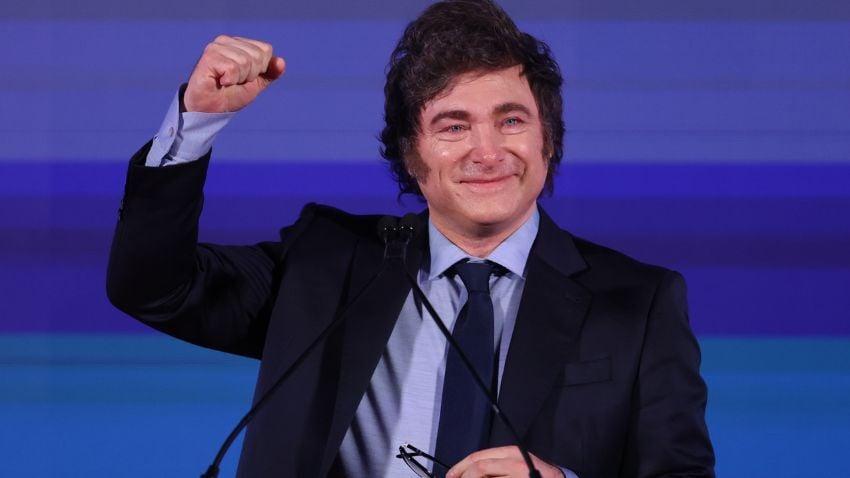
Three weeks ago, I told you this was coming. In my piece on June 2, 2026, I wrote that Colombia was about to close the book on four years of Gustavo Petro’s socialist experiment, and that a 47-year-old criminal defence lawyer, right-wing candidate, Abelardo De La Espriella, was the man who would do it. On June 21, 2026, Colombians went back to the polls and finished the job.
De La Espriella, "El Tigre," appears to have won the runoff with 49.66% of the vote, with 99.99% of ballots counted. His rival, socialist candidate Ivan Cepeda, had 48.70% of the votes. Although official results have not been announced yet, De La Espriella declared his victory with these words: "Mine will be an absolutely democratic government and a guarantor of freedom and institutional order."
I believe De La Espriella is the president Colombia needs. He will reward those who build, invest, and create, rather than treat them as a problem to be taxed into submission.
Colombia's notorious reputation dates back to the era of Pablo Escobar, and Petro's four-year socialist rule remains a deviation rather than a new direction. With De La Espriella holding a narrow but apparently decisive lead, Colombia appears poised to turn the page on the Petro era and pursue a different political and economic course.
In this article, I will explain why De La Espriella’s victory is some of the best news for investors and expats planning a Plan-B in Latin America.

Change does not stop at borders. De La Espriella’s victory reinforces a growing trend across Latin America: greater security, greater economic freedom, and a new direction for the continent
WHY LATIN AMERICA’S POLITICAL SHIFT CAN’T BE IGNORED
De La Espriella's opponent, Cepeda, said he would acknowledge the official result once the count was complete and the checks carried out. Incumbent President Petro also made it clear that he would abide by the judges' decisions. This is a very good signal because it shows the socialist opposition is ready to admit defeat and let the reform process begin without causing any big trouble.
Additionally, American support arrived without delay. De La Espriella said he had spoken with U.S. President Donald Trump, who expressed his support and recognized his victory. U.S. Secretary of State Marco Rubio also called De La Espriella to congratulate him on his victory and posted on X: "The Trump Administration looks forward to working closely with your incoming administration to advance regional security cooperation, end illegal immigration to the United States, and strengthen our economic ties. Colombia's best days are ahead."
I am writing a follow-up article soon because Colombia is not an isolated case, but the latest domino. One Latin American electorate after another has looked at the socialist model up close and said no thanks. Argentina handed Javier Milei a mandate. Ecuador re-elected Daniel Noboa. Bolivia ended nearly two decades of socialist rule. Chile went to Kast, Costa Rica elected conservative Laura Fernández, and in Peru, unofficial runoff results show right-wing candidate Keiko Fujimori as the likely winner. Now add Colombia to the list.
What is happening in Colombia right now is not a reaction of protest votes, but an indicator of a lasting transformation in Latin America. Colombians, like citizens in many other Latin American countries, are now demanding a country that prioritizes security, low taxes, alignment with Washington, and capital retention rather than expelling it. That is the trend that should be shaping your decisions regarding your Plan-B in Latin America.
PETRO LEFT A HEAVY BURDEN
Remember what the last four years actually delivered. Petro came in promising to remake Colombia, and he spent his term proving exactly why the socialist model does not work.
His first step was a comprehensive tax reform, higher taxes on the rich, a permanent wealth tax, doubling the dividend tax on foreign companies to 20% and increasing the effective tax burden on oil revenues to roughly 70%. The result was that foreign direct investment collapsed from over $17 billion in 2022 to roughly $9 billion by 2025. Exxon walked. Mining output shrank.
His “Total Peace” plan, sitting down with every armed group and cartel at once, didn’t bring peace. It bought the criminals time to regroup, recruit, and expand. Coca production hit record highs. His anti-American posturing blew up Colombia’s most important relationship, all the way to personal U.S. sanctions on the sitting president, his family, and his interior minister. Four years of “progressive” government left Colombians poorer and less safe. That is the record voters just rejected.
DE LA ESPRIELLA’S VICTORY IS GREAT NEWS FOR COLOMBIA
The new direction is the mirror image of the old one. De La Espriella ran as a Colombian blend of Javier Milei and Nayib Bukele, and he was blunt about the program: end the “Total Peace” charade, confront the armed groups, build high-security prisons for the members of organized crime, cut the size of the state by around 40%, slash regulation, lower taxes, and reopen the energy sector to foreign capital. He is repairing the relationship with Washington, which is Colombia’s biggest trading partner, with bilateral trade north of $50 billion a year.
Colombia's public institutions have also shown great resilience by standing against Petro's attempts at constitutional overreach. This matters because, whoever rules the country, the institutions guarantee that the game is played by the rules. A country whose institutions can absorb Petro and then hold peaceful elections is one where you can invest with confidence.
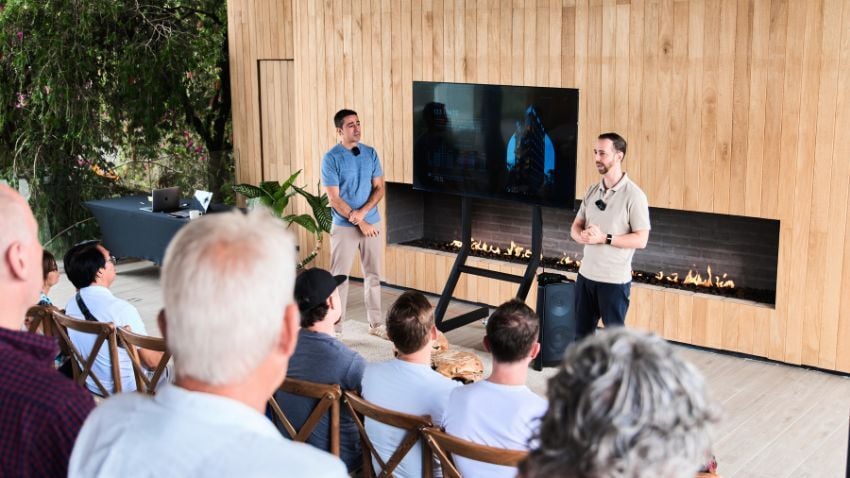
When perception changes, markets follow. Colombia’s next chapter could reward those who recognize the opportunity before everyone else does
WHAT IS IN IT FOR EXPATS AND INVESTORS?
Let me be straight about my own position first: I have been investing in Colombia for years, including under Petro, because I was betting on exactly this turn. Thus, read what follows knowing I have skin in the game. However, the case doesn’t rest on my optimism, but on realities. Four years of socialism stamped a discount on every Colombian asset. The peso, the real estate, and the whole country traded at a “political risk” markdown. That discount is precisely what a pro-market government begins to unwind. If you buy in during the transition, you can capture the re-rating.
It is clear why Colombia performed poorly during the four-year socialist period. Petro has frozen new oil and gas exploration activities in a country dependent on hydrocarbon exports. De La Espriella, however, has promised to reopen the sector. This means restoring licenses, foreign capital, and financial support.
Petro also damaged Colombia's most important relationship, and in return, he faced 25% U.S. tariffs, cancelled visas and personal sanctions. De La Espriella comes to fix this, and fixing it brings back the one thing the capital needs before committing: confidence that the rules won't change overnight and that the U.S. stands behind Colombia on trade.
Beneath all this, the security policy change in Colombia is going to be another game-changer in the country. If a Bukele-style security policy truly repels armed groups, the risk premium that has hung over Colombia will begin to decline fast. This is directly reflected in real estate values, tourism, business confidence and a simple question such as whether your family feels safe walking around Medellín at night.
Huge capital wants to enter the country, and assets are still being priced for the old story, not the new one. This gap is a perfect opportunity. At these prices, the window won't stay open for long.
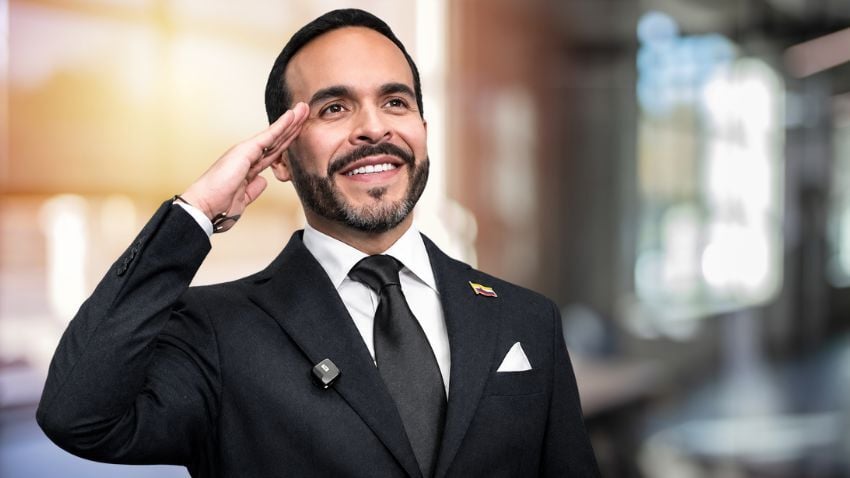
Elections create opportunities, but results depend on execution. Still, history shows that when a country embraces economic freedom, security, and investment, transformation becomes possible
CONCLUSION
I maintain a realistic perspective because that is what I always do. Winning elections is not the same as governing well. De La Espriella faces a devastated financial situation, established armed groups, and a damaged relationship with Washington that cannot be mended overnight. It is easy to promise a 40% smaller state and tighter security measures, but it is difficult to deliver on those promises. We need to keep a close eye on this; implementation is paramount. However, my hopes are high.
I have already put my money where my mouth is in Colombia, and June 21, 2026, told me my read on the country was correct. Imagine what such a country could achieve with an anti-establishment and pro-market president clearing the way. The next four years could look nothing like the last four, in the best possible way.
Colombia is one country making the right move. However, there are already great, proven expat destinations across Latin America you can build around today. Start your own Plan-B now by downloading our free special report on Plan-B Residencies & Instant Citizenships.


%20Brazil%20The%20Cash%20Cow%20Opportunity%20That%20I%20Couldn%E2%80%99t%20Ignore%20Any%20Longer-1.jpg?width=800&height=429&name=(BLOG%20BANNER)%20Brazil%20The%20Cash%20Cow%20Opportunity%20That%20I%20Couldn%E2%80%99t%20Ignore%20Any%20Longer-1.jpg)

















 Mikkel Thorup: October 19, 2026