The West is living through its biggest immigration crisis in decades, and governments have no idea what to do about it. As the global order fractures under conflicts nobody resolves, the crowds keep coming to the Western borders.
But that is not the immigration I want to talk about today. Because while the crowds mass at the gates, a quieter migration is moving in the opposite direction. For Western governments, it is the more dangerous one. The millionaires are leaving. Henley & Partners estimates around 120,000 millionaires relocated in 2023, 134,000 in 2024, and roughly 142,000 in 2025. The West is trying to fix its finances by squeezing its wealthiest individuals and families, and they are responding the only rational way: by leaving.
The exodus of millionaires has fueled competition among non-Western governments for millionaires, and this trend is quietly reshaping the world. When a typical immigrant wants to enter, the government decides whether they qualify. The government holds all the cards. However, if you arrive with real capital, the game reverses, and governments begin to offer you incentives. Just as companies promote their products, they promote residency programs, set thresholds, shorten processing times, and make tax systems more attractive.
In this article, I will break down the top five reasons why governments are competing for wealthy individuals and families.
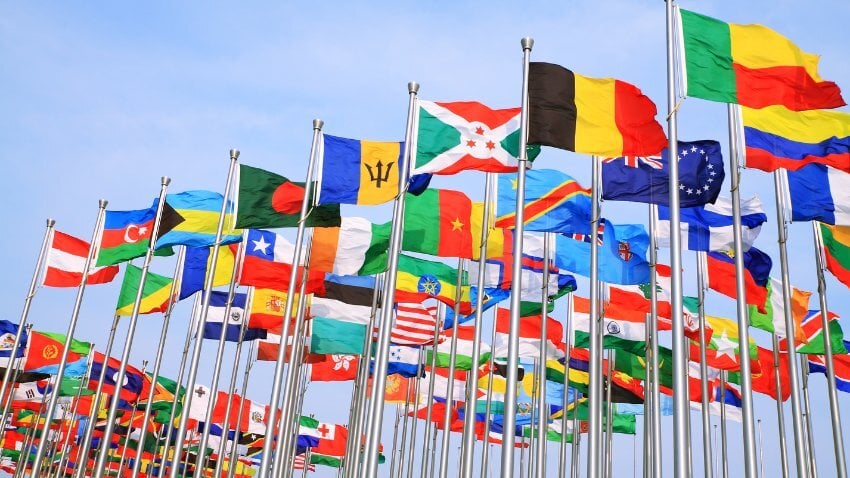
Global competition for mobile wealth is reshaping migration policy and transforming how nations attract capital
REASON 5: WHY SOME COUNTRIES CAN AFFORD TO COMPETE
If attracting wealthy expats has so many benefits, why doesn’t every country do it? The answer is simple: some governments have far more room to compete than others.
The first advantage is lower spending commitments. Unlike many Western governments, smaller governments like Panama, Paraguay, and the UAE have well-managed budgets and are not burdened with massive amounts of debt. Therefore, they do not make promises that would require seizing half of anyone's income. Consequently, they can manage their budgets with low tax rates. Panama and Paraguay use territorial taxation, while the UAE does not levy any income tax at all.
For these governments, offering low or no taxation is relatively simple, as they are not necessarily giving up revenue they depend on. This is foreign income that likely would never have entered the country without the offer, rather than revenue the government was already counting on from its domestic tax base. Attracting a wealthy expat along with the economic activity they generate doesn’t require sacrificing an existing source of revenue. It’s a true win-win.
The second advantage is speed. Small governments with less bureaucracy can move quickly to implement new programs and adjust existing ones. Countries like Panama have designed and implemented visa programs for investors while larger countries are still considering the right course of action. Panama has adjusted its residency programs repeatedly over the years, adapting to rapidly changing circumstances much like a business updates its product lineup. When your legislature is small, and your bureaucracy is thin, you can respond to the market within months. This agility is a competitive weapon in itself.

Countries with lower spending commitments and less bureaucracy can offer competitive tax systems, adapt residency programs quickly, and attract wealthy expats without sacrificing existing revenue
REASON 4: TALENT AND CREDIBILITY THAT COME WITH CAPITAL
The most valuable thing a wealthy family brings is not the bank balance. It is the people themselves. The fact that the wealthy are disproportionately business owners, founders, inventors, and operators changes the game. When Norway's wealth tax pushed its rich toward the exits, a Princeton researcher who studied the outflow found that around 40% of the emigrants were business owners. This means a great deal for many countries. It is not just about importing a bank balance, but about importing someone who has built companies, managed people, survived economic crises, and carries an international network on their phone. Their children grow up with capital, education, and ambition, and many start their own businesses in their new homes. You cannot buy management experience with development loans. You can only attract people who have that experience.
These people also bring credibility. Capital has no ideology, and it goes where it is treated well and flees where it is not. Therefore, every wealthy family that chooses your country is casting a public vote of confidence that markets, investors, and other migrants can see. A government cannot borrow talent or trust. Those have to walk in the door on their own two feet, which is exactly why governments compete so hard for the people who carry both.
REASON 3: THEY CREATE JOBS AND BUILD INDUSTRIES JUST BY SHOWING UP
When a wealthy family moves to a new country, they create enormous demand that did not exist before. They need a lawyer to arrange their residency, a bank that can handle international money transfers, and an accountant who understands cross-border tax systems. You can count on builders and architects for the house, staff to run it, schools for the children, doctors, dentists, insurance brokers, car dealers, restaurants, gyms, and more.
Multiply that by thousands of families, and you see an entire industry form. This is not theory. The proof is sitting in plain sight, and every government on earth has seen it. Dubai was a modest Gulf port that decided to make itself irresistible to foreign wealth. Singapore did the same with clean rules and low taxes, and built one of the richest societies in history on imported capital and talent. Switzerland has run this model so long that banking discretion became a national brand.
This is the part of the equation that makes politicians lean forward. A government that attracts a thousand wealthy families does not have to explain the benefit to voters with a spreadsheet. Voters are employed by it.

Wealthy families generate demand across housing, finance, education, healthcare, and services, creating jobs and entire industries wherever they relocate
REASON 2: THEY BRING CAPITAL THAT COUNTRIES CANNOT RAISE AT HOME
Ask any finance minister in the developing world what keeps them up at night and the answer is capital. Roads, ports, housing, energy, and businesses that hire people all require investment money, and developing economies never have enough of their own. The traditional fix is to go begging abroad. They court the multinationals, negotiate with the IMF, and wait for the World Bank.
However, a wealthy family that relocates is a different animal entirely. Their capital arrives with them, goes where they live, and stays because their life is now built around it. Nobody has to negotiate a treaty to make it happen.
Therefore, many governments have stopped writing visa rules like border guards and have started writing them like investment guides. They are turning a family relocation into an investment that the local economy could not generate on its own.
The arithmetic also favours the smaller countries. A few thousand wealthy families would vanish without a trace into the German or Japanese economy. In a country of seven million people, the same families create significant change in the construction, banking, and service sectors in ways visible even from the street. That is why the most aggressive bidders in this competition are not the giants. The small, hungry economies know exactly what that capital is worth to them, and they price their residency programs accordingly.

Wealthy expats expand the tax base without forcing governments to raise taxes on the people already living there
REASON 1: WEALTHY EXPATS ARE TAX REVENUE WITHOUT THE POLITICAL COST
No government ever has enough money. The trouble is, every way to get more -raising taxes, taking on debt, or printing currency- comes with severe political risks.
There is one exception. A wealthy foreigner who moves to your country is revenue that walks in the door voluntarily. He pays taxes he never voted on. He buys property, hires staff, eats at restaurants, sends his kids to school, and funds a government that owes him nothing in return. For a politician, this is the closest thing to free money that exists in public finance.
The tax aspect also favours governments welcoming millionaires. Low tax rates on imported wealth beat high rates on wealth that never arrives. Panama runs a territorial tax system, meaning it does not touch what its residents earn abroad. Critics call that giving money away. Nonsense. Before that wealthy family arrived, Panama collected exactly zero from them. Now it collects property taxes, consumption taxes, local business taxes, and everything their spending generates. Zero versus something is not a difficult equation, and Panama figured it out decades before the rest of the region.
Now look at the other side of the ledger, because this is where the stakes become obvious. Modern welfare states are funded by a shockingly small group of people. In the U.S., IRS data shows the top 1% of earners pay about 40% of all income taxes. In the UK, roughly 300,000 people carry 30% of the entire income tax burden. The Adam Smith Institute, a free-market think tank in London, calculates that every millionaire who leaves Britain costs the Treasury around £394,000 (roughly $539,000 USD) a year, the same as losing 49 average taxpayers.

Latin American countries are increasingly competing for wealthy expats with tax advantages, flexible residency programs, and new investment incentives
LATIN AMERICA IS RISING: THE BID FOR WEALTHY EXPATS
Latin American economies are capital-hungry, the service industries have room to grow around foreign wealth, and some countries are lean enough to afford territorial taxation. There are many Latin American countries you can choose from according to your needs and preferences.
Panama is right at the top of the list for expats moving to Latin America. It offers territorial taxation, a dollarized economy, and a banking and legal industry built over decades to serve international money. Its Qualified Investor Visa is one of the most straightforward residency programs in the world.
Paraguay is a rising star for expats in Latin America and just repriced its offer. For years it has been giving residency away for almost nothing, alongside a territorial tax system and a government that leaves you alone. However, with the growing demand, Paraguay launched the Investor Pass, a paid route that converts residency into committed capital. A government repricing its own program is competition in its plainest form.
Costa Rica is another great expat destination, offering a territorial tax system, a high standard of living at a lower cost, political stability, and, of course, easy residency options.
Some of the larger countries in Latin America also offer similar residency programs and investment opportunities, though without a territorial tax system. Brazil, roughly a third of Latin America's GDP, has an investor visa. Javier Milei’s Argentina approved South America's first citizenship-by-investment law, but it is still not active because of legal complications. Colombia’s pro-market President Abelardo de la Espriella has pledged to abolish the wealth tax, and under De la Espriella, Colombia will reward investors greatly.
Latin America is attracting capital not only from emerging markets but also from Americans, Britons, Germans, Norwegians, and New Zealanders. Wealthy citizens of the Western world constitute the fastest-growing group in these programs, and many are choosing Latin America.

When governments compete for your wealth, you gain leverage to choose the tax system, residency path, and lifestyle that best fit your goals
WHAT THIS MEANS FOR YOU: MAKE THEM BID
When governments compete for your wealth, you become the buyer. You should choose according to your needs and preferences. Whether it is better tax treatment, a pathway to citizenship, business-friendly regulations, or simply the lifestyle you want for your family, it's all on the menu.
That said, do not sit on this forever. Offers change fast because of rising demand in these countries. Paraguay may end its free residency route. Panama is expected to increase its investment threshold. Costa Rica's investor terms come with a deadline attached. The deal on the table today might be gone next year. Leverage only works if you actually use it, and you use it by moving, not waiting.

Your wealth is mobile, but the window of opportunity may not stay open forever as governments change tax rules, residency programs, and investment terms. You should act now
CONCLUSION
Governments compete for wealthy expats because they provide tax revenue without political pressure, unconditional capital investment, and job opportunities that do not require incentive programs. Many Latin American governments figured this out and started bidding, but Western governments cannot afford to bid. That is why they build fences instead.
Your capital is mobile, your investments can cross borders, your business can move, and your residency can change. However, none of that is guaranteed to stay true forever, and the exit taxes appearing across Europe should tell you which way the wind is blowing.
You should start planting flags in these countries while they are still bidding for you. Because there are only two positions in this game: you are either the prize being courted, or the tax base being fenced in. If you’d like to evaluate your options, you can download our special report on Plan-B Residencies & Instant Citizenships.




%20Brazil%20The%20Cash%20Cow%20Opportunity%20That%20I%20Couldn%E2%80%99t%20Ignore%20Any%20Longer-1.jpg?width=800&height=429&name=(BLOG%20BANNER)%20Brazil%20The%20Cash%20Cow%20Opportunity%20That%20I%20Couldn%E2%80%99t%20Ignore%20Any%20Longer-1.jpg)



















 Mikkel Thorup: October 12, 2026