For a growing number of Americans, cost-of-living math no longer works. Housing feels harder to reach, everyday costs keep climbing, and long-term stability is less predictable than it used to be. Amid an exhausting political climate, many people are questioning whether the U.S. is still the best place to build their future.
That question often becomes sharper after spending time abroad. In many countries, life is more affordable, healthcare is easier to access, and day-to-day living is less stressful. Some countries offer stronger personal safety and friendly tax systems, giving you more control over what you earn.
You have many strong options when it comes to building a life abroad. To help you make an informed decision, my team and I created our annual special report, the Expat Index. This year marks the publication of the 3rd Edition of the Expat Index: Mapping the World’s Most Livable Countries, evaluating 62 expat destinations across five categories and 25 sub-pillars.
My team and I continually produce solid, reliable insights that help expats make informed decisions. The Expat Index doesn’t rely solely on scientific data. I travel extensively to experience conditions firsthand and gather on-the-ground insights for our flagship report.
In this article, I will explore the easiest countries to immigrate to from the U.S. and what makes them attractive for Americans. You’ll also find the Expat Index rankings of those countries.
WHAT “EASY” ACTUALLY MEANS
“Easy” has nothing to do with how a place looks on Instagram or how it feels on a one-week vacation. For everyone looking to relocate abroad, “easy” means something practical: a country where you can secure legal residency without unnecessary obstacles, then live comfortably once you arrive.
First, residency options have to be realistic. The best programs have clear requirements, predictable timelines, and rules that are applied consistently. If a pathway depends on vague discretion, constant renewals, or unclear documentation standards, it stops being “easy” very quickly.
Second, the cost of living is crucial because it determines how quickly you can stabilize. Lower housing and daily expenses give you breathing room as you adjust, even if you don’t arrive with a strong plan (which I don’t recommend) or a substantial budget.
Third, quality and accessible healthcare are non-negotiable. For many Americans, the U.S. healthcare system has become a serious financial burden, and even insured families can face bills large enough to drain savings, force asset sales, or create long-term debt after a single illness or emergency. In many other countries, high-quality private care is available at a fraction of U.S. costs and with faster access.
Fourth, safety should be reflected in how life feels day-to-day. Low crime rates mean being able to move around without constant tension, rely on public transportation, and raise children in a secure environment. You still need basic vigilance, but living in a place where personal security is generally predictable makes a major difference.
Finally, tax systems are a major part of the decision. Territorial versus worldwide taxation is important, but what matters even more is how the rules work in practice and how heavy the compliance burden is for U.S. citizens. Americans remain responsible for meeting U.S. tax and reporting obligations even after moving abroad, and staying compliant is essential.

Mexico offers a clear, accessible residency system with low fees and multiple pathways. With a lower cost of living, quality healthcare, and strong expat communities, it remains a practical option for Americans
5. MEXICO
Mexico has long been a familiar destination for Americans, but familiarity is not the main reason it belongs on this list. Mexico has built a residency system that is formal, rule-based, and accessible, without turning immigration into a luxury product.
Mexico’s immigration framework is based on temporary and permanent residency. The process is handled through Mexican consulates and immigration offices with clear procedures, published financial thresholds, and relatively low government fees.
There are several routes to obtain residency in Mexico. Foreigners can qualify through family ties, employment, retirement, or financial solvency. That said, temporary residency is often the entry point, valid for up to four years, after which applicants can convert to permanent status.
Lifestyle is where Mexico has clear advantages for Americans. The cost of living is low relative to North America, food quality is exceptional, and daily life is comfortable, even on a modest budget. For example, according to Numbeo’s Cost of Living Index, overall living costs in the U.S. are about 69% higher than in Mexico, including rent. Everyday expenses also matter significantly. Restaurant prices are 59% higher, and grocery prices are 52% higher in the U.S.
Major cities and coastal regions in Mexico have large expat communities, world-class private hospitals, and excellent proximity to the U.S. Private hospitals such as Hospital Médica Sur, Centro Médico Nacional Siglo XXI, and Hospital Ángeles are world-class institutions, staffed with English-speaking professionals and Western-trained specialists. Comprehensive private health insurance typically starts at around $1,200 USD per year, with rates varying based on age and coverage.
Safety in Mexico is another topic expats often ask about. Although drug-related gang violence remains an issue in certain parts of Mexico, in the cities and neighbourhoods where expats typically live, the main concerns are non-violent petty crimes rather than serious violence. The homicide rate in 2025 was 17.5 per 100,000 people, which is high compared to a typical Western country, but violent crime isn’t a problem in everyday life, as it is concentrated in certain areas. According to Numbeo’s Safety Index, Mexico’s score is around 47 out of 100. However, this isn’t a poor score, especially considering that the U.S. scores around 50 out of 100.
Tax residency rules are more complicated than in countries with a territorial tax system, and Americans must be deliberate in how they structure their income and presence. If you are considering relocating to Mexico, you are subject to progressive income tax rates ranging from 1.92% to 35% after spending 183 days in the country.
Mexico ranks 58th in the 2026 Expat Index, indicating that there is still room for improvement in areas such as taxation, business conditions, and safety.
4. PARAGUAY
In an era when most countries have raised barriers, Paraguay is one of the last places where obtaining residency remains simple and almost cost-free. There is no required investment, no mandatory real estate purchase, and no donation scheme. The only real cost is the government application fees. Paraguay has quietly established one of the lowest-friction immigration systems in the world.
Under current rules, to become eligible for permanent residency, foreigners must first obtain temporary residency. However, there is no need to worry: temporary residency can be obtained with basic documentation, a clean criminal record, and standard apostilles, with government fees remaining very low by international standards. Processing usually takes a few months.
After two years of temporary residency, applicants can apply for permanent residency, which grants an indefinite stay with only periodic renewals. You can secure legal status first and decide later whether, and how, Paraguay fits into your relocation plans.
The low cost of living in Paraguay is one of the country’s most important advantages. You can build a luxurious life here without spending a fortune. According to Numbeo, overall living costs in Paraguay are about 62% lower than in the U.S. You can expect similarly low prices for groceries, restaurants, and rent.
Paraguay’s urban centres offer modern amenities, and a key advantage is access to affordable, high-quality private healthcare. Many internationally accredited private hospitals serve expats with English-speaking staff, including Hospital La Costa, Sanatorio San Roque, and Centro Médico Bautista. Private health insurance in Paraguay is affordable, typically costing $50-150 USD per month for comprehensive coverage at top private hospitals.
Paraguay is a considerably safe country in the region, with low homicide rates and drug-related gang violence. Ordinary safety precautions, along with living in expat neighbourhoods, are enough to ensure your security. Paraguay’s homicide rate is about 7 per 100,000 people, which is relatively low by regional standards. Numbeo’s Safety Index gives Paraguay a score of 41 out of 100.
Paraguay also operates under a territorial system. For Americans, this doesn’t automatically eliminate U.S. tax obligations. However, as a rapidly developing country, Paraguay offers many lucrative investment opportunities that are hard to find elsewhere in the region.
Paraguay also steadily increases in our Expat Index, placing 13th in 2026, with greater stability and better business conditions.
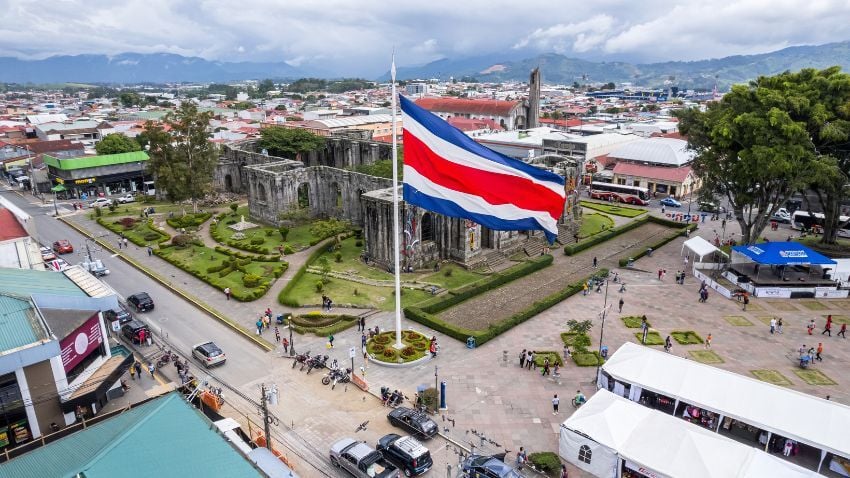
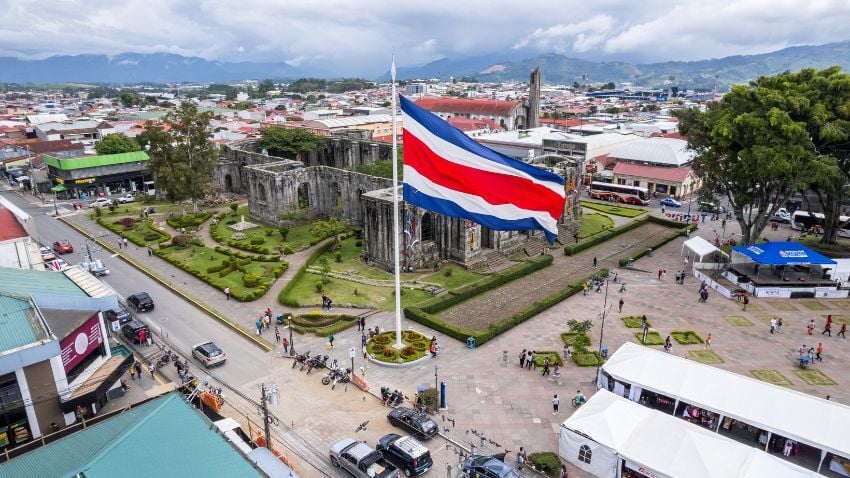
Costa Rica is close to North America, easy to settle into, and offers simple residency options (Rentista/Pensionado). It has affordable private healthcare, a territorial tax system, and strong expat hubsthough living costs aren’t the lowest
3. COSTA RICA
Costa Rica is one of the most familiar and accessible destinations for Americans looking to relocate abroad without venturing too far from home. It’s a small Central American country with diverse landscapes, including rainforests, volcanoes, and beaches along both coasts. There’s a well-established expat community, and flights to the U.S. or Canada are short and frequent. With a warm climate and modern amenities in most expat hubs, Costa Rica is easy to settle into.
Immigrating to Costa Rica is relatively simple. Many Americans enter the country visa-free before transitioning to a temporary residency program. The favourite option is the Rentista visa, which requires proof of $2,500 USD per month in income (or a structured bank deposit). The Pensionado visa is also very common among Americans, which requires proof of just $1,000 USD per month. These are temporary visas and are typically issued for two years. Expats can apply for permanent residency after three years.
Expats can choose the investor visa path that requires a $150,000 USD investment in a business or real estate. You may also prefer to invest $100,000 USD in a forestry project. However, note that an investor visa is also temporary.
Overall expenses in Costa Rica are relatively higher than in other Central American countries. The cost of living, including rent, is 30% higher in the country than in the U.S. You can dine in restaurants in Costa Rica for 34% cheaper than in the U.S. Groceries are also 18% cheaper than in the U.S. However, while Costa Rica has some obvious cost-of-living advantages compared to the U.S., it isn’t among the most affordable Latin American countries.
Additionally, high-quality private healthcare is affordable for expats and widely available in both city centres and coastal towns. Among the most famous private hospitals are Hospital CIMA, Hospital Metropolitano, and Hospital Clínica Bíblica. Private healthcare insurance in Costa Rica typically ranges from $60 to $250 per month for local plans covering private hospitals, consultations, and emergencies.
Costa Rica is known for its peaceful culture. The absence of a standing military makes expats feel safe there. Although there are localized security problems related to drug trafficking, ordinary citizens and expats who aren’t engaged in gang disputes are generally not affected. Costa Rica’s homicide rate stands at 16.6 per 100,000 people, and Numbeo’s Safety Index scores the country around 46 out of 100.
Costa Rica’s territorial tax system is a major advantage for expats with foreign-source income. Combined with the country’s other attractions, it draws retirees, digital nomads, entrepreneurs, and other expats seeking to improve their quality of life.
In the Expat Index 2026, Costa Rica rose 12 places, from 20 to 8, and steadily improved its scores in stability, safety, and business conditions. Those considering a move to Costa Rica should act now, before financial thresholds rise quickly.

Uruguay offers stability, an easy residency path, and a flexible route to citizenship. It combines a high quality of life with lower costs, strong private healthcare, and good safety plus tax perks for newcomers, though rules tightened in 2026
2. URUGUAY
Uruguay is one of Latin America’s favourite destinations among expats, known for its political and economic stability, modern amenities, and easygoing lifestyle. Its well-established, expat-friendly, and durable immigration path also helps raise its popularity. Although Uruguay is relatively far away from North America, located on the southeastern coast of South America, it has four distinct seasons, mild temperatures without extremes, and evenly distributed rainfall year-round.
Residency in Uruguay is quite straightforward. There are no minimum investment thresholds or point systems. You can enter the country as a tourist and apply for residency by submitting basic documents. According to your intentions, you can apply for either permanent or temporary residency. Obtaining residency in Uruguay requires a genuine intent to live in the country. Nevertheless, once approved, you’re free to come and go as you wish.
Uruguay's citizenship path is more flexible than in many other Latin American countries. For those with family ties, three years of residency is enough to apply for citizenship. Others need five years of residency without paying any application fee. However, applicants must demonstrate strong ties to the country by learning basic Spanish, integrating socially, and engaging in economic activity.
One of the strengths of Uruguay is the relatively low cost of living in the country. A first-world quality of life combined with the ability to save an important portion of your income greatly enhances Uruguay’s appeal. According to Numbeo’s Cost of Living Index, overall expenses, including rent, is 45% lower than in the U.S.
As a well-established expat destination, Uruguay offers easy access to affordable, high-quality private healthcare in urban and coastal areas alike. There are many great private hospitals, such as the British Hospital, Hospital Italiano de Montevideo, and Médica Uruguaya, which all have English-speaking staff and Western-educated specialists. Private healthcare in Uruguay, mainly through mutualistas, is affordable and widely used by expats, offering access to top facilities such as the British Hospital. Standard plans typically cost $70–250 per person per month, with small copays for services.
Uruguay remains one of the safest countries in the region. By following common-sense precautions, avoiding poorer suburbs and border areas with Brazil, and choosing established expat neighbourhoods, you can live quite safely in Uruguay. Uruguay's homicide rate has been around 10 per 100,000 people in recent years, and Numbeo’s Safety Index scores the country around 47 out of 100.
Furthermore, Uruguay offers some attractive tax policies for expats with foreign income. To make the regime attractive to newcomers, Uruguay offers new tax residents a choice: either an 11-year exemption (tax holiday) on foreign dividends and interest, or a permanent reduced rate of 7% on that income, instead of the standard 12%. There have been changes to the tax system that have expanded the tax base in Uruguay. From January 1, 2026, Uruguay will treat certain foreign passive income as Uruguayan-source income and tax it at 12%, with credits for foreign taxes paid. Tax holiday eligibility now also requires stricter conditions, such as 183+ days of presence or qualifying investments. You should also be careful to distinguish between passive and active income sourced abroad.
Because of its many advantages, Uruguay ranks in the top ten in our Expat Index. However, largely due to tax system changes that broaden the tax base in Uruguay, it fell 5 places to 7th this year.
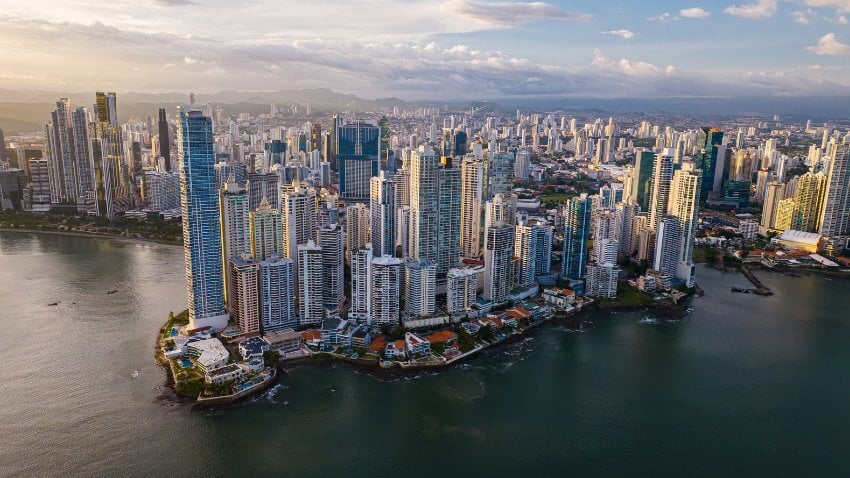
Panama is a welcoming, trade-powered hub that makes residency straightforward for expats while offering a high-quality lifestyle at a much lower cost than the U.S.
1. PANAMA
Panama has spent decades designing itself around foreign residents as a policy choice. As a country that largely benefits from regional and international trade routes, Panama understands that expats bring capital, skills, and stability. The system is designed to let them in quickly, not to wear them down.
However, I must warn you that the investment threshold is rising, as Panama has become a top destination for expats. Nevertheless, Panama still offers multiple, well-established residency routes, with the most common being investment-based, income-based, and professional pathways.
The most established residency path in Panama is the Qualified Investors Visa, which requires a $300,000 USD real estate investment. However, the investment threshold is set to rise to $500,000 USD this year, 2026. You can also choose to invest $500,000 USD in Panamanian securities or place $750,000 USD in a five-year fixed-term bank deposit. This residency path can also lead to citizenship, but you must act quickly, as the investment threshold is rising.
These visa programs in Panama are well-established and have clear rules. There are no surprises for applicants, and procedures move quickly. Panama is also home to large expat communities, so you won’t feel like a stranger for long. Its proximity to the U.S. makes visits easy, and efficient freight-forwarding options allow you to bring almost anything from home, helping you settle in comfortably.
It’s a first-class lifestyle without first-world costs. According to Numbeo’s Cost of Living Index, overall living expenses in Panama, including rent, are about 55% lower than in the U.S. With these lower expenses, you can maintain any modern amenities you are accustomed to and more.
Expats also benefit from the many lifestyle advantages Panama offers. Private healthcare is world-class and affordable enough that many people pay out of pocket for doctor visits rather than use insurance. However, health insurance is affordable, ranging from $50 USD to $150 USD, depending on age and coverage.
Beyond these advantages, safety is generally not a major concern for expats. I have lived in Panama with my family for six years and have never experienced any incidents. Of course, that doesn’t mean you should ignore basic precautions, but the safety habits required here are the same common-sense measures you would follow anywhere in the world. The homicide rate in Panama is around 12 per 100,000 people. Numbeo’s Safety Index scores the country 57 out of 100, higher than the U.S. and Canada.
One of Panama's strengths is its territorial tax system, which does not tax income from abroad. Panama has a truly territorial tax system, without exceptions or special conditions, and it has been well established and tested for years. Along with its territorial tax system, its dollarized economy is a significant advantage for monetary stability, which is crucial for expats.
It’s no surprise that Panama places 4th in our Expat Index 2026. Panama rose three places in the rankings this year thanks to a stronger performance in lifestyle, stability, and business.
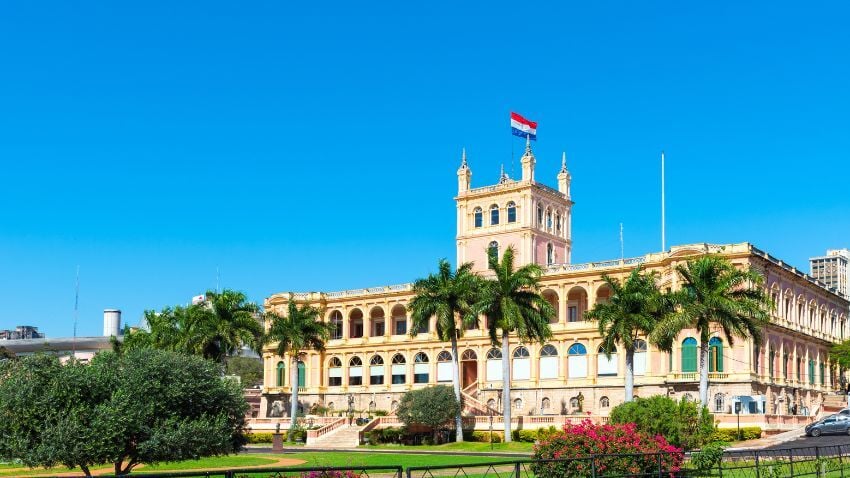
Choosing where to immigrate depends on your priorities: Panama for speed, Paraguay for low costs, and Mexico for proximity. These are just examples; there are many great options. Easy immigration is about building a long-term Plan-B
CONCLUSION
Although there are many criteria to consider when deciding on immigration, choosing the right country ultimately comes down to your priorities. If you are looking for a top-tier expat destination with fast processing, Panama is the best choice for most Americans. If the goal is to keep costs low and invest in emerging economies, Paraguay is hard to beat. Of course, some Americans prioritize proximity to the U.S. and familiarity; in that case, the choice is Mexico. However, don’t forget that these are just a few examples for you to think about. There are many other great countries in the world, offering opportunities for expats who are willing to take them.
Easy immigration isn't about fleeing the United States; it's about choosing jurisdictions that offer long-term options for your Plan-B. Start exploring more options by downloading our free special report on Plan-B Residencies and Instant Citizenships.





 Mikkel Thorup: February 19, 2026