Taxation is theft, and you have not just practical reasons to avoid it but also moral reasons not to pay taxes. On the other hand, taxing is the defining feature of modern states, and political elites are quite sensitive to protect their arbitrary monopoly power over taxing productive people.
Since the invention of income tax in England, the scope and the rates of taxation have progressed steadily, and there seems to be no prospect of reversal in the foreseeable future. As a matter of fact, far from reversing course on taxation, governments are preparing a new wave of progressive taxes as the populations of developed economies age.
Thus, leaving aside the zero tax oil-rich countries, governments tax everything they can, though some tax more than others. However, for expats with offshore income streams, the territorial tax system offers an opportunity to restructure tax planning, resulting in lower or zero tax exposure.
Some Latin American countries have implemented territorial tax systems to attract expats and foreign investors, and the Panama territorial tax system is one of the most famous among them. In this article, I will explain what a territorial tax system is, how it works in Panama, and what you should know before making any move, especially if you are considering expat living in Panama or relocating as part of a long-term strategy.
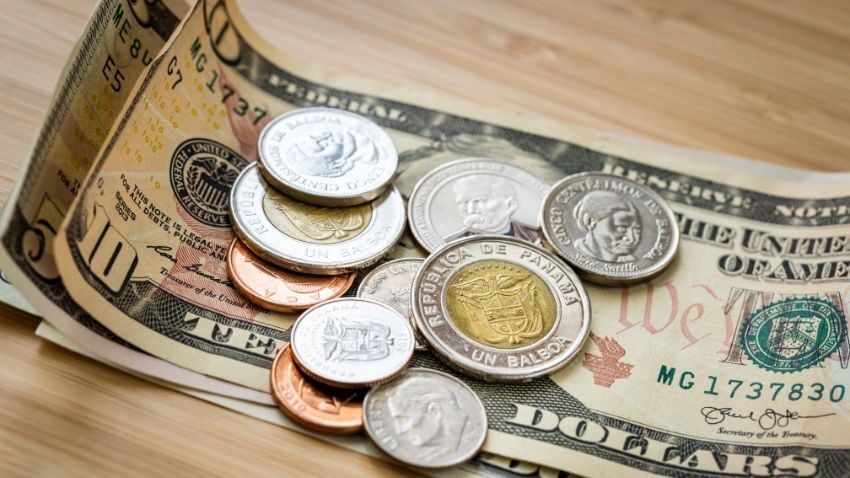
Panama uses a territorial tax system, taxing only income earned within its borders. Foreign income is exempt for all residents, unlike countries with worldwide taxation, like the U.S.
WHAT IS THE TERRITORIAL TAX SYSTEM IN PANAMA?
Panama has become a crossroads of global trade since the Canal opened in 1914. Ships from every nation on earth have been passing through its waters, and money has been flowing in from every direction. This Central American country understands that the best way to attract more wealth is not to try to grab all of it, which is why the Panama territorial tax system remains so competitive.
Most countries around the world have built sprawling tax bureaucracies designed to track and tax every dollar their citizens earn, no matter where on the planet it is generated. Panama took the opposite approach. It drew a line at its own borders and said that it will only tax what happens within its territory, which is the foundation of the territorial tax system.
That is what a territorial tax system is. Only income earned within the country’s borders is subject to tax. Income from abroad, whether it comes from employment, investments, freelancing, business operations, or a pension earned over decades, is completely exempt. This is one of the main reasons why many people consider living in Panama as an expat.
This is the polar opposite of what countries like the United States do. America follows a citizenship-based worldwide taxation model, which means that if you are an American citizen, the IRS expects a piece of everything you earn, even if you have not set foot in the country in years. That is why Americans living in Panama must still plan carefully.
What surprises people the most is that this is not a new trend. Panama has been running this system for over a century. It is one of the oldest continuously operating territorial tax regimes in the world, which is why living in Panama as an expat has become increasingly attractive and continues to draw expats to Panama looking for tax efficiency and lifestyle benefits.
HOW DOES THE PANAMA TERRITORIAL TAX SYSTEM AFFECT EXPATS LIVING IN PANAMA?
The entire system rests on a single article of law. Article 694 of the Panamanian Fiscal Code states that income tax applies only to taxable income produced within the territory of the Republic of Panama. That is it. That one provision is the foundation of all taxes in Panama.
This means that if you are living in Panama, but your clients are in London, New York, or Berlin, and the services you provide are consumed outside Panama, you owe nothing to the local tax authority. If you are a retiree collecting a pension from abroad, Panama will not tax it.
If you run a company headquartered in Panama that generates its revenue through international trade conducted outside the country, that revenue is also tax-free under the Panama territorial tax system.
The system does not even bother defining what a non-resident is in the Tax Code. When the only thing that matters is where the income comes from, your residency status is almost irrelevant. This simplicity is one of the reasons why expat life in Panama is so appealing, especially among expats in Panama who earn income internationally.
Of course, this does not mean Panama is a tax-free country in every sense. Income earned in Panama is taxed. If you open a business, work locally, or sell to Panamanian customers, you will pay taxes like anyone else under the standard taxes in Panama.
%20agreement%20with%20the%20U.jpg?width=850&height=478&name=It%20is%20a%20signatory%20to%20the%20OECD%20Multilateral%20Convention%20on%20Mutual%20Administrative%20Assistance%20in%20Tax%20Matters.%20Finally%2c%20it%20has%20signed%20the%20Foreign%20Account%20Tax%20Compliance%20Act%20(FATCA)%20agreement%20with%20the%20U.jpg)
Panama follows global transparency rules, sharing financial data with other countries. While it doesn’t tax foreign income, it doesn’t hide it either, offering a system that’s favourable, not secretive
HOW DOES THE TERRITORIAL TAX SYSTEM WORK IN PANAMA IN PRACTICE FOR EXPATS AND INVESTORS?
A tax system is only as good as the legal and institutional framework that supports it. Panama’s territorial model is built on specific, interlocking mechanisms that have been refined over decades.
WHAT IS THE LEGAL FOUNDATION OF THE TERRITORIAL TAX SYSTEM IN PANAMA?
The history of the territorial tax system in Panama goes back to Article 694 of the Fiscal Code, enacted under Law No. 8 in 1956. This article explicitly limits taxation to income originating in Panama.
Additional clarification was provided by Executive Decree 170 of 1993, which explains how the principle applies in different scenarios. These rules provide the legal certainty that attracts expats to Panama.
HOW IS INCOME SOURCE DETERMINED UNDER TAXES IN PANAMA?
This is where things become practical. The authorities focus on where the economic activity takes place, not where the money is received. This is a key concept in understanding taxes in Panama.
If you provide services, the question is where those services are delivered. If you sell products, the question is where the transaction occurs. This clarity is one of the reasons why many choose to live in Panama.
HOW DOES PANAMA’S TERRITORIAL TAX SYSTEM COMPLY WITH INTERNATIONAL TAX RULES?
Despite its favourable system, Panama participates in global transparency initiatives. It has signed agreements with the United States, Canada, and European countries, and it complies with FATCA and CRS standards.
For those considering becoming expats living in Panama or joining established expat communities in Panama, this means that while Panama does not tax foreign income, it also does not hide it from foreign authorities.
HOW DO TRANSFER PRICING RULES WORK?
One of the important rules imposed on multinational companies operating through entities in Panama is the transfer pricing. When a multinational company operates through different subsidiaries (for example, one in Panama and another in the U.S. or Europe), those companies often buy and sell things from each other: goods, software, services, loans, etc.
Transfer pricing is the price they set on these internal, cross‑border transactions. Companies may set artificially high or low prices between their own entities just to move profits to low‑tax countries and reduce taxes in high‑tax countries. That is why transactions between related parties must reflect market prices. The aim is to prevent artificial profit shifting within regional systems. This structure helps maintain credibility with international regulators while supporting long-term confidence among expats in Panama and global investors.
WHAT ARE PANAMA’S SPECIAL ECONOMIC ZONES FOR EXPATS AND INTERNATIONAL BUSINESSES?
Panama also has targeted regimes designed to attract specific types of business. The most important of these is the Multinational Corporation Headquarters Regime (SEM). If companies are actually operating in the country and have established their regional headquarters in Panama, they are subject to a reduced tax rate of 5%. Furthermore, the Panama Pacific Special Economic Area in the Arraiján region offers preferential rules for various business activities. The EMMA (Multinational Company for the Provision of Manufacturing‑Related Services), implemented in 2020, also targets manufacturing-related services.
These special zones were updated in 2018 to comply with the OECD’s Base Erosion and Profit Shifting standards. Thus, although Panama is willing to play by evolving international rules, it is not willing to abandon the territorial principle itself.
These developments also contribute to the growth of expat communities in Panama, particularly among professionals and entrepreneurs involved in international business and cross-border operations.
WHY HAS THE PANAMA TERRITORIAL TAX SYSTEM REMAINED STABLE FOR EXPATS LIVING IN PANAMA?
The territorial system is not some experiment or a temporary government incentive program that might get cancelled after the next election. Panama’s territorial tax system has been in continuous operation, in one form or another, for more than a hundred years.
It started in 1919, when Panama began registering foreign ships to help international companies sidestep the taxes and regulations of their home countries. That was the birth of Panama’s famous flag-of-convenience shipping registry, which to this day gives the country the largest registered fleet in the world on paper.
In recent years, this system has been extended to corporate and financial services. The country has introduced permissive incorporation laws that allow anyone to create tax-free, anonymous corporations with minimal questions asked. That is why Panama has been building its reputation as a place where international money could flow without friction.
CAN EXPATS TRUST THE PANAMA TERRITORIAL TAX SYSTEM FOR LONG-TERM LIVING IN PANAMA?
You can have the most favourable tax system in the world, but if it might change next year, it is useless for long-term planning.
That is where Panama’s territorial tax system shines most. It has survived everything. Dictatorships, democratic transitions, international sanctions, global financial crises, the Panama Papers, and intense pressure from the OECD and the European Union. Through all of it, the territorial principle has remained intact.
There is a simple but strong reason for the sustainability of the system: the entire economy depends on it. Panama’s roles as a shipping registry, a banking center, a logistics hub, and a destination for foreign investment are all built on the foundation of territorial taxation. Removing it would be like pulling the engine out of a moving car. That is why no rational government would do it.
Panama won’t tax your foreign income, but your home country might. Tax rules vary, and residency differs from tax residency, requiring real ties or 183+ days in Panama to qualify
WHAT SHOULD YOU KNOW ABOUT TAXES IN PANAMA BEFORE LIVING IN PANAMA AS AN EXPAT?
The system is highly attractive, but there are important details to understand before living in Panama.
HOW DO HOME COUNTRY TAXES AFFECT AMERICANS LIVING IN PANAMA?
Panama will not tax your foreign income. However, that does not mean nobody will. If you are a U.S. citizen, the IRS will tax you on your worldwide income regardless of where you live. Sure, you can use the Foreign Earned Income Exclusion to shelter some of your earnings, but it has limits, it applies only to earned income, and you have to qualify. Pensions, Social Security, dividends, and capital gains are not covered. There is also no totalization agreement, which means self-employed Americans may end up paying into both the U.S. and Panamanian social security systems at the same time.
Other nationalities have their own rules. The point is: Panama’s system handles only the Panamanian side of the equation. You still need to deal with your own country, and that is where things get complicated.
WHAT IS THE DIFFERENCE BETWEEN RESIDENCY AND TAX RESIDENCY FOR EXPATS IN PANAMA?
Having a residence card and being recognized as a tax resident are two different things. If you want to use your Panamanian residency to support tax positions in your home country, like the Bona Fide Residence Test for U.S. purposes, you must show genuine ties with the country. Spending real time in the country, maintaining a home, and building a life there are examples of evidence of real ties.
For Panamanian tax residency purposes with the DGI, you generally need to spend at least 183 days per year in the country or establish that your center of vital interests is in Panama.
WHAT COMPLIANCE RULES APPLY TO EXPAT LIVING IN PANAMA AND BANKING?
Panama uses the U.S. dollar as its everyday currency, with its own balboa coins circulating at a 1:1 peg. If your income is in dollars, that's one less thing to worry about. Thus, there is no currency risk or conversion fees. However, opening and maintaining bank accounts requires dealing with robust KYC and anti-money laundering procedures. Banks are supervised by the Superintendency of Banks, which takes compliance seriously. If you are American, you also need to remember the Report of Foreign Bank and Financial Accounts (FBAR) reporting: any Panamanian bank accounts that exceed $10,000 USD at any point during the year must be reported to FinCEN.

Panama’s territorial tax system isn’t a loophole; it’s a proven, century-old model. For global earners who plan properly, it offers a stable, tax-friendly environment with zero tax on foreign income
CONCLUSION
It is important to know that Panama’s territorial tax system is not a loophole or a temporary experiment. The territorial tax system is a century-old policy that has been tested by history, codified in law since 1956, and reinforced by Panama's economic reality.
For the right person, someone who earns their income internationally, understands their home country’s tax obligations, and is willing to structure their affairs properly, Panama offers one of the most favourable tax environments on the planet. There is no tax on foreign income, wealth, or inheritance. It has A dollar-based economy, easy and established residency programs, and a government that has every reason in the world to keep things exactly as they are.
If you are considering Panama as part of your international diversification, or looking to build a solid Plan-B with residency and citizenship options, you can download our special report on Plan-B Residencies & Instant Citizenships to explore your next steps in a structured and informed way.




%20Brazil%20The%20Cash%20Cow%20Opportunity%20That%20I%20Couldn%E2%80%99t%20Ignore%20Any%20Longer-1.jpg?width=800&height=429&name=(BLOG%20BANNER)%20Brazil%20The%20Cash%20Cow%20Opportunity%20That%20I%20Couldn%E2%80%99t%20Ignore%20Any%20Longer-1.jpg)


















 Mikkel Thorup: October 12, 2026