Colombia continues to move up the radar for people looking to live better, spend less, and build international optionality. With improving infrastructure, expanding private healthcare, and a cost structure far below that of North America, the country offers a real lifestyle upgrade for those willing to look beyond traditional destinations.
What makes Colombia especially interesting is the range of environments it offers. You can find modern cities with international amenities, regional hubs with lower costs and less density, and cultural centers that still feel authentically local. For expats, this creates a genuine choice rather than a single obvious destination.
Colombia is also no longer just cheap. It is becoming functional. Digital infrastructure, residential development, private services, and international connectivity have all improved substantially. That shift makes long-term residence more realistic for professionals, entrepreneurs, and retirees alike.
In this article, we will dive into the best cities in Colombia for expats in 2026, focusing on what actually matters for relocation decisions: lifestyle, safety, cost of living, infrastructure, and long-term viability.
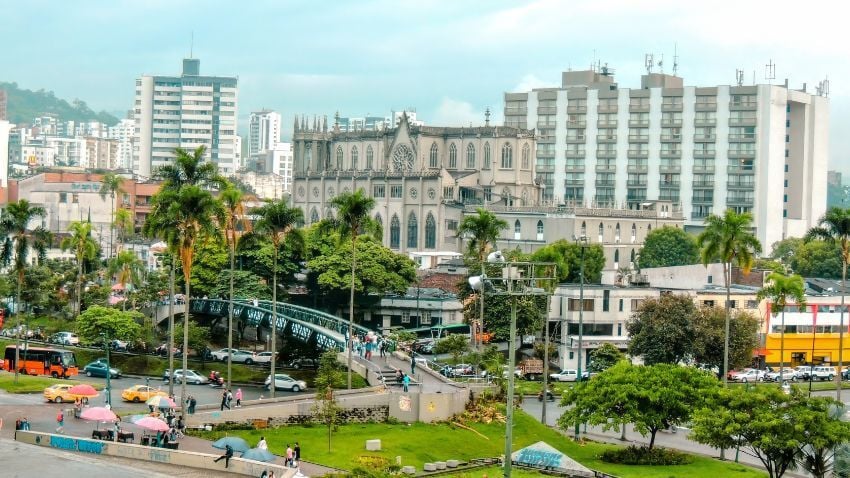
Expats and digital nomads are increasingly choosing to live in Colombia’s Coffee Triangle cities, such as Pereira, drawn by its calm and affordable lifestyle, mild weather, fresh food, and easy access to nature
5. THE COFFEE TRIANGLE (PEREIRA, MANIZALES, ARMENIA)
The Coffee Triangle is one of Colombia’s most scenic and culturally rich regions. Rolling green hills, coffee plantations, and mild temperatures create an environment that feels calm, grounded, and distinctly Colombian. For many expats, this region represents an appealing alternative to large urban centers.
Cities like Pereira, Manizales, and Armenia offer lower population density, less congestion, and a slower pace of life. Daily expenses are among the lowest in the country, and access to fresh food, nature, and outdoor activities is a major draw. For expats who value tranquillity, routine, and proximity to nature, the lifestyle can be deeply satisfying.
The region also benefits from a strong local identity and a sense of community that is harder to find in larger cities. Expats who integrate tend to develop closer relationships with locals, and the overall environment feels stable and predictable rather than fast-moving or chaotic. For retirees, remote workers, or those prioritizing lifestyle over expansion, it can be an excellent fit.
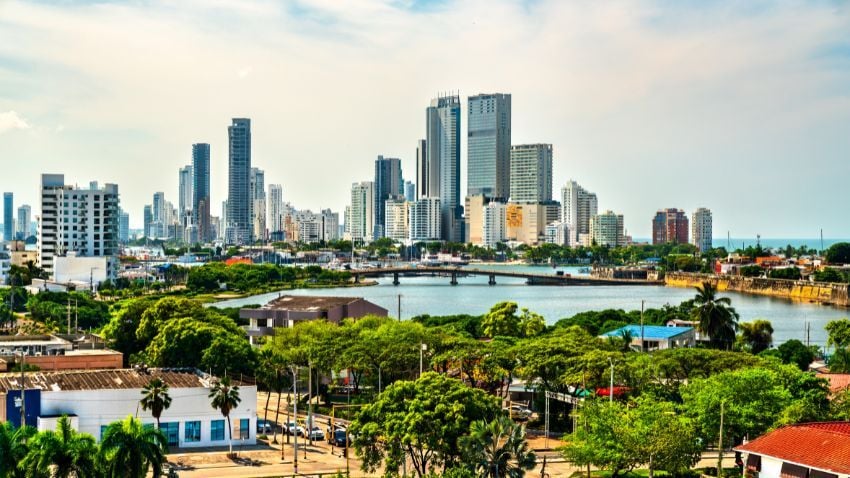
Cartagena offers coastal living, a historic old town, rich culture, and a vibrant Caribbean atmosphere with strong amenities in its prime areas
4. CARTAGENA
Cartagena is one of Colombia’s most iconic cities, known for its historic old town, Caribbean atmosphere, and tourism-driven economy. From a lifestyle perspective, it offers coastal living, culture, and an environment that often feels more like a permanent vacation than a work-focused city.
For expats, however, Cartagena is generally better suited to short- to medium-term stays than to building a long-term base. Economic activity is heavily concentrated in tourism, hospitality, and seasonal services, which limits professional and entrepreneurial opportunities in other sectors.
Infrastructure continues to improve, but it still lags behind Medellín and Bogotá. Healthcare access is solid but not as comprehensive, and real estate prices in premium areas are higher relative to the value offered compared with inland cities.
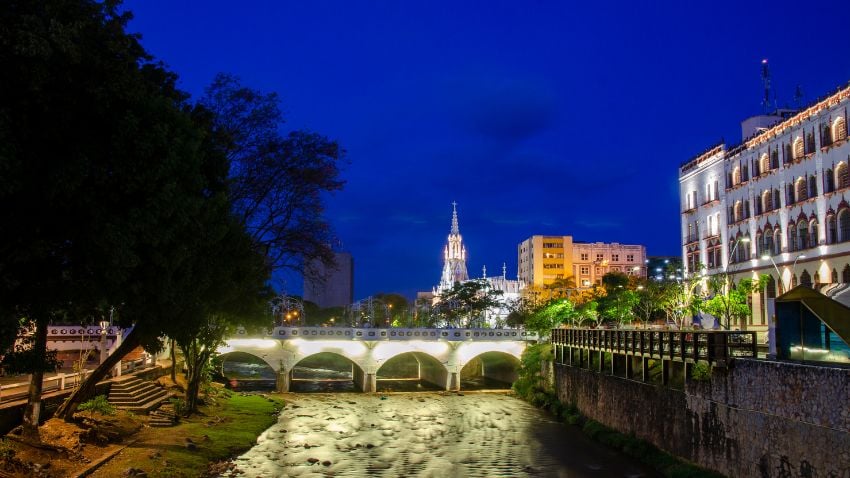
Cali is a lower-cost Colombian city offering urban amenities, a warm climate, and a more local expat experience
3. CALI
Cali offers a combination of affordability, culture, and energy that appeals to expats who want a more local and less internationalized experience. Known for its music, food, and warm climate, it provides a lower cost of living than Medellín or Bogotá while still functioning as a major urban center.
The expat scene in Cali is smaller and less structured. This can be a positive for cultural immersion, but it is a drawback for those who rely on international networks, coworking environments, or English-speaking professional services. Business ecosystems and investment pipelines are also more limited.
Safety perception in Cali is weaker than in the top-ranked cities, and expats tend to be more selective about neighbourhoods and daily routines. This does not make it unlivable, but it does require a higher level of situational awareness and planning.
Cali is a strong value option for budget-conscious expats who prioritize culture over connectivity. For those seeking a long-term strategic base, it sits solidly in the middle of the rankings.

Bogotá is Colombia’s institutional and financial center, ideal for career-focused expats seeking access to professional networks and major opportunities
2. BOGOTÁ
Bogotá is Colombia’s political, financial, and institutional center. It offers the widest access to universities, multinational companies, government offices, and top-tier healthcare facilities. For career-oriented expats, this is where most professional opportunities exist.
The scale of the city brings both advantages and drawbacks. Infrastructure is extensive, but traffic, congestion, and air quality can affect day to day quality of life. Neighbourhood selection becomes critical, as the experience varies dramatically across the city.
Safety perception is lower than in Medellín, and while many expats live comfortably, it requires more deliberate planning around where you live and how you move. Cost of living remains far below major cities in the United States and Canada, but it is higher than in most other Colombian destinations.
Bogotá makes sense if your priority is access to institutions, large-scale opportunity, and professional networks.

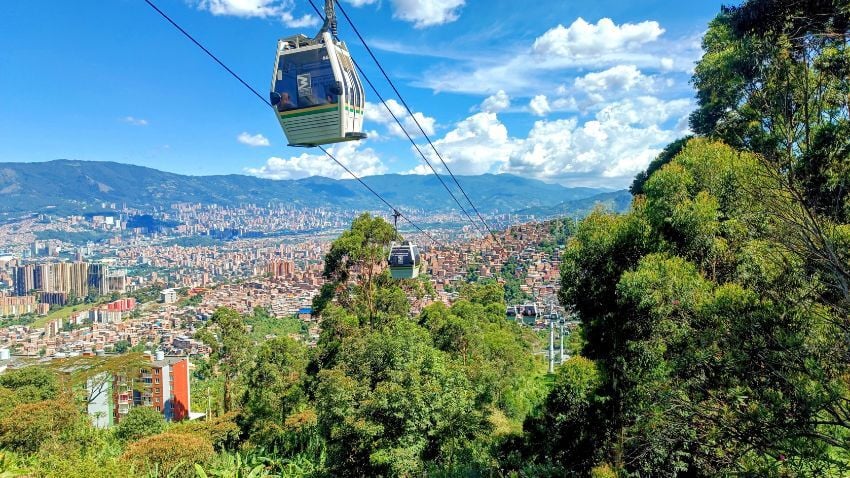
Medellín stands as Colombia’s top expat city, combining spring-like weather, strong infrastructure, walkable neighbourhoods, and real opportunities to live well, invest, and build a long-term base
1. MEDELLÍN
Medellín remains the gold standard for expats in Colombia. It offers a rare combination of livability, affordability, infrastructure, and opportunity. Often referred to as the City of Eternal Spring, its climate alone places it ahead of most competitors.
The city has built a strong international ecosystem with coworking spaces, modern residential developments, private healthcare, and a visible entrepreneurial community. Neighbourhoods such as El Poblado and Manila provide walkable, café-centred lifestyles that feel familiar to expats without losing local character.
Safety perception in Medellín consistently ranks higher than in other major Colombian cities, and quality-of-life metrics reflect the city's transformation over the past decade. It is not perfect, but relative to the rest of the country, it offers the most balanced environment.
Medellín is not just a place to live well. It is also one of the few Colombian cities where expats can realistically build businesses, invest in property, and establish a long-term base. For 2026, it stands clearly as the best city in Colombia for expats.
TYPES OF VISAS IN COLOMBIA
When moving to Colombia, choosing the right visa is your first major step. The Colombian Ministry of Foreign Affairs offers three main visa categories, each designed for a different purpose.
-
Visitor Visa (V Type): This option is ideal for tourists, short-term business travel, or digital nomads who are not establishing formal residency. It generally allows stays of up to 180 days per year and includes subcategories such as Tourist, Business, Event Participant, and Volunteer. For many people, this is the entry point to test life in Colombia before making longer-term decisions.
-
Migrant Visa (M Type): This visa is designed for foreigners who intend to live or work in Colombia for an extended period. Common categories include Work, Student, Marriage or Union with a Colombian citizen, Investor, and Retiree visas. These are typically valid for up to three years and represent the main pathway for expats who want legal residence without committing to permanent status.
-
Resident Visa (R Type): This is the option for those who want to settle permanently. It is generally granted after holding a Migrant Visa for at least five years, or immediately in cases such as having Colombian children or making a qualifying investment in the country. Resident visas are usually indefinite, provided you do not remain outside Colombia for more than two consecutive years.
Because each visa category has its own financial requirements, documentation standards, and eligibility rules, the right choice depends on how you plan to live in Colombia, the type of work or business you intend to pursue, and how long you expect to stay. Defining those factors in advance makes the residency process significantly more straightforward.
Related content: Essential Guide On Colombian Visas For Expats
HOW SAFE IS COLOMBIA TODAY?
Colombia is one of the most popular expat destinations in Latin America, even though its reputation is still shaped by a very different past. While headlines often focus on outdated narratives, the day-to-day reality for most expats living in Colombia today is far more balanced and positive.
The country’s reputation was largely formed during the 1980s and 1990s, when drug cartels and armed groups created real instability. That period left a lasting impression abroad, but it does not reflect modern Colombia. Over the past two decades, the government actively dismantled major criminal organizations and restored state presence across much of the country.
These efforts led to a significant decline in crime compared to peak levels and marked a turning point in national security. Improved law enforcement, institutional reforms, and a stronger judicial system helped stabilize cities and created the conditions for economic growth, tourism, and international investment.
For expats, safety today is largely defined by location and awareness rather than constant risk. Major cities such as Medellín, Bogotá, and Cartagena have experienced sustained improvements, particularly in central and expat-friendly neighbourhoods.
Colombia is not perfect, and some regions still require caution. However, for expats who choose their city and neighbourhood carefully, integrate into local and expat communities, and follow common-sense practices, Colombia offers a safe and livable environment with a quality of life that often exceeds expectations.
Related content: How Safe Is Colombia For Expats?

Colombia combines low living costs with improving safety and modern infrastructure, making it an increasingly attractive destination for visitors, expats, digital nomads and retirees
COST OF LIVING IN COLOMBIA
Cost of living remains one of Colombia’s greatest advantages. According to Numbeo, the overall cost of living, including rent in Colombia, is 58.9% lower than in the United States and 52.5% lower than in Canada.
Housing is where the difference is most dramatic. Rent prices in Colombia are 72.2% lower than in the United States and 64.2% lower than in Canada. This alone allows most expats to upgrade their living conditions while significantly reducing monthly expenses.
Everyday lifestyle costs also show substantial gaps. Restaurant prices in Colombia are 61.9% lower than in the United States and 56.7% lower than in Canada. Grocery prices are 54.7% lower than in the United States and 51.3% lower than in Canada. These differences make daily life noticeably more affordable without sacrificing quality.
This cost advantage enables expats to maintain a comfortable lifestyle while redirecting resources toward investments, travel, savings, or long-term international strategies. It is one of the core reasons Colombia continues to attract globally mobile individuals looking for both freedom and financial efficiency.

Colombia is emerging as one of Latin America’s top expat destinations, offering affordability, modern infrastructure, and the flexibility to build a sustainable Plan-B abroad
CONCLUSION
Colombia has positioned itself as one of the most popular expat destinations in Latin America for 2026. The combination of affordability, improving infrastructure, and diverse lifestyle options gives expats a level of flexibility that is increasingly difficult to find around the world.
What ultimately makes Colombia attractive is not just its cost of living, but the variety of experiences it offers. The country allows expats to lower expenses while improving day-to-day living, accessing modern services, and building a sustainable base outside a single system.
Whether you’re already exploring a Plan-B in Colombia or still searching for the right place and strategy, your journey starts here. Take the first step with our "Plan-B Residencies & Instant Citizenships" special report.




 Mikkel Thorup: March 06, 2026