Imagine standing at the airport check-in counter, ticket in hand, ready to board your flight, only to be told that your passport has been suspended. You can’t leave. Even worse, imagine that you’re already abroad when your government declares you a criminal and cancels your passport. Suddenly, you’re stranded in a foreign country with no way to return home or legally move on. It sounds far-fetched, but your freedom of movement can vanish with a single bureaucratic decision, often without due process or warning.
Most people go through life assuming their passport is a lifelong guarantee of freedom of travel. However, a passport is just a government-issued document that permits you to travel internationally. Since the government controls it, it can be suspended or weaponized against you if circumstances ever change.
In this article, we’ll explore the hidden dangers of holding only one passport—how it can limit your freedom, expose you to financial and political risks, and leave you vulnerable when things go wrong.
MAJOR RISKS OF HAVING ONLY ONE PASSPORT
Although your passport is a travel document, it’s also a reflection of your government’s reputation, stability, and foreign relations. When that system is shaken, your freedom is shaken with it. Here are the most common and often underestimated risks associated with relying on a single passport.
GEOPOLITICAL RISKS
A regime change, sudden sanctions, or diplomatic crisis can turn yesterday's allies into today's enemies, and you may be left on your own before you know it. By hiding behind the excuse of so-called national security or public health, governments can revoke passports, impose travel bans, or block citizens from leaving the country. We've seen this before: people trapped by border closures, unable to access their money abroad, or suddenly unwelcome in countries they were previously free to visit. One election, one crisis, one executive order can eliminate overnight the rights you thought were permanent.
LEGAL AND TAX VULNERABILITIES
Citizenship is a legal bond—and sometimes, it’s a financial trap. For example, if you’re an American citizen or even a U.S. resident, your government taxes your worldwide income no matter where you live. Many other countries extend their reach in similar ways. They can demand foreign asset disclosure, impose an exit tax, or even restrict citizens from moving funds abroad during times of economic stress. Some go further by freezing accounts or denying passport renewals to enforce compliance or collect unpaid taxes. When you hold only one passport, you have no opportunity to step outside that system.
A second passport changes that equation. It gives you legal flexibility. You can choose to reside, work, or invest under a different jurisdiction that has more favourable tax laws or fewer reporting requirements. In some cases, you can renounce a high-tax or restrictive citizenship altogether or legally move your tax residence to a country that respects privacy and individual sovereignty. Dual citizenship doesn’t just expand your travel rights but also your legal options, allowing you to decide which government governs the rules for your life and your finances.
MOBILITY LIMITATIONS
The power of a passport is measured by the number and variety of countries it allows visa-free access to, meaning that your passport offers great variability to your global mobility. Limited visa-free access can make global mobility an expensive, time-consuming ordeal. You may face endless visa applications, interviews, and bureaucratic suspicion—especially if your passport comes from a politically unstable or sanctioned country. Even if you’ve done nothing wrong, border agents often judge you by the colour and origin of your passport, not your intentions.
According to the Henley Passport Index, English-speaking countries are falling in the rankings, but East Asian and Latin American passports are steadily rising. In fact, the U.S. passport dropped out of the top 10 in 2025, falling to 12th place, and 37 countries now rank above it.
Moreover, if you already hold a Western passport, obtaining another similar one may not offer much added value. Instead, a better strategy is to diversify by acquiring a passport from a different region. For example, if you’re American, a Brazilian passport can open doors that a U.S. one cannot, such as visa-free access to China.
EXIT TRAPS AND EMERGENCY BANS
One of the most chilling realities of the modern state is how easily a government can decide who is allowed to move and who is not. During the COVID-19 hysteria, countries around the world closed their borders for months. People with long-term residency rights could not travel to their homes because they didn’t hold that country’s passport. Conversely, perhaps you want to leave your home country in an emergency, but the government won’t let you go. Australians, for example, were legally barred from leaving their country for over a year.
OVEREXPOSURE TO A FAILING ECONOMY OR POLITICAL SYSTEM
If your country’s economy collapses, the value of your passport falls with it. This risk isn’t limited to developing nations. During the 2008 financial crisis, citizens of Greece, Spain, and Italy saw their governments impose capital controls and limit bank withdrawals. In 2015, Greek citizens were limited to withdrawing only €60 ($70 USD) per day, while overseas transfers were heavily restricted. In Canada, the government froze hundreds of bank accounts during the 2022 trucker protests under illegal emergency powers, demonstrating how so-called “developed countries” can weaponize financial systems against their own citizens. Meanwhile, British expats faced banking disruptions and residency uncertainty after Brexit, not because they did anything wrong, but because the political consensus shifted beneath them.
Each of these examples shows that no passport guarantees stability. When you rely on only one, you’re exposed to every political decision, fiscal mistake, or emergency decree your government makes. A second passport or residency provides you with options, an alternate system to live, bank, and travel under if your own country starts closing doors.
THE ALTERNATIVE STRATEGY
You don’t collect passports for bragging rights. Each one serves a purpose, such as granting you visa-free access across Europe, allowing you to live or invest where your income isn’t penalized by excessive taxes, or providing a stable jurisdiction to store your wealth. This is what Flag Theory is all about: planting different “flags” of your life— citizenship, residency, banking, and business—in other countries, so that no single government can control every aspect of you. Each passport you hold is a tool, a layer of protection. Together, they form a shield that no single law, crisis, or politician can easily break.

With the right strategy, a second passport isn’t a risk. It’s security, flexibility, and a stronger backup when life changes
COULD PASSPORTS BE A DOWNFALL?
People can become nervous when they read about the dangers of obtaining a second passport. However, most of the so-called “problems” with having a second passport are either extremely rare or easily avoidable if you understand how the process actually works.
Take citizenship-based taxation, for example—almost every country on earth taxes based on tax residency. Unless you’re American, not being a tax resident in your home country is typically sufficient to avoid taxation on income you don’t earn there.
What about military conscription? It’s technically on the books in countries like Brazil or Turkey, but in reality, it’s easy to get an exemption or simply avoid it if you’re living abroad. If a worst-case scenario ever happened, you could relinquish that citizenship. Exit bans and travel restrictions are also generally not a concern.
Even systems like FATCA or CRS reporting, dual citizenship limits, or stigma tied to certain nationalities sound scary, but they’re just part of the game. You navigate them by structuring your life intelligently by creating multiple options, staying compliant, reporting, and having good legal guidance.
So no, a second passport isn’t a risk but a form of insurance. You don’t panic because you have insurance; you sleep better knowing it's there. As long as you plan correctly, understand the laws, and choose your jurisdictions wisely, these “risks” disappear.
HOW TO CHOOSE A SECOND PASSPORT
When choosing a second passport, think strategically and leave your emotions out of the equation. First, prioritize mobility. How many countries can you enter visa-free, and does this visa-free access cover the regions where you actually travel or conduct business? Next, check the citizenship rules. Some nations allow dual citizenship easily, while others force you to renounce your current one. The tax regime is of significant importance. Choose countries that tax based on residency rather than citizenship, and ideally those that exempt foreign-source income, such as territorial tax systems. You should also consider political circumstances in the country, like strong property rights and a trustworthy legal system, because you’re buying into the country’s rule of law, not just its passport.
Geographic balance also matters. If your first passport is European, consider getting your next one from Latin America or the Caribbean. That combination gives you greater reach and flexibility—access to two distinct regions, systems, and political environments. Finally, assess the regulatory risks—whether the country faces sanctions, banking restrictions, or has a habit of changing its citizenship laws.
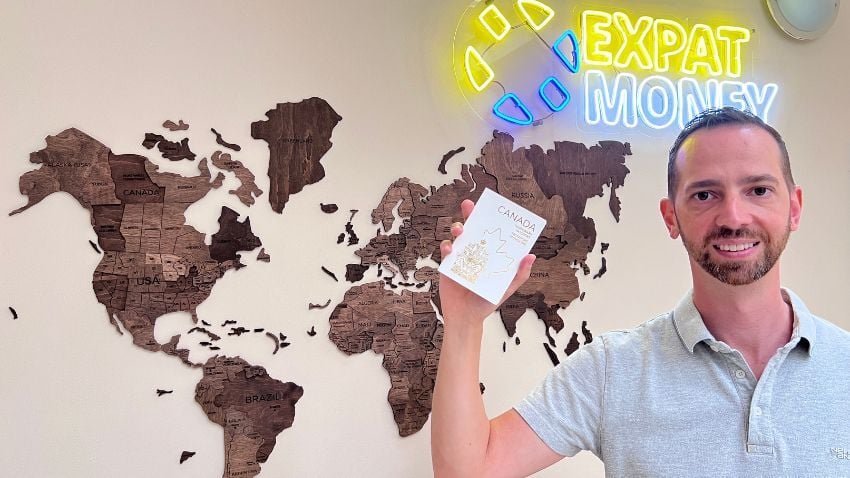
One passport creates dependency. A second citizenship offers resilience—a guaranteed way out and the freedom to move, no matter what happens at home
CONCLUSION
Relying on a single passport is a hidden vulnerability you may not have realized. Most people never question this until a government freezes accounts, blocks travel, or changes the rules overnight. A single passport promotes dependency, not freedom.
However, you can change all of that. Building a second residency or citizenship is about resilience. It’s the quiet confidence that, no matter what happens in your home country, you and your family will always have a way out, a place to go, and the legal right to keep moving forward.
I’ve seen too many people wake up to this reality after the door has already closed. Don’t be one of them. Start planting your flags, one by one—strategically, legally, and deliberately. Take the first step by downloading our free special report, Unlocking True Freedom: How A Second Passport Can Secure Your Future.

















 Mikkel Thorup: October 06, 2026