Expats building a Plan-B usually spread both their legal status and wealth across multiple countries. They might start by purchasing real estate abroad, then obtain a second residency or open an offshore bank account. Sooner or later, they have to move money across a border.
The hard part is usually getting the money there. The bank that has received your salary deposits for twenty years suddenly treats a purchase abroad as a red flag and holds your transfer while it reviews it. When the money finally moves, the same bank may charge you a small fee you can see and, if currency conversion is involved, a larger one hidden in the exchange rate. The good news is you have better options than your bank.
I will walk you through how a transfer really works, what each way of sending money is good for, and how you can move your own money while minimizing delays and hidden costs.
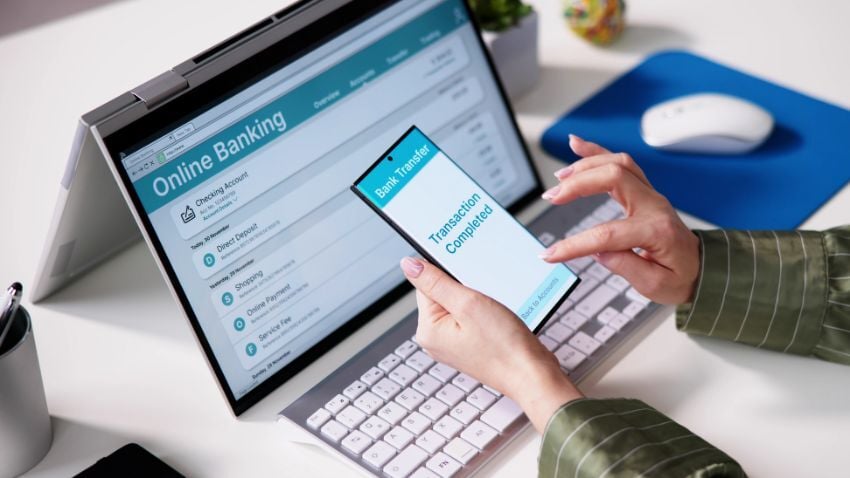
Cross-border transfers often involve more than just the advertised fees, as hidden exchange rate markups, currency conversion costs, and intermediary bank charges can significantly increase the total cost of sending money internationally.
HOW A CROSS-BORDER TRANSFER ACTUALLY WORKS
When an international transfer involves currency conversion, you're comparing two main pricing components, though additional bank fees may also apply. Providers like to advertise the fee because it is small. The second cost can be buried in the exchange rate.
Every currency pair has a market exchange rate, and you can Google it. Banks and transfer companies rarely give you that rate. They quote a slightly worse rate and keep the difference, which never appears on your statement as a charge. On a large transfer, that hidden markup usually costs you far more than the advertised fee.
The exchange rate only comes into play when your money changes currency. Dollars sent from Miami to a U.S. dollar account in Panama arrive as U.S. dollars. Where people get caught is a conversion they never asked for. Your bank may send the payment in the destination currency unless you tell it not to, or the bank on the other end may turn your dollars into the destination currency the moment they land. Either way, someone takes a cut through the rate, and it rarely shows up anywhere you would think to look.
Your money also passes through more hands than you would expect. An international wire often travels through one or more intermediary banks, and each can take a fee on the way. The receiving bank may also charge a fee. That is how $50,000 USD can leave your account and arrive a few dozen dollars short.
Most buyers never think about the gap between signing and paying. You agree on an apartment in Brazil at a fixed price in reais, and the seller expects the money three weeks later. Exchange rates move every day, and if the Brazilian real strengthens against the U.S. dollar during those three weeks, you will need more dollars to pay for the same apartment.
FOUR WAYS TO SEND MONEY ABROAD
Each way of sending money abroad works well for some transfers but not for others. The amount you are sending and how quickly it has to arrive usually decide which one fits.
BANK WIRE
A bank transfer is the default method because your money is already in your bank. Bank wires can accommodate large transfers and work well for straightforward dollar-to-dollar payments. However, transfer and intermediary fees may still increase the total cost.
Problems can start when currency gets converted or a large transfer triggers additional compliance checks. Bank exchange rates are rarely competitive, and intermediary fees are hard to predict. A large transfer to Latin America can also trigger a hold and a call from the compliance department asking you to justify moving your own savings. Your bank answers to its regulators first, and your plans come a distant second.
TRANSFER APPS
If you send your mother $1,000 USD every month, you can use an app. They are quick, and you see the rate on your screen before you send anything. For a house, I want more than that. Many apps impose transfer limits, and they often rely on automated compliance checks. If one of those systems flags your payment, it can be frozen while you deal with customer support by email. Some larger platforms offer higher limits and dedicated support. Check what your provider offers before you plan a large transfer around it. With a closing date on the calendar, I want a person I can call.
SPECIALIST CURRENCY BROKERS
Currency brokers are built for the transfers that give banks trouble. Exchanging currency is their core business, and the rate they quote is usually much closer to the market rate than your bank's. Large transfers are routine for them, too. A $250,000 USD property payment that sets off alarms at a traditional bank is an ordinary working day for a broker.
The biggest difference with currency brokers is the person you deal with. Many specialist currency brokers offer clients a dedicated contact who understands why the money is moving, when it has to arrive, and how to plan the transfer around a closing date. Some currency brokers also offer two useful tools: forward contracts and target-rate orders. You can use a forward contract to lock in an exchange rate when you sign a purchase agreement. That way, currency movements before closing do not change the amount you need to pay in your home currency. Just check the contract terms, including any deposit or cancellation requirements. If you are in no hurry, you can set a target rate and have the order execute when the market reaches it.
Opening the account takes some planning. The broker checks your identity and where your money came from, so start well before the money has to move.
After that, each transfer comes down to two steps. First, you tell your broker what the money is for, such as a land purchase or a residency investment, and agree on the rate. Second, you pay the broker from your own bank account, in your home currency. For clients in the U.S. and the UK, brokers with local collection accounts can often receive payment through an ordinary domestic transfer. The broker then handles the rest, converting the money at the agreed rate and sending it to the designated account abroad, whether that is a lawyer's account or your new foreign bank account.
If a currency broker sounds like the right fit, our trusted partner is the one I have used myself for five years, and you can open an account with them to send your money abroad with confidence.
CRYPTOCURRENCY
Cryptocurrency can be useful when both parties are willing and able to transact in digital assets. However, its suitability depends on whether the recipient accepts cryptocurrency and whether conversion into traditional currency is required.
In a decentralized transfer, Bitcoin can be sent directly between wallet addresses without a bank processing the blockchain transaction. The sender controls the transaction through their wallet, while the recipient controls the Bitcoin once it arrives in their wallet.
Many people use an exchange instead. With a custodial exchange, a company holds customers' cryptocurrency on their behalf and may handle its conversion into traditional currency. Many exchanges are licensed or regulated and ask for ID the way a bank would, while others operate without regulatory oversight.
However, there is an important limitation you need to be aware of. If the seller or notary requires payment in the destination currency from a bank account, your cryptocurrency must first be converted into that currency and deposited into a bank account. At that stage, the bank may require documentation showing where the funds originally came from.
Before sending money internationally, it is essential to compare exchange rates, understand potential fees, prepare the required documentation, and verify that your transfer provider is properly regulated to avoid unexpected costs and protect your funds.
WHAT TO CHECK BEFORE YOU SEND
Start with the rate. The advertised fee is visible, but the provider's markup may be hidden in the exchange rate. Whenever your money changes currency, compare the quoted exchange rate with the market rate on Google.
Have your paperwork ready before the transfer. You will need bank statements and documents supporting the source of your funds, such as a sale contract or an inheritance record. Property lawyers and residency programs will ask for the same papers anyway.
Once you have agreed to buy a property in the destination currency, you may be able to lock in the exchange rate through a forward contract, allowing you to establish the cost in your home currency. A locked rate is a binding agreement, though. If the deal falls through, you may still have to complete the exchange or pay cancellation costs, depending on the contract terms. Make sure you understand those obligations before locking the rate. Leaving your budget exposed to the market for the weeks before closing gains you nothing.
If you use a provider that holds client funds, check whether it is regulated in a jurisdiction with established financial oversight and keeps those funds separate from its own. This separation can help protect your money if the company runs into trouble.
Banks and governments can make international money transfers more difficult through strict compliance requirements, transaction restrictions, account freezes, and capital controls, creating additional risks and uncertainty for individuals moving their money across borders.
WHY BANKS AND GOVERNMENTS MAKE THIS HARDER
Even when you choose a suitable transfer method, banking restrictions and government measures can still affect access to your money. Banks are more concerned about satisfying their regulators than maintaining their business relationship with you. Every large international transfer carries a compliance risk for the bank. The simplest way to manage this risk is to slow down the transaction or reject the request. In more extreme cases, banks may decide to end customer relationships altogether, a practice known as "de-risking." This can lead to account closures, sometimes with little explanation.
Governments have a longer history of restricting access to money. Cyprus shut its banks for nearly two weeks in March 2013 and kept capital controls in place until April 2015. At Bank of Cyprus, 47.5% of eligible uninsured deposit balances were converted into bank shares by July 2013. The calculation applied to amounts exceeding €100,000, after applicable offsets.
Canada took an unthinkable route in February 2022. Under the Emergencies Act, Ottawa authorized banks to freeze accounts linked to the trucker convoy protests without a court order. Approximately 280 financial products, including bank accounts, credit cards and lines of credit, were frozen or otherwise restricted, involving around C$8 million. The restrictions were subsequently lifted, but every Canadian with savings learned that a bank account can be switched off by political decision. In 2024, the Federal Court ruled that invoking the Emergencies Act was unreasonable; the Federal Court of Appeal upheld that ruling on January 16, 2026.
CONCLUSION
When your plans abroad depend on a large transfer arriving on time, the last thing you need is uncertainty over the exchange rate, unexpected fees, or doubts about whether the payment will go through. Having someone who understands the purpose of your transfer and can help you plan it makes a difference.
For a property purchase or a residency investment, work with a specialist who handles international transfers regularly. If that sounds like what you need, see how our trusted partner can help before your next transfer.






















 Mikkel Thorup: November 02, 2026