Pro-market and pro-security President Abelardo De La Espriella has declared the beginning of a new era with his inaugural address on August 7, 2026. He announced his comprehensive tax reform, business-friendly market regulations, expanded oil and gas exploration, an austerity program, plans to boost investor confidence, and hard-line security policies.
As an outsider, De La Espriella gave his first speech at the Pichincha Military Base in Cali, breaking the tradition of delivering an inaugural speech at the Plaza de Bolívar in Bogotá. The change of venue emphasized his determination to implement hard-line security policies, in sharp contrast to former President Gustavo Petro’s "tolerant" approach to cartel violence.
Colombia's shift from left-wing policies to right-wing policies is significant as part of a broader rightward transformation happening in Latin America. In this article, I will examine the expected policy changes in Colombia under the leadership of De La Espriella -a.k.a. 'El Tigre'- and analyze the current political climate to assess the chances of these reforms.
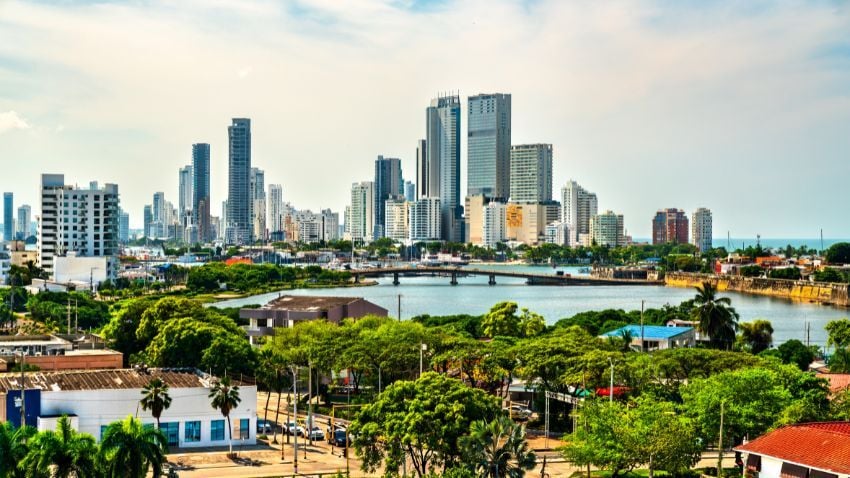
Colombia enters a new political chapter after years of tax expansion, halted oil and gas exploration, worsening security, and growing fiscal strain
WHAT DE LA ESPRIELLA INHERITED
Before explaining De La Espriella's expected policies, it is good to know what he inherited. Petro spent four years treating private capital as a problem to be managed. His 2022 tax reform, the first bill he sent to Congress, passed quickly during his own honeymoon and made Colombia's wealth tax permanent.
With his progressive agenda, Petro halted new oil and gas exploration licenses in a country where hydrocarbons play a major role in exports and government revenue. As a consequence, capital flew away to countries where success is not treated as a confession.
One of his most harmful policies was the "Total Peace," which involved negotiation with armed groups while those groups expanded their territorial control. The week before the inauguration, a truck bomb near a police station in Cúcuta wounded eight officers and three civilians. That is the country El Tigre inherited, along with a large fiscal deficit and high borrowing needs.
CAN DE LA ESPRIELLA DELIVER?
De La Espriella cannot eliminate a single tax by decree. Every meaningful fiscal change requires legislation; his electoral victory was narrow, and Colombia's Congress is fragmented and polarized. Markets rallied on his win, but investors still need to know how much of his program can actually pass. However, I am more optimistic than the usual caution around campaign promises would suggest.
Every new Colombian administration gets what people on the ground call the legislative honeymoon, the first 100 days: when the initiatives it backs pass with far less friction than at any later point in the term. That window is real, historically observable, and open right now. Congressional majorities appear to favour reform in this direction, and the finance minister has indicated that a structural tax bill will reach Congress in September.
De La Espriella also controls a broad legislative majority encompassing his own movement and traditional right-wing parties; the opposition is limited to the left wing. Every party in the governing coalition wants this tax gone. That is why the real question is not political will or votes. It is the fiscal offset. Colombia is running a deficit, and Congress will want to see how the lost revenue gets replaced, through spending cuts, enforcement, growth, or a broader base. However, if a bill moves within the honeymoon window, relief could arrive as early as the 2027 tax year, since the wealth tax is assessed on net worth as of January 1.

De La Espriella proposes eliminating Colombia’s wealth tax to reduce planning costs, simplify the tax system, and encourage investment and capital formation
THE ECONOMIC AGENDA: ELIMINATING THE WEALTH TAX
De La Espriella promised structural reforms to simplify the tax system, combat tax evasion, and create a favourable environment for investment, production, and employment. Then he confirmed what he had promised as a candidate: the wealth tax will be eliminated. In his words, Colombia must stop punishing those who invest and generate wealth in the country.
Here is what that tax looks like today. It applies to individuals with net assets above 72,000 UVT (roughly $1.2 million USD), at marginal rates of 0.5%, 1%, and 1.5%. If you are a Colombian tax resident, it applies to your worldwide assets. If you are not, only your Colombian assets are exposed.
However, for most HNWIs, the wealth tax can already be fully neutralized, not through opaque arrangements or tricks, but through legitimate, well-established tax planning. We do this for dozens of clients in Colombia. It is entirely possible to structure a resident's affairs so that no wealth tax is ultimately owed.
The catch is that this takes sophistication. Structures have to be built and maintained, and that carries a cost. Thus, the real burden of the wealth tax today is not the tax itself, but the complexity and expense of planning around it. Abolition would remove friction and the need to build those structures at all.
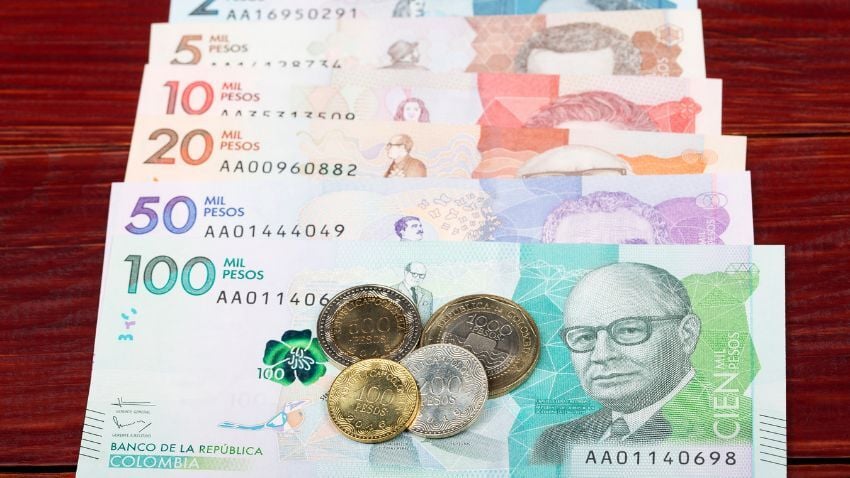
De La Espriella’s economic plan aims to boost growth through lower taxes, leaner government, and renewed energy investment
THE BROADER ECONOMIC PROGRAM
The wealth tax is just the headline; the whole story is way more promising. De La Espriella announced an immediate freeze on public spending, arguing that Colombia needs to put its house in order before larger changes. The cuts will target waste, duplication, and bloated administration. Post-election reporting describes proposals to shrink the state apparatus by roughly 40% and eliminate around 700,000 public-sector positions. Although this is an ambitious plan, it is not impossible, given the scale of the reductions implemented by Milei in Argentina under far less favourable political conditions and economic constraints.
His broader plan also includes killing the financial-transactions tax, the infamous 4x1,000 that skims every bank movement in the country, along with certain fuel levies. His agenda reverses energy policy entirely. He has promised to expand oil and gas exploration, allow fracking under government-defined conditions, and strengthen Ecopetrol.
Colombia will likely never become a territorial tax country like Panama, Paraguay, or Costa Rica. However, Colombia is a country of 52 million with a diversified economic base: oil, agriculture, manufacturing, finance, a growing tech scene, and half a dozen genuine cities to choose from. Colombia produces skilled talent at scale and at low cost, runs some of the best hospitals in Latin America, feeds itself, has water and hydroelectric energy in abundance, and offers a climate for every taste. Its assets still trade at a risk discount left over from the Petro years, which is exactly the opportunity.

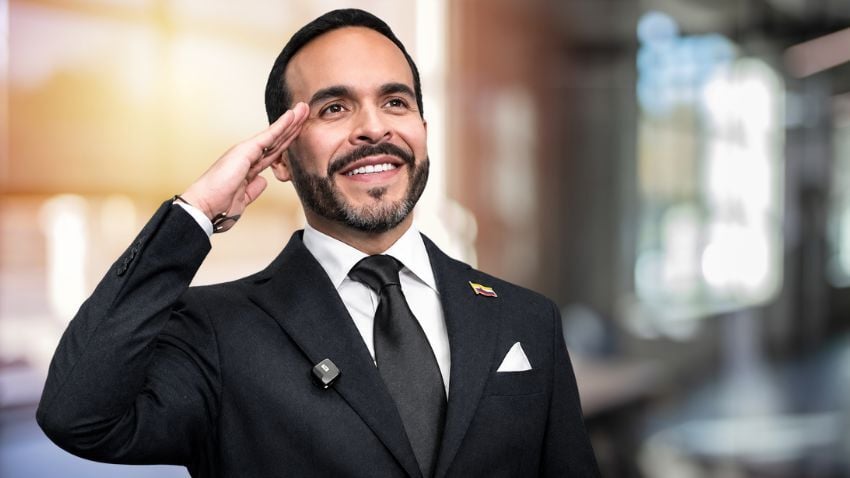
De La Espriella’s security strategy combines tougher action against armed groups with deeper U.S. cooperation to restore territorial control and investor confidence
THE CALI SPEECH AND DE LA ESPRIELLA’S SECURITY POLICY
The venue for his inauguration speech was not chosen at random. During his address, President De La Espriella was surrounded by soldiers in Colombia's contested southwest, territory where FARC dissidents (former members of the Revolutionary Armed Forces of Colombia who rejected the historic 2016 peace agreement), the ELN, and the Clan del Golfo all operate. That is why the venue was a statement in itself.
De La Espriella stated that the option of dialogue with armed groups had been completely exhausted and vowed to relentlessly defeat narco-terrorism. He did not wait to start. Within the first hours of his administration, Colombian security forces launched operations across the country that killed a top FARC dissident commander and arrested several Clan del Golfo members tied to the group's trafficking and finances.
The American connection is the force multiplier here. On his first day in office, Colombia joined Shield of the Americas, the U.S.-backed regional counter-cartel coalition, with Colombian operations headquartered in Medellín. Alongside it comes Plan Patriota 2.0, a bilateral security initiative announced after meetings between the incoming defence minister and the Pentagon. This name deliberately echoes the Uribe-era strategy used twenty years ago to reclaim territory from armed groups.
Washington is putting money and muscle behind this. The U.S. has pledged $1 billion USD in security assistance to the new government, and U.S. Defence Secretary Pete Hegseth confirmed he discussed joint strikes against U.S.-designated terrorist groups with Colombia's defence minister.
Uribe proved twenty years ago that improved security and foreign investment can rise together. De La Espriella is betting the same playbook works twice, this time with far more American firepower behind it.

Colombia’s strong fundamentals, pro-market reforms, and improving security outlook could set the stage for a new period of accelerated growth and investment
CONCLUSION
I have been investing in Colombia for years, through the Petro years, because the fundamentals never stopped being extraordinary. The socialist prelude is over, and policies are finally pointing in the same direction as the fundamentals. With a pro-market president, a favourable Congress, an open honeymoon window, American backing on security, and favourable regional political trends, the stage is set in Colombia for a fast transformation in the right direction.
If El Tigre is able to accomplish even a fraction of what he is promising, Colombia’s already bright future is about to be turbocharged in a way that would have been difficult to imagine even a few years ago.
I’ve been talking about Colombia for years, as those who’ve been following our newsletter know well. Subscribe today and get my free report, Plan-B Residencies & Instant Citizenships.






















 Mikkel Thorup: August 17, 2026