For the past 23 months, I have been warning my followers that Panama would return to the investment thresholds for the Qualified Investor Visa (QIV) program. With Decree 17 signed on September 8 and in force since September 16, 2026, one threshold increased. Buying a completed property from a previous owner now requires a $500,000 USD investment.
The good news is where that increase stopped. I am very happy to inform you that new first-sale property purchases and preconstruction purchases still qualify at $300,000 USD. Panama had every opportunity to move the whole real estate category to $500,000 USD but chose not to. This was the smart move.
This new regulation makes it clear that Panama rewards direct foreign investment that builds the country and creates jobs for its people. Panama chose not to tax foreign capital, opting instead to channel it into the real economy. This mindset distinguishes Panama from most of the world. It gives expats the confidence to invest in the country’s future, and that is what we at Expat Money have been doing successfully in Panama for years.
Alongside the tiering of the real estate threshold, the decree adds rules on valuation, source of funds, preconstruction purchases, and ongoing compliance, all of which change how these applications must be structured.
In this article, I explain what the new decree requires, how the two real estate tiers are defined, how Panama now calculates whether your investment meets the threshold, what happens to applications and investments made before September 16, 2026, and what this means if you are planning to obtain residency in Panama.
%20To%20Invest%20In%20International%20Real%20Estate.jpg?width=850&height=478&name=Using%20Your%20401(k)%20To%20Invest%20In%20International%20Real%20Estate.jpg)
Panama now distinguishes clearly between first-sale new construction and secondary-market property, making title history and transaction structure critical to determining whether the $300,000 USD or $500,000 USD threshold applies
THE TWO REAL ESTATE TIERS
The $300,000 USD minimum now applies to a specific type of purchase. The property must be new and unoccupied, and you must acquire it directly from the developer or whoever has legally succeeded them in the project, as a first sale. A unit that has never been lived in, never rented, and never transferred to anyone outside the development chain qualifies at $300,000 USD.
Other completed-property transactions generally fall into the $500,000 USD secondary-market tier, subject to the specific exceptions listed in the decree. Promise-of-sale investments are governed separately.
A property can be physically brand new and never occupied and still fall into the secondary-market category, because what matters is whether it has already been commercially sold or transferred to an unrelated third party. Working out which tier applies takes more than reading the listing. The Public Registry record is the starting point, and prior occupation, leasing, permits and tax records can all bear on the answer.
That is why an expert review is essential to trace the chain of title, contracts, and transaction structure before any capital is committed. Our offshore contract review service ensures the documentation strictly aligns with your objectives before you execute the deal.
THE NEW INVESTMENT REQUIREMENTS
Under the new rules, the minimum investment depends on the investment route:
-
New real estate / first-sale property: $300,000 USD
-
Promise of sale, including preconstruction: $300,000 USD
-
Secondary-market real estate: $500,000 USD
-
Panamanian securities: $500,000 USD
-
Fixed-term deposit at a licensed private bank: $750,000 USD
-
Fixed-term deposit at Banco Nacional or Caja de Ahorros: $500,000 USD
Investments through Panama’s securities market must generally be maintained for at least five years and can include qualifying private equity funds, government bonds and other registered securities. Fixed-term deposits must also have a minimum term of five years.
One of the most important changes is the distinction between new real estate and the secondary market. A qualifying purchase of newly sold real estate can still meet the QIV requirement at $300,000 USD. However, purchasing property on the secondary market now requires an investment of at least $500,000 USD. This makes the type of property you purchase significantly more important when structuring a QIV application.
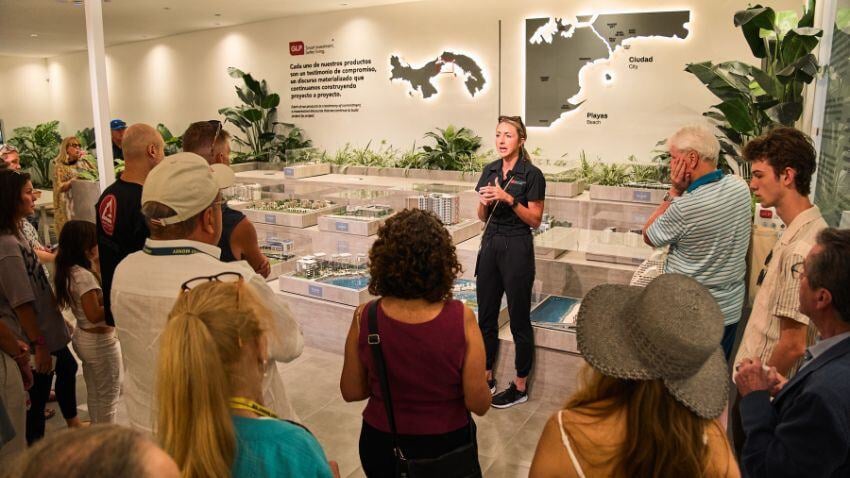
Panama’s lower threshold for new construction is designed to channel foreign capital into the local economy, supporting development, jobs and businesses while still keeping the resale market open to investors
WHY PANAMA PRICED NEW CONSTRUCTION LOWER
The $200,000 USD gap between the two real estate tiers is deliberate, and the government has said why. In the decree’s recitals, it explains that the differentiated thresholds are intended to prioritize first-sale inventory as a way to support construction-sector activity, employment, tax revenue and local supply chains.
I have been investing in projects in this country long enough to tell you the government has this exactly right. Put foreign capital into a new development and watch where it goes. It pays the architects and the engineers. It pays the construction crews, the electricians, the plumbers, the welders. It pays the companies supplying cement, steel, glass, tile and fixtures, most of them Panamanian businesses employing Panamanian families.
As the building goes up, the investment also pays for appliances, furniture, and landscaping. Then the owners move in, and it keeps paying for property managers, maintenance crews, security and cleaners. One qualifying investment passes through a dozen local businesses before it settles.
Buy an existing apartment instead, and none of that happens. One person owned it yesterday, someone else owns it today, and the money mostly leaves with the seller. Panama has an under-supplied housing market and a construction sector that needs work. A resale adds nothing to either. Therefore, the government has priced that difference at $200,000 USD, and it has done it without closing the secondary market.
HOW PANAMA NOW CALCULATES WHETHER YOU HIT THE THRESHOLD
One of the most consequential parts of the new decree is how it calculates what your investment is actually worth for program purposes. Panama now applies what the decree calls a computable net value. For purposes of meeting the minimum, the recognized investment value is the lower of two figures: the amount actually paid by the applicant and the reasonably substantiated commercial value of the property. If the purchase price exceeds the required minimum, the excess may be financed, provided the financing is properly documented, and no lien reduces the computable net value below the applicable investment minimum.
The previous regime required the qualifying minimum to be supported by unencumbered value, although it already allowed financing of the amount above the minimum through a local-bank mortgage. The new decree now formalizes the calculation through a computable net-value test.
The verification process begins with the mandatory ANATI cadastral certification and runs alongside the review of your purchase agreement, proof of payment, and source-of-funds documentation. However, the Ministry of Commerce and Industries (MICI) may request an independent commercial valuation if reasonable doubts arise, based on objective factors, as to whether the declared price corresponds to market value.
When an appraisal is required, it must have been issued within the six months preceding MICI’s request and must be signed by a professional recognized by Banco Nacional de Panamá and Caja de Ahorros. The appraiser must set out the methodology, the comparables used, and the basis for the conclusion.

Preconstruction remains a viable $300,000 USD route, with clearer bank-backed protections and defined timelines for replacing an investment if a promise-of-sale purchase falls through
PRECONSTRUCTION AND PROMISE-OF-SALE PURCHASES
Buying before a building is finished remains available from $300,000 USD, and you can structure the investment in two ways. Both carried over from the previous decree. The first is a deposit held in trust by a bank or trust company licensed to operate in Panama, with the funds disbursed under the trust arrangement toward the purchase obligations.
The second is payment of 100% of the property value directly to the developer or seller under the promise-of-sale agreement. This route already required bank-backed protection under the previous regime. However, the new decree now specifies a broader range of acceptable instruments and the conditions they must meet.
The effect is to give the investor bank-backed protection against specified failures by the developer or seller. If the promise of sale does not materialize for reasons not attributable to the investor, the decree grants you 180 business days, starting on the business day after the agreed-upon period expires, to replace the investment.
You can substitute through another promise of sale once. Beyond that, total time spent holding immigration status on the basis of promises of sale alone cannot exceed three years, whether continuous or not. That is why this route has a defined end point rather than an open-ended arrangement.

The new rules place greater emphasis on proving where the investment funds came from and keeping the qualifying investment in place for five years, while giving investors clear timelines to reinvest if the original asset changes
WHERE THE MONEY HAS TO COME FROM
The qualifying funds must be of foreign origin, must be traceable, and must belong to the applicant. Money already in a Panamanian account can still be used, provided you can trace its origin to an earlier international transfer. Gifts, donations and other gratuitous transfers from third parties do not count toward the minimum, so capital handed to you by a family member will not support an application on its own.
You can hold the investment through a Panamanian or foreign company, or through a private interest foundation. You will have to document that the entity exists and is in good standing, who owns and controls it, and that you are the beneficial owner with real control over the investment.
MAINTAINING THE INVESTMENT FOR FIVE YEARS
Permanent residency is granted upon approval, but the investment behind it must remain in place for five years. Every year, your legal representative files proof of that with the MICI within the 30 calendar days leading up to the anniversary of your immigration resolution.
The decree does allow the investment to change. The main change is that if it is sold, replaced, or otherwise ceases to exist before the five years are complete, you have 30 calendar days to notify the MICI and then up to 90 calendar days to document an equivalent reinvestment that meets the program requirements.
These are two separate obligations with two separate deadlines. While the reinvestment period runs, any administrative action to cancel residency on that basis is suspended. If you do not complete the replacement, the permit is cancelled.
Securities investors get one additional protection. A fall in market value outside your control does not by itself break compliance, provided you have not withdrawn, sold or voluntarily encumbered anything and the amount is restored within 90 calendar days of notification from the MICI.

The new rules make the Qualified Investor program more family-friendly by allowing certain dependents to be added after approval while also creating a more streamlined path for investors pursuing Panamanian citizenship
DEPENDENTS AND FAMILY MEMBERS
This is one of the new provisions that I am happy to see, because securing the future of families is the main point of a Plan-B. Dependents may be included in the initial application, just as before. What the new regulations add is a way to bring people in afterward. A child born or adopted after approval, or a spouse from a civil marriage entered into after approval, can be added directly as a dependent to the principal investor’s existing status.
Anyone who has relocated a family knows why that matters. Under the old arrangement, a child arriving after the residency was granted meant going back to the immigration process from the outside. Now the family simply grows into the status the parents already hold.
To do that, the principal must show that their residency is in good standing and that the investment maintenance conditions are being met, as evidenced by a certification from the MICI. In addition to providing proof of the new family relationship and a letter of economic responsibility, the applicant must pay $1,000 USD to the National Treasury and $1,000 USD to the National Immigration Service for each new dependent.
NATURALIZATION NOW FILED THROUGH MICI
I always advise my clients to prioritize permanent residency programs that allow you to apply for citizenship. Qualified investors and their dependents become eligible to apply for citizenship after five consecutive years of permanent residency in Panama. The new decree simplifies the application procedure for you.
Naturalization applications are now submitted through MICI’s investment directorate. MICI certifies that the investment remains valid and complies with the Qualified Investor requirements, and the application is then forwarded to the National Immigration Service if the applicable requirements are met. That is another great convenience for expats seeing Panama as their new base.
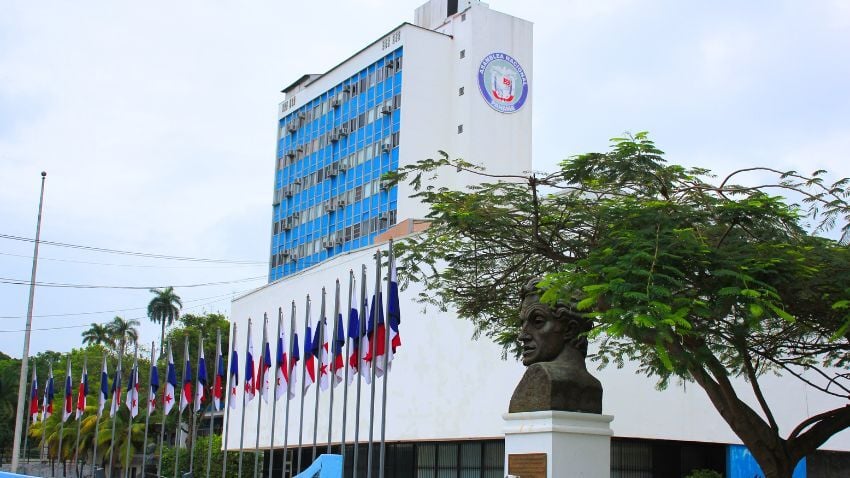
Existing investors may still qualify under the previous rules, but strict filing deadlines now apply, making timing and documentation critical for anyone with a pending or pre-existing investment
TRANSITIONAL RULES FOR EXISTING APPLICATIONS AND INVESTMENTS
If you have made a payment or signed but have not yet submitted your application, the course of action you need to take depends on the dates:
-
Applications filed before September 16, 2026 are governed by the requirements, conditions and amounts in force at the time of filing, without prejudice to the immediate application of more favourable procedural rules.
-
Investments and binding contracts perfected before September 16, 2026 can still qualify under the previous regime, but only if the application is filed within six months of that date.
-
Investment certifications already issued remain valid until they expire.
-
The new appraisal and verification rules cannot be applied retroactively to disregard previously certified investments, except where there are objective indications of falsity, simulation, fraud or unlawful origin of funds, and then only with due process.
-
If you hold valid status under Residencia Permanente por Razones de Solvencia Económica Propia, or have an application pending in that category, you have twelve months from September 16, 2026, to request conversion to Qualified Investor. You will need to meet the minimum investment amounts and the other requirements.
The six-month election window is the one to watch. An investor who signed a purchase contract in August 2026 and files an application in April 2027 will be assessed under the new rules, including the new valuation method, rather than the regime in place when the money was committed.
PROCESSING TIMES
MICI has 15 business days to issue the investment certificate once it accepts a complete file. The certificate is then valid for three months. The National Immigration Service has 30 business days to process the residence permit application from the date it officially receives a complete file. Both periods may be suspended for legally valid reasons.
The application can be filed through Panamanian counsel before the investor and dependents enter the country. Biometric enrolment and registration are required in person before the residency card is issued.

Panama’s Qualified Investor Visa remains an attractive residency option, but under the new rules, choosing the right property and structuring the investment correctly are more important than ever
CONCLUSION
Panama’s Qualified Investor program has changed a couple of times since Decree 722 created it in 2020, and Decree 17 now replaces the previous regulatory framework. The key takeaway is that Panama has kept the $300,000 USD threshold for new first-sale and preconstruction property, while introducing clearer rules around valuation, ownership history and compliance. For investors, that means the opportunity remains, but the structure of the purchase matters more than ever.
Panama also continues to offer the broader advantages that make it attractive as a second base, including a territorial tax system, a dollarized economy, private healthcare, international schools, strong flight connections and established financial infrastructure. For anyone considering the Qualified Investor route, careful due diligence is essential: the property’s ownership history, valuation and documentation can determine whether an investment actually qualifies.
The best way to understand those details is to see the market firsthand. Our Panama Fly’n Buy Real Estate Tours put you in front of qualifying projects with our team beside you, so you can walk the developments, meet the developers and understand which properties fall on the right side of the new thresholds before you commit your capital. Join us on our Fly'n Buy Tours.



%20Brazil%20The%20Cash%20Cow%20Opportunity%20That%20I%20Couldn%E2%80%99t%20Ignore%20Any%20Longer-1.jpg?width=800&height=429&name=(BLOG%20BANNER)%20Brazil%20The%20Cash%20Cow%20Opportunity%20That%20I%20Couldn%E2%80%99t%20Ignore%20Any%20Longer-1.jpg)



















 Mikkel Thorup: October 06, 2026