Many people picture Latin America as a region of jungles, beaches, and constant sunshine. While that image has some truth, it doesn’t tell the whole story. The region’s geography creates a wide range of climates, offering comfortable and appealing living conditions that often surprise visitors. Having travelled extensively, I’ve found few places in the world that match Latin America’s diversity and year-round livability.
To understand this variety, look at a map of Latin America—from Mexico down to Patagonia. The region spans nearly every climate zone on Earth. Many of its major cities sit between 1,000 and 2,500 meters above sea level, where the elevation brings mild, spring-like weather to areas that would otherwise be hot and humid.
This combination of beauty and comfort is what sets Latin America apart. In this article, I’ll highlight 7 cities in the region that offer some of the most pleasant climates year-round.
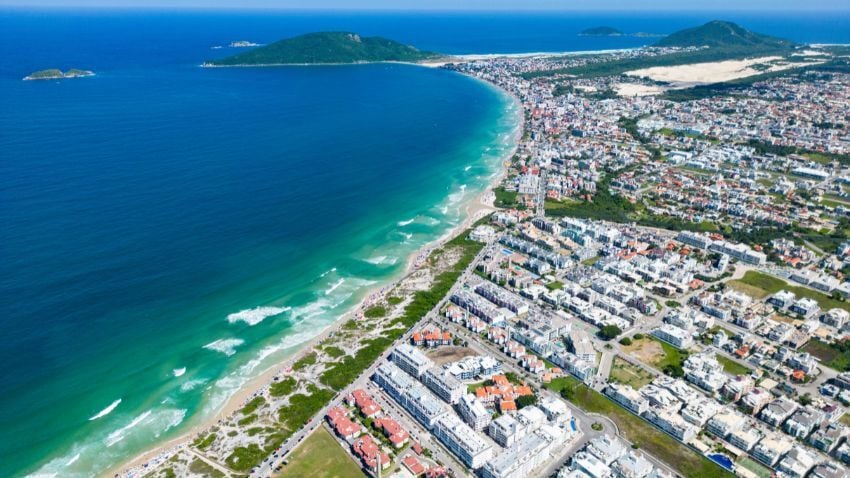
Florianópolis offers a mild, year-round coastal climate with balanced temperatures, refreshing sea breezes, and warm summers ideal for enjoying its beautiful beaches
7. FLORIANÓPOLIS, BRAZIL
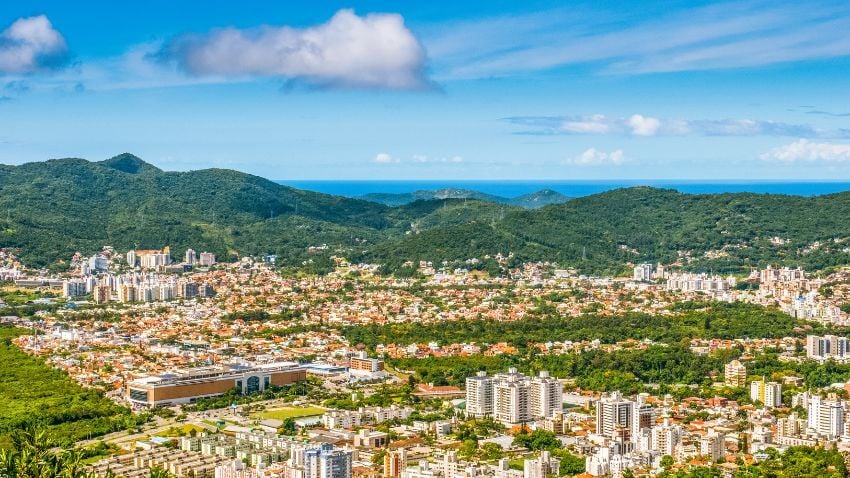
Florianópolis is the capital of Santa Catarina, in southern Brazil. Famous for its beautiful beaches and mild, oceanic climate, Florianópolis lies mostly at sea level, spread across Santa Catarina Island and a small part of the mainland. The surrounding Atlantic Ocean moderates the temperature, keeping summers comfortable and winters mild.
Average temperatures in the city range between 17°C and 28°C throughout the year. Summers, from December to March, are warm and humid, perfect for beach activities, with highs around 30°C. Winters, from June to August, are mild, with average daytime temperatures near 21°C and cooler nights dropping to about 13°C.
Snow is unheard of, and extreme weather is rare. Although the city can experience brief, heavy showers, which are typical of coastal regions, rain falls regularly throughout the year. Because of its fresh sea breezes and balanced temperatures, Florianópolis offers one of the most pleasant and livable climates in Brazil.
6. CORONADO, PANAMA
If you like to stay close to the most wonderful beaches but still enjoy the fresh weather for the rest of the day, I know the perfect place for you: Coronado. Just a 90-minute drive west of Panama City, Coronado is located along Panama’s Pacific coast. However, unlike many tropical beach towns, it has the advantage of being near the mountain breezes blowing from the Chame and Altos de María mountains. This unique geography makes Coronado a more balanced, livable climate than Panama’s humid lowlands. If you choose to live in the highlands of Coronado and only drive down the beach whenever you like, you can have priceless comfort in Central America.
The average annual temperature is around 25°C, cooling down to the mid-20s in the evenings due to the highland winds blowing along the coastline. It never gets cold, and you’ll never see snow, but the air there feels surprisingly fresh for a tropical beach town. Humidity is high during the rainy months (May to November), yet the Pacific breezes keep it tolerable. The dry season, from December through April, is sunny, breezy, and beautifully consistent.
The highlands near Coronado, in Panama’s interior, have a mild, spring-like climate year-round, and the air is cooler and less humid than on the coast, with refreshing breezes that make even the rainy season comfortable.
5. SAN JOSÉ, COSTA RICA
San José is located in the heart of Costa Rica’s Central Valley, with an elevation of about 3,900 feet (1,200 meters) above sea level. This geography provides the capital with a spring climate, making it one of the mildest urban centers in Latin America.
Temperatures usually stay steady throughout the year, averaging 24–26°C during the day and cooling to around 18°C at night. You won't be complaining about snow or extreme heat, allowing yourself to enjoy the pleasure of cool air. The two main seasons change pleasantly. The dry season (verano), from December to April, offers bright blue skies and gentle breezes, while the green season, from May to November, brings short afternoon showers that keep the valley lush and fresh.
Although humidity remains moderate compared to coastal regions, the mountain air gives the city a clean, breathable feel. You can comfortably live without heating or air conditioning, which keeps living costs down and daily life easy.
4. OAXACA, MEXICO
Oaxaca is set in a wide valley in southern Mexico’s Sierra Madre mountains, about 5,085 feet (1,550 meters) above sea level. It is high enough to escape the coastal heat, yet low enough to stay pleasantly warm all year.
Temperatures average between 17-29°C, which means the days are warm and bright, and the evenings are cool enough to wear a light jacket. People who hate humidity will also like Oaxaca, particularly in the dry season (November to May), where sunny skies and gentle breezes provide comfort. The green season (June to October) sees brief afternoon rains that refresh the city without disrupting daily life.
The city is also a UNESCO World Heritage Site, known for its colonial streets, art scene, and legendary food culture. When you crave a change of scenery, the Pacific coast is just a few hours’ drive away. That means you can enjoy mountain air during the week and ocean sunsets on the weekend.
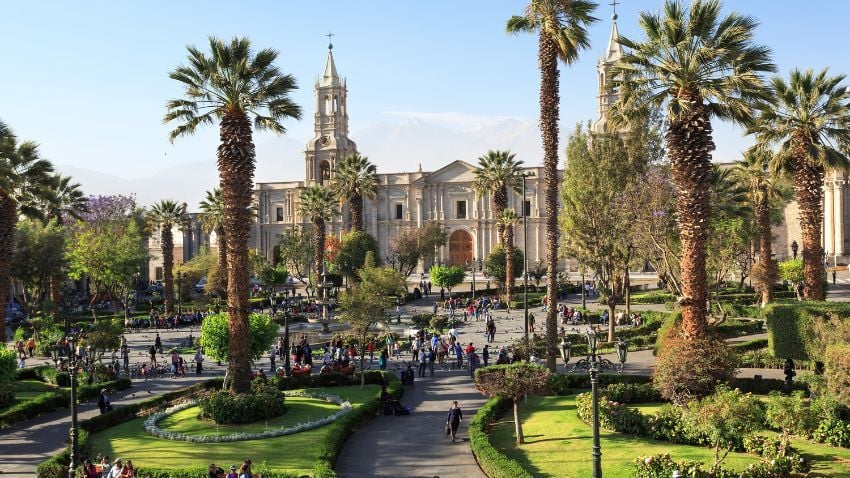
Arequipa offers a sunny, dry, high-altitude climate with over 300 days of sunshine, mild temperatures, and crisp mountain air at the foot of the majestic Misti Volcano
3. AREQUIPA, PERU
Arequipa lies at the foot of the majestic Misti Volcano (known as El Misti), about 2,300 meters (7,500 feet) above sea level, in southern Peru. Due to its mountainous location, the city offers residents bright sunshine, cool mornings, and air so clear you can even see distant mountain peaks.
Arequipa is often called La Ciudad Blanca (The White City) for its colonial buildings carved from white volcanic stone. Arequipa has over 300 sunny days a year, mild temperatures that rarely exceed 25°C, and low humidity that makes even hot afternoons comfortable. Its winter nights (December to February) can indeed feel chilly, especially because homes rarely have heating. Temperatures sometimes drop to around 12–14°C at night, even if the days remain warm and sunny. The use of traditional materials and bioclimatic design strategies improves thermal comfort without conventional heating.
You’ll experience the rainy seasons with short showers from January to March. However, the rest of the year remains dry and luminous, giving you the opportunity to live in sunshine without tropical heat. Arequipa is also well-connected. You can reach the Pacific coast towns like Mollendo or Mejía in about 2.5 hours by car. So, the weekend beach escapes are easy.
2. CUENCA, ECUADOR
Located in the southern highlands of Ecuador, Cuenca sits about 8,200 feet (2,500 meters) above sea level in the Andes Mountains. Although Ecuador’s coasts and Amazon lowlands are known for their high humidity and long, hot summers, Cuenca has a spring-like climate because of its elevation. The weather remains stable throughout the year, with daytime temperatures around 20-24°C, dropping to as low as 15°C in the evening. You can open your windows and let the mountain air flow in, without turning on the air conditioning.
The city experiences a light rainy season roughly from October to May. However, showers tend to come in short bursts followed by clear skies. The rest of the year remains dry, sunny, and mild, and humidity levels rarely feel oppressive.
Since Ecuador is a small, geographically diverse country, it is easy to access a wide range of climates. Within four to five hours, you can drive or take a bus down to the Pacific coast and experience a full change of scenery without crossing a border. You may enjoy cool highlands during the week and warm beaches on the weekend.
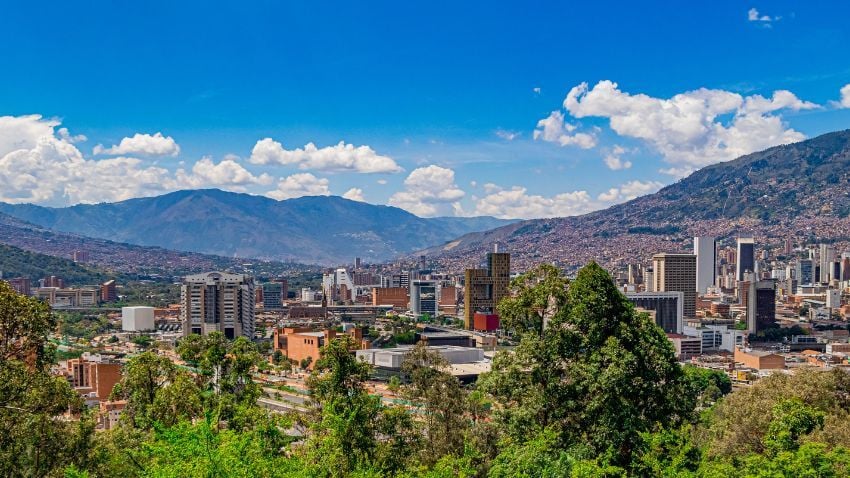
Medellín, the “City of Eternal Spring,” delivers near-perfect weather year-round with steady temperatures around 22 °C, refreshing mountain breezes, and moderate 65% humidity
1. MEDELLÍN, COLOMBIA
Medellín is located in the heart of Colombia’s Andes Mountains, surrounded by the lush Aburrá Valley of northwestern South America. Its elevation is about 4,900 feet (1,500 meters) above sea level. The locals proudly call it eternal spring, which is no exaggeration. Temperatures in Medellín hover around 22°C throughout the year. You can wear a T-shirt in the morning and sleep under a light blanket at night, without ever needing air conditioning or heating.
Because there is no snow or extreme seasons, the climate is stable. From April to May and September to November, Medellín has a typical rainy season, but even then, rain usually comes as short afternoon showers rather than full-day downpours. The rest of the year stays pleasantly dry and sunny. However, if you ask me, the true luxury is the constant mountain breeze, which keeps the humidity around 65%.
Despite being surrounded by mountains, Medellín isn’t isolated. Within a few hours’ drive, you can reach Colombia’s Caribbean coast or take a short flight to the beaches of San Andrés, a beautiful island in the Caribbean Sea. So, you can enjoy both cool, urban comfort year-round and the tropical weather by the sea during the weekends.
CONCLUSION
One of the greatest advantages of Latin America is its incredible variety of climates. Within just a few hours’ travel, you can move from cool mountain valleys to warm tropical beaches, from highland breezes to coastal sunsets. Few regions in the world offer this kind of natural balance.
A mild, predictable climate means lower living costs, better health, and more time outdoors. It’s easier to stay active, eat fresh, and live simply when the weather supports you every day of the year. Climate is only part of the story. Latin America combines this comfort with affordable living, welcoming people, diverse residency programs, and a growing number of expat-friendly communities. Whether you want to retire in peace, work remotely, or raise a family abroad, there’s a Latin American city where the weather, lifestyle, and freedom align perfectly.
The best part of Latin America is that it offers many straightforward residency options, making it easy to consider relocation. If you like to learn the basics of how to move to Latin America, download our free special report on Plan-B Residencies & Instant Citizenships.



%20Brazil%20The%20Cash%20Cow%20Opportunity%20That%20I%20Couldn%E2%80%99t%20Ignore%20Any%20Longer-1.jpg?width=800&height=429&name=(BLOG%20BANNER)%20Brazil%20The%20Cash%20Cow%20Opportunity%20That%20I%20Couldn%E2%80%99t%20Ignore%20Any%20Longer-1.jpg)



















 Mikkel Thorup: October 12, 2026